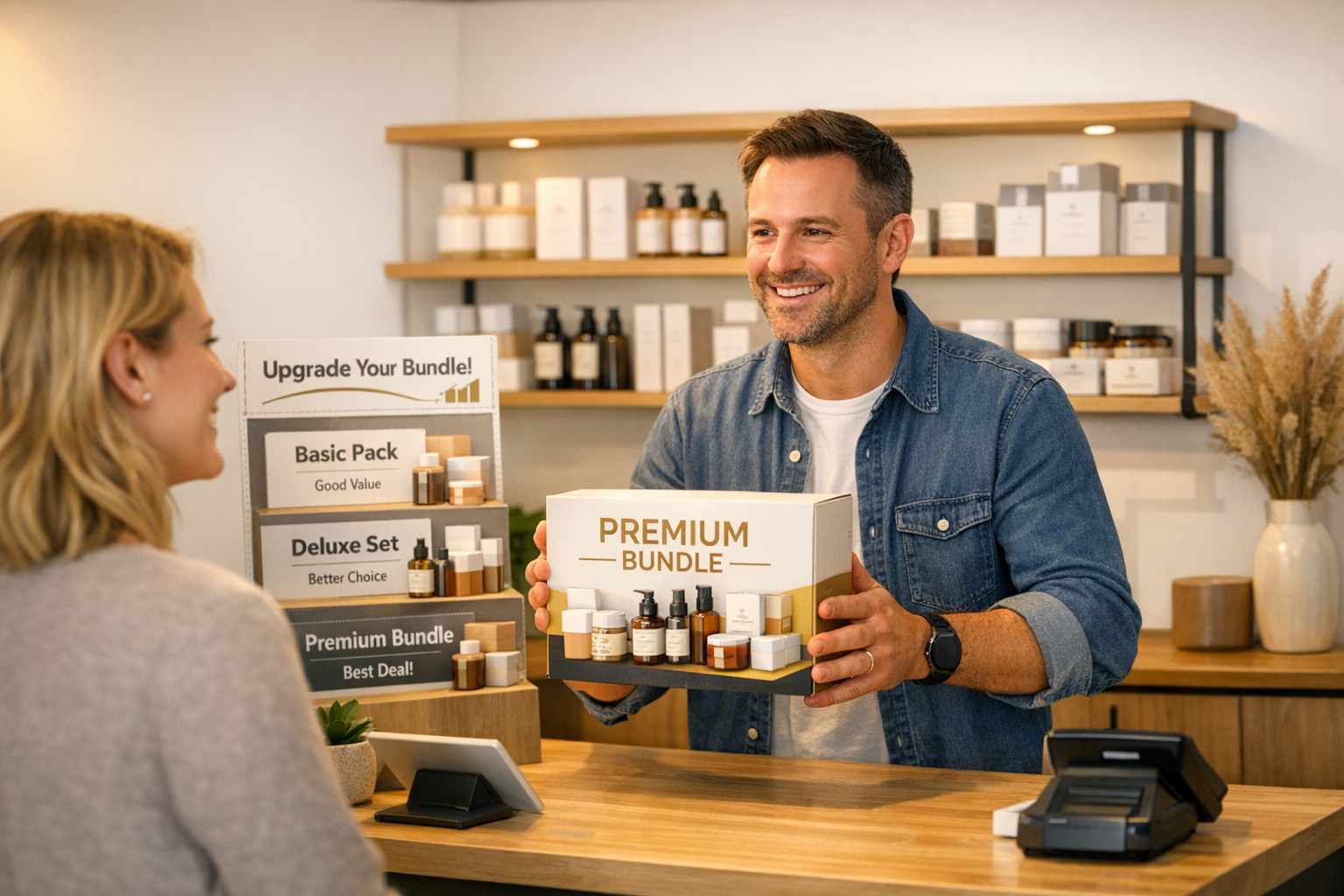
Acquiring a new customer costs five to seven times more than selling again to an existing one. That math is well-established — and most small business owners know it intellectually. What they struggle with is the follow-through: actually building the systems and habits that turn one-time buyers into repeat customers who spend more each visit.
Upselling and cross-selling are the simplest tools for closing that gap. Not aggressive tactics. Not annoying pop-ups. Just well-timed, genuinely relevant offers that help customers get more value — and help your business grow revenue without spending more on ads.
This guide covers how to do it right: what to offer, when to offer it, and how to automate the parts that usually fall through the cracks.
The Difference Between Upselling and Cross-Selling
They’re often used interchangeably, but they’re distinct strategies with different mechanics:
Upselling is offering a better, higher-value version of what the customer is already buying. A landscaping company offering a premium maintenance package instead of the basic one. A salon upgrading a cut to include a conditioning treatment. A web design agency pitching the ongoing SEO retainer alongside the website build.
Cross-selling is offering a complementary product or service alongside the main purchase. The landscaping company recommending seasonal fertilizer service to a lawn care client. The salon recommending professional shampoo to take home. The agency suggesting Google Ads management to a website client.
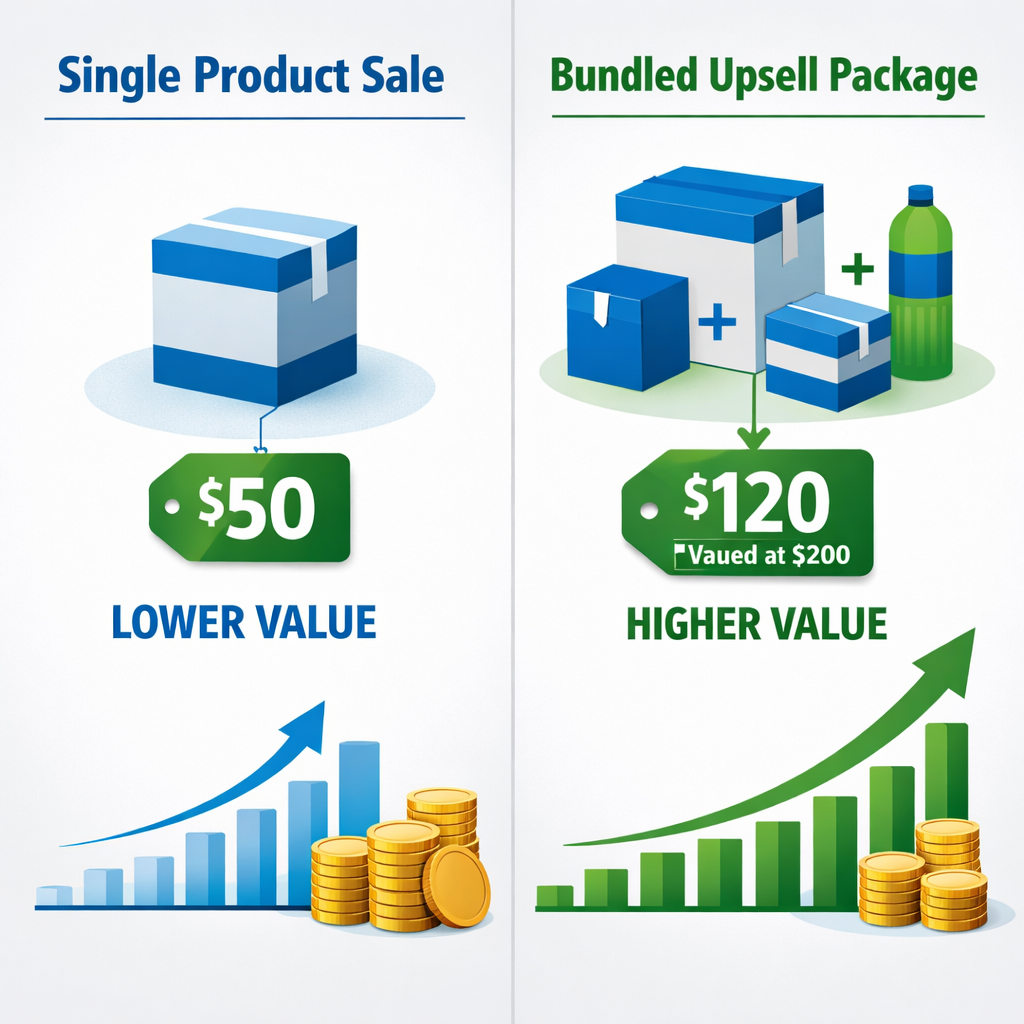
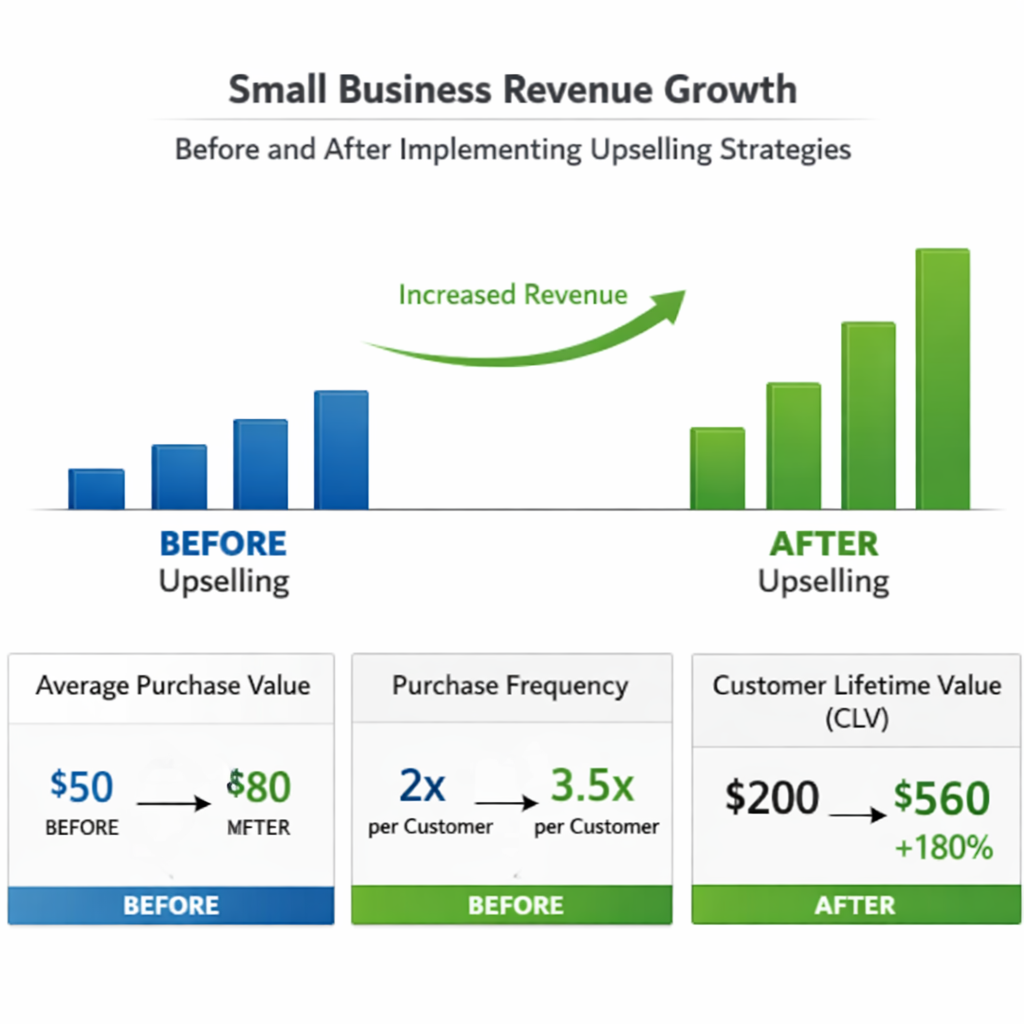
Both strategies work by increasing average transaction value and customer lifetime value — the two numbers that most directly predict whether a small business grows or flatlines.
Why Most Small Businesses Leave Money on the Table
The biggest barrier to upselling and cross-selling isn’t customer resistance. It’s internal:
No system. The offer depends on whoever happens to be at the counter that day remembering to mention it. Some do. Most don’t. Revenue is inconsistent because the behavior isn’t systematized.
Fear of seeming pushy. There’s a genuine discomfort with suggesting more, especially for service businesses where the relationship is personal. But a relevant, well-timed suggestion isn’t pushy — it’s helpful. A customer who just bought a single session at your training studio genuinely might not know that your 10-pack is 20% cheaper per session. Telling them is a service, not a pitch.
No data on what goes together. If you don’t track purchase patterns, you can’t identify what customers typically buy together or what the natural upgrade path looks like. Without that visibility, any cross-sell offer is a guess.
The offer is too generic. “Would you like to add anything?” is not a cross-sell. A specific, relevant suggestion — “Most clients who get this service also add our monthly maintenance plan, which covers all follow-up visits for 30 days” — is.
Step 1: Map Your Offers to Upgrade Paths
Before you can upsell or cross-sell effectively, you need a clear picture of what you offer and how the pieces fit together.
For each core service or product, define:
- The upgrade — What’s the higher-tier version? What makes it better and worth more?
- The complement — What naturally pairs with this? What do customers typically need next?
- The timing — When is the customer most receptive to hearing about it? (At purchase, immediately after delivery, 30 days later?)
A med spa, for example, might map it like this:
| Core Service | Upsell | Cross-Sell | Ideal Timing |
|---|---|---|---|
| Single Botox session | Quarterly maintenance plan | Skincare product bundle | At checkout |
| Chemical peel | Series of 3 for better results | SPF and post-care kit | During consultation |
| Laser hair removal | Full body package vs. one area | Skin rejuvenation consult | After session 1 |
Do this exercise for every service line. The output is your upsell/cross-sell playbook — a reference document that makes the “what to offer” decision for everyone on your team.
Step 2: Time It Right
The right offer at the wrong time kills the sale and damages the relationship. The right offer at the right time feels like good advice.
Pre-purchase: When a customer is already in decision mode, it’s natural to show them options. A well-structured pricing page with clear tiered options is itself an upsell mechanism — you’re not pushing anything, you’re letting them see what’s available.
At point of sale: This is the classic upsell moment, and it works because the customer has already committed. They’re in a “yes” state of mind. A brief, specific suggestion (“Most customers in your situation also add X, which covers Y”) converts at surprisingly high rates when it’s genuinely relevant.
Post-delivery: If someone just had a great experience, they’re at peak trust and satisfaction. A follow-up message 24-48 hours later with a relevant next step (“Since you loved your session, we have a 3-pack available at a 15% discount — it’s how most of our regulars keep results going”) lands very differently than a generic promotional email.
Milestone-based: 30 days in, 90 days in, on the anniversary of their first purchase — these are natural moments for a “what’s next” conversation. Automated follow-up sequences make this scalable without requiring your team to remember every customer’s timeline.
Step 3: Make the Offer Specific and Benefit-Focused
The mechanics of a good upsell offer:
- Reference what they already have — grounds the suggestion in their specific situation
- Name exactly what the upgrade adds — don’t make them guess why it’s better
- State the benefit, not just the feature — “you’ll get results twice as fast” beats “it includes two additional sessions”
- Make the cost simple — the price difference, not the total price, is what people evaluate
A weak cross-sell: “We also offer skincare products.”
A strong cross-sell: “The SPF we use in clinic is the same one most of our patients use at home — it protects your results between sessions and runs $45. Want me to add it to today’s order?”
One is a menu item. The other is a recommendation.
Step 4: Systematize It So It Actually Happens
Great upsell strategy implemented inconsistently is worth almost nothing. The goal is to make the right offer happen automatically — regardless of who’s working that day or how busy the floor is.
Script it. Every front desk, sales team, or checkout staff should have a consistent line for the top 2-3 cross-sell moments in your business. Not a memorized pitch — a natural prompt that leads to the offer. Practice it until it’s comfortable.
Add it to your checkout flow. If you take payments online or via software, add a “before you complete your purchase” step that shows the relevant upsell. Stripe, Square, and most booking platforms support this. Customers who are mid-checkout convert on upsells at 10-25% depending on relevance.
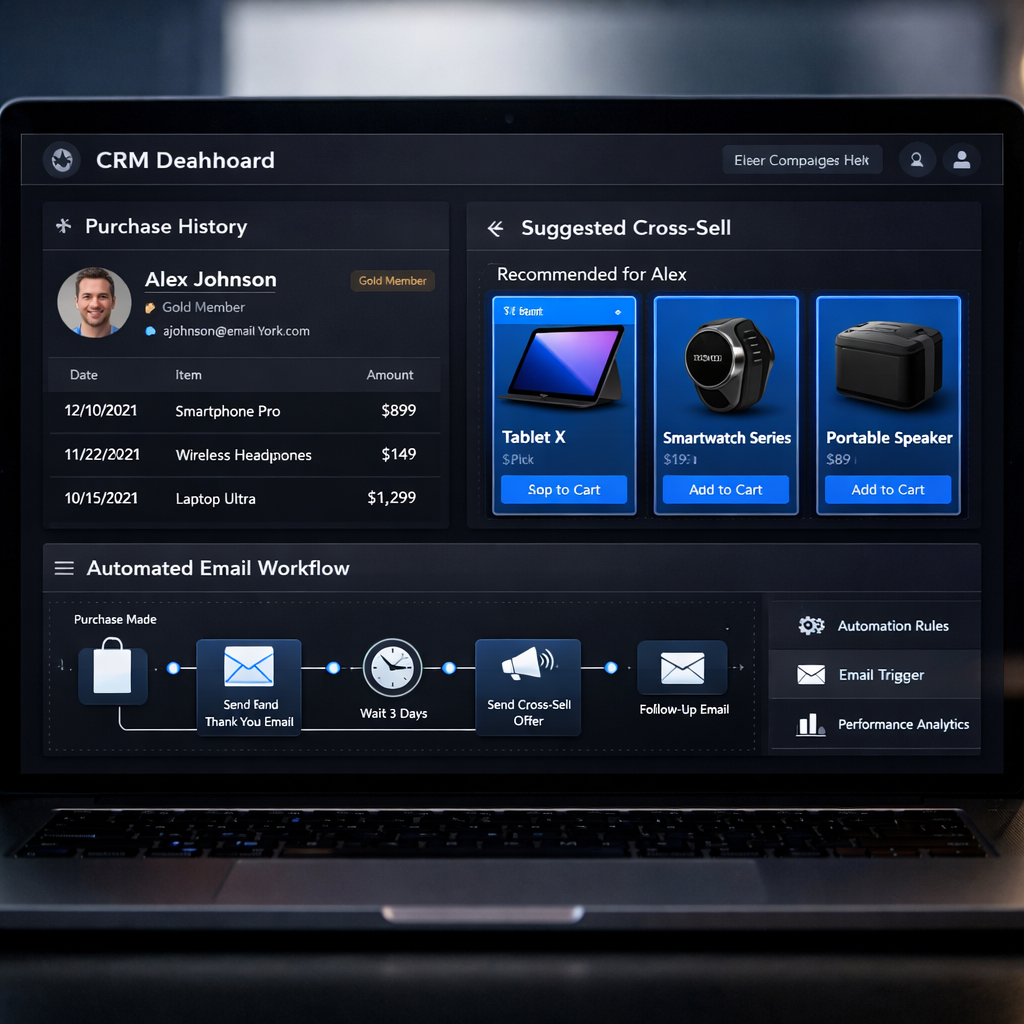
Automate post-purchase. Your CRM automation should trigger a follow-up sequence after every completed purchase — not just a “thanks for your order” but a value-add message that naturally leads to a next step. Someone who bought your single service package should get an email at day 7 explaining why clients who move to the monthly plan see 3x better outcomes, with a single-click link to upgrade.
Use purchase data to personalize. This is where customer segmentation pays off. Customers who bought X are excellent candidates for Y. If you know that 60% of customers who buy your basic lawn care package convert to the premium package within 6 months, you can build a campaign specifically for that segment and offer them an early upgrade incentive. Our AI customer segmentation guide covers how to build these segments systematically.
Pricing the Upsell Correctly
Pricing affects whether the offer feels like value or like a squeeze. A few principles:
The upgrade should feel obviously worth it. If your premium tier is 30% more but delivers 60% more value (more sessions, more coverage, faster turnaround), customers see that math clearly. If the premium tier is 30% more for 10% more value, most people stay put.
Bundle discounts create urgency. A 3-pack at 15% off per unit is a better offer than three individual sessions at full price. The discount gets them to commit now. The bundle gets them coming back. Both move in your favor.
Anchoring matters. Show the full-service option first, then the core offer. After someone hears the comprehensive package at $500/month, the standard package at $300 feels like a deal — even if it’s the product you actually want them to buy. This is the same psychology that makes “most popular” labels on pricing tiers so effective.
For a deeper look at the psychology behind pricing, our pricing psychology guide covers the mechanics in more detail.
Upselling in a Service Context Without Feeling Pushy
Service businesses — doctors, consultants, coaches, tradespeople — often have the most discomfort with this because the relationship feels more personal. A few reframes that help:
You’re managing their complete problem, not just the one they mentioned. A plumber who notices a slow drain while fixing a burst pipe and says nothing is leaving a future emergency unaddressed. Mentioning it is good service.
The goal is their outcome, not your revenue. If your premium plan genuinely delivers better results, recommending it is in their interest. The discomfort usually comes from offering things that don’t actually add value — and the fix is to make sure your upsell genuinely does.
Frame it as an option, not a push. “Most clients in your situation end up upgrading to X because of Y — just want to make sure you know it’s available” is informative, not pressuring. The customer decides.
What to Measure
Upsell and cross-sell programs only improve if you track them. Key metrics:
- Attach rate: What percentage of customers take the upsell or cross-sell offer? Benchmark varies by industry, but 15-25% is a reasonable target for a well-designed point-of-sale offer.
- Average order value (AOV): The most direct measure of whether your efforts are working. Track this month over month.
- Customer lifetime value (CLV): The longer-view metric. Are customers who take upsells or buy bundles actually worth more over 12 months than single-purchase customers?
- Offer-specific conversion rates: Which upsells convert best? That’s where to put more emphasis. Which ones consistently get rejected? Either the offer is wrong or the timing is wrong.
Use your CRM or even a simple spreadsheet to track these. Google Analytics 4 can track online upsell conversions if you sell through a website or booking platform.
Building a Referral Loop on Top of Upsells
There’s a natural extension here worth mentioning: customers who buy more, spend more, and see better results are your best source of referrals. They have more to talk about. They’re more invested. They feel more like advocates than one-time buyers.
If you have a referral program — and you should — make sure your high-value customers (the ones who’ve taken upsells or bought bundles) are explicitly invited in. A well-timed referral ask after a successful upsell (“Now that you’re on the premium plan, you’ll be seeing even better results — if any of your colleagues need the same, we’d love to take care of them too”) ties revenue growth and customer acquisition together.
Our referral program guide covers how to structure this formally.
Where to Start This Week
Don’t try to redesign your entire pricing and sales process at once. Pick one:
Option A: Identify your top 3 services and write one specific cross-sell script for each. Brief your team this week. Measure attach rate for 30 days.
Option B: Add an upsell step to your online checkout flow. Most booking and payment platforms allow this with a few clicks. Set it and track it.
Option C: Build one automated post-purchase email sequence that introduces a relevant upgrade to customers 7 days after their first purchase. One email, one clear offer, one link.
Any of these, done consistently, will move the number. The one you actually implement beats the perfect plan that stays in your notes.
Upselling and cross-selling aren’t about extracting more money from customers. They’re about making sure every customer knows the full value you can provide — and choosing to stay.
When the offer is genuinely good, the timing is right, and the system runs automatically, it stops feeling like selling and starts feeling like service. That’s the version worth building.
Ready to build the automation layer that makes upsells and cross-sells run on autopilot? Talk to the Monsoft team — we help small businesses build the CRM workflows and email sequences that turn one-time buyers into long-term revenue. You can also explore our email marketing automation guide and customer retention strategies for related tactics that compound with this approach.