
Your best customers didn’t find you through an ad. They came because someone they trust told them about you. Word-of-mouth has always been the most powerful form of marketing—the question is whether you’re leaving it to chance or building a system to amplify it.
Most referral programs fail. They launch with fanfare, offer some generic discount, and slowly fade into irrelevance. But the ones that work? They can become your most cost-effective acquisition channel, bringing in customers who are pre-sold, higher-value, and more loyal than any other source.
Here’s how to build one that actually delivers.
Why Referrals Outperform Every Other Channel
Before we dive into tactics, let’s understand why referral marketing deserves your attention.
The Trust Advantage
When someone recommends your business, they’re lending you their credibility. That recommendation carries more weight than any advertisement because:
- 92% of consumers trust referrals from people they know over any other form of marketing
- Referred customers have a 37% higher retention rate than customers from other channels
- Referred customers spend an average of 25% more on their first purchase
- Customer acquisition costs drop by 50-80% compared to paid advertising
These aren’t marginal improvements—they’re transformational.
The Compounding Effect
Unlike paid advertising (where you stop getting customers the moment you stop paying), referrals create a flywheel. Happy customers bring new customers, who become happy customers, who bring more new customers. The longer your program runs, the more powerful it becomes.
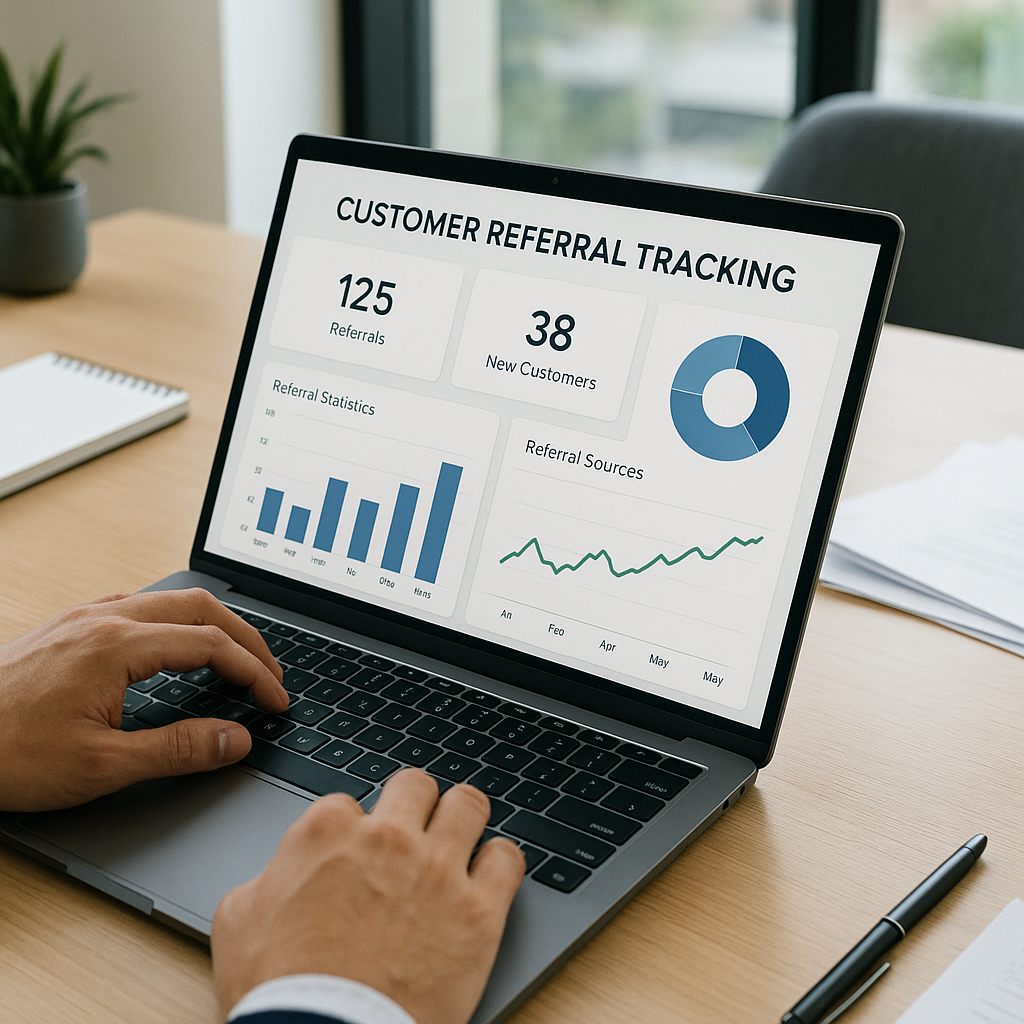
The Anatomy of a Successful Referral Program
1. Make It Easy to Understand
The number one killer of referral programs is complexity. If customers have to think about how it works, they won’t participate.
Your program should be explainable in one sentence: “Give $25, Get $25” or “Refer a friend, both get a free month.”
What makes it work:
- Clear value proposition for both parties
- No fine print or confusing tiers
- Instant understanding of the benefit
What kills it:
- “Earn points that can be redeemed for…”
- “After your third referral, you unlock…”
- “Terms and conditions apply…“
2. Reward Both Sides
One-sided rewards feel transactional. Two-sided rewards feel generous.
When you reward both the referrer and the new customer, you accomplish three things:
- The referrer feels good about sharing (they’re giving a gift, not just getting one)
- The new customer gets an incentive to act
- The relationship starts positively for everyone
Example structures:
- Service businesses: Both get $50 off next service
- Subscription products: Both get a free month
- Retail: Both get 20% off next purchase
- Professional services: Referrer gets credit toward future work; new client gets consultation discount
3. Choose the Right Incentive
Not all rewards work equally well. The best incentive depends on your business model and customer psychology.
Cash or account credit works well when:
- Your product/service has high repeat purchase potential
- Customers are price-sensitive
- You want to encourage ongoing engagement
Discounts or free services work well when:
- You want to drive specific behaviors (try a new service)
- Your margins are healthy enough to absorb the discount
- The perceived value exceeds the actual cost
Exclusive perks work well when:
- You have a strong brand community
- Status matters to your customers
- You can offer something money can’t buy (early access, VIP treatment)
Gift cards or third-party rewards work well when:
- Your business has infrequent purchases (real estate, major services)
- Cash feels awkward in your industry
- You want to celebrate without complicating your accounting
Building Your Referral System
Step 1: Identify Your Referral Moments
Not every customer interaction is equally ripe for referrals. Focus your asks on these high-conversion moments:
Peak satisfaction moments:
- Right after a successful outcome (surgery recovery going well, project delivered)
- After receiving a compliment (“That’s so kind—would you mind sharing that with others?”)
- During renewal conversations (they’re already affirming their choice)
Natural sharing moments:
- When customers ask for extra business cards “for a friend”
- When they’re posting about you on social media
- When they bring someone along to appointments
Trigger events:
- Post-purchase confirmation (while excitement is high)
- Positive review or NPS response (they’ve already expressed satisfaction)
- Milestone achievements (anniversary with your business, 10th visit)
Step 2: Remove All Friction
Every additional step you require cuts your referral rate in half. Audit your process ruthlessly:
Make sharing effortless:
- One-click sharing via text, email, or social
- Pre-written messages they can customize or send as-is
- Unique referral links that track automatically
Make redemption automatic:
- No codes to remember
- No forms to fill out
- Credits applied automatically when referral converts
Make tracking transparent:
- Clear visibility into referral status
- Notifications when referrals progress
- Easy access to accumulated rewards
Step 3: Ask at the Right Time
Most businesses either never ask for referrals (leaving money on the table) or ask too aggressively (annoying customers). Find the middle ground.
The right time to ask:
- After delivering value (not before)
- When the customer has expressed satisfaction
- When enough time has passed to see results
- When they naturally bring up recommending you
The wrong time to ask:
- During onboarding (they don’t know if you’re good yet)
- When there’s an unresolved issue
- Every single interaction (referral fatigue is real)
- Through impersonal mass emails

Making Referrals Part of Your Culture
Train Your Team
Your staff are the front line of your referral program. They need to:
Understand the why:
- How referrals help the business grow
- How growth benefits them (job security, opportunities)
- The cost difference between referrals and other channels
Know when to ask:
- Recognition of referral-ready moments
- Permission-based language that doesn’t feel pushy
- Natural integration into existing conversations
Script the ask: “We grow almost entirely through referrals from happy customers. If you know anyone who might benefit from what we do, we’d love to take care of them—and you’d both receive [benefit].”
Celebrate Publicly
Recognition can be as powerful as rewards. Create visibility around successful referrals:
- Thank referrers personally (a handwritten note goes far)
- Feature top referrers in your newsletter (with permission)
- Create a “referral champion” program for your best advocates
- Share referral success stories with your team
Follow Up Properly
The referred lead experience matters enormously. They’re coming in with high expectations set by someone they trust—don’t disappoint them.
When a referral comes in:
- Acknowledge the connection immediately (“Sarah mentioned you—we’re so glad she connected us”)
- Prioritize them in your pipeline (they’re higher quality leads)
- Provide exceptional service (they’ll report back to the referrer)
- Close the loop with the referrer (“Thanks again for sending John—he’s going to be a great fit”)
Measuring What Matters
Track These Metrics
Participation rate: What percentage of customers make at least one referral?
- Below 10%: Your program has visibility or friction problems
- 10-20%: Typical range for decent programs
- Above 20%: You’re doing something right
Referral conversion rate: What percentage of referred leads become customers?
- This should be significantly higher than other lead sources
- If it’s not, your referrers might not understand your ideal customer
Referral customer lifetime value: How do referred customers compare to others?
- They should have higher average order values
- They should have longer retention
- If not, examine who’s doing the referring
Program ROI: What’s the cost per acquisition through referrals vs. other channels?
- Factor in both reward costs and administrative overhead
- Compare to your paid acquisition costs
- Include the long-term value difference
Iterate Based on Data
Your first version won’t be perfect. Plan to optimize based on what you learn:
- Low participation? Test different incentives, simplify the process, or improve your ask timing
- High participation but low conversion? Your referred leads might not be qualified—clarify who’s a good fit
- Decent results but not growing? You might have hit your active referrer ceiling—time to reactivate dormant referrers
Common Mistakes to Avoid
Over-complicating the reward structure. Tiered rewards, point systems, and complex rules make customers disengage. Simple wins.
Forgetting to promote the program. Building it isn’t enough. You need consistent visibility through email signatures, receipts, website presence, and verbal reminders.
Treating referrals as transactions. The best referral programs feel like community building, not commerce. Lead with gratitude, not mechanics.
Ignoring program maintenance. Referral programs need regular attention—updating creative, recognizing top referrers, refreshing incentives when they go stale.
Failing to personalize. Generic referral emails get ignored. Personalized asks from real people get responses.
Getting Started This Week
You don’t need complex software or a big budget to launch a referral program. Start simple:
Day 1-2: Define your offer (what both parties get) and create basic materials (email template, one-pager)
Day 3-4: Identify your top 10 most satisfied customers and reach out personally to introduce the program
Day 5-7: Add referral mentions to your key customer touchpoints (email signature, post-service follow-up, receipt)
Ongoing: Track results, collect feedback, and iterate
The perfect referral program is the one that runs consistently, not the one with the most features. Start with something simple that you’ll actually execute, and build from there.
Build Growth Systems That Scale
A successful referral program is one example of a growth system—a repeatable process that generates predictable results. At Monsoft Solutions, we help businesses build these systems using AI, automation, and smart technology integration.
Whether you need help implementing referral tracking software, automating your follow-up sequences, or building customer communication systems that drive loyalty, let’s talk about what’s possible.