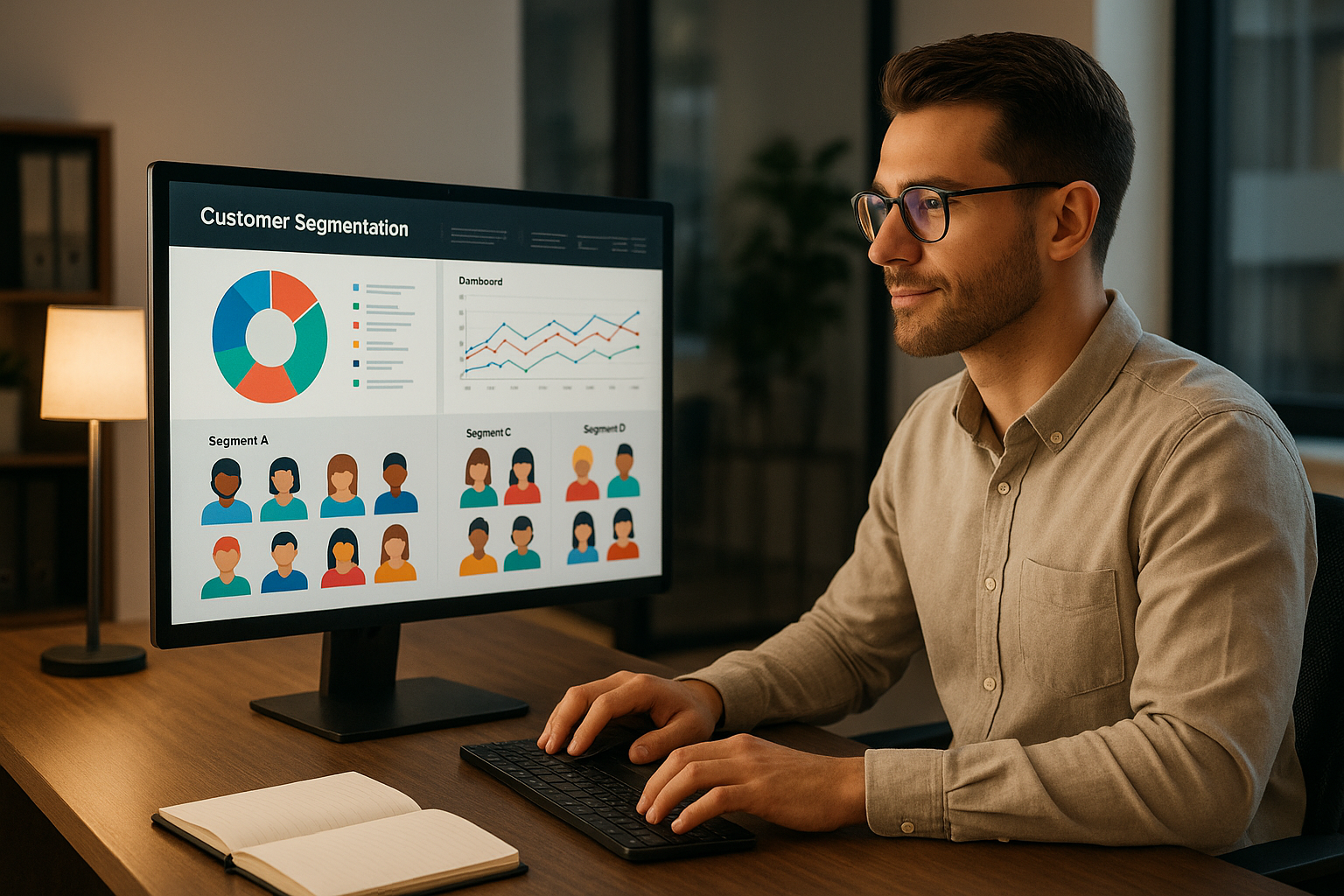
Not every customer is the same. You already know this intuitively — the loyal regular who buys every month is nothing like the one-time visitor who found you on Google, grabbed a deal, and disappeared. Treating them the same way — with the same emails, the same offers, the same messaging — is one of the most expensive mistakes in small business marketing.
Customer segmentation fixes this. It means dividing your customers into meaningful groups based on behavior, preferences, or purchase history — and then marketing to each group in a way that actually resonates.
The old way: hours of manual spreadsheet sorting. The new way: AI does it automatically, updates it continuously, and triggers the right campaign for the right customer at the right time.
This guide walks you through how AI-powered segmentation works, why it matters for small businesses in 2026, and how to put it in motion.
What Is Customer Segmentation (And Why AI Changes Everything)?
Customer segmentation is the practice of grouping customers by shared characteristics so you can communicate with each group more effectively.
Traditional segmentation was simple — demographics like age, location, or how much someone spent. Useful, but shallow. AI segmentation goes much deeper:
- Behavioral segmentation — What did they buy? When? How often? What did they click?
- RFM analysis — Recency, Frequency, Monetary value. Who’s your best customer right now?
- Predictive segments — Who’s about to churn? Who’s likely to buy again this week?
- Engagement scoring — Who opens every email? Who hasn’t clicked in 90 days?
The difference between manual and AI-powered segmentation isn’t just speed — it’s depth and dynamism. An AI system updates segment membership in real time. A customer who just made their third purchase automatically moves from “new buyer” to “repeat customer” and triggers a loyalty offer. Without you touching anything.
The Core Segments Every Small Business Should Use
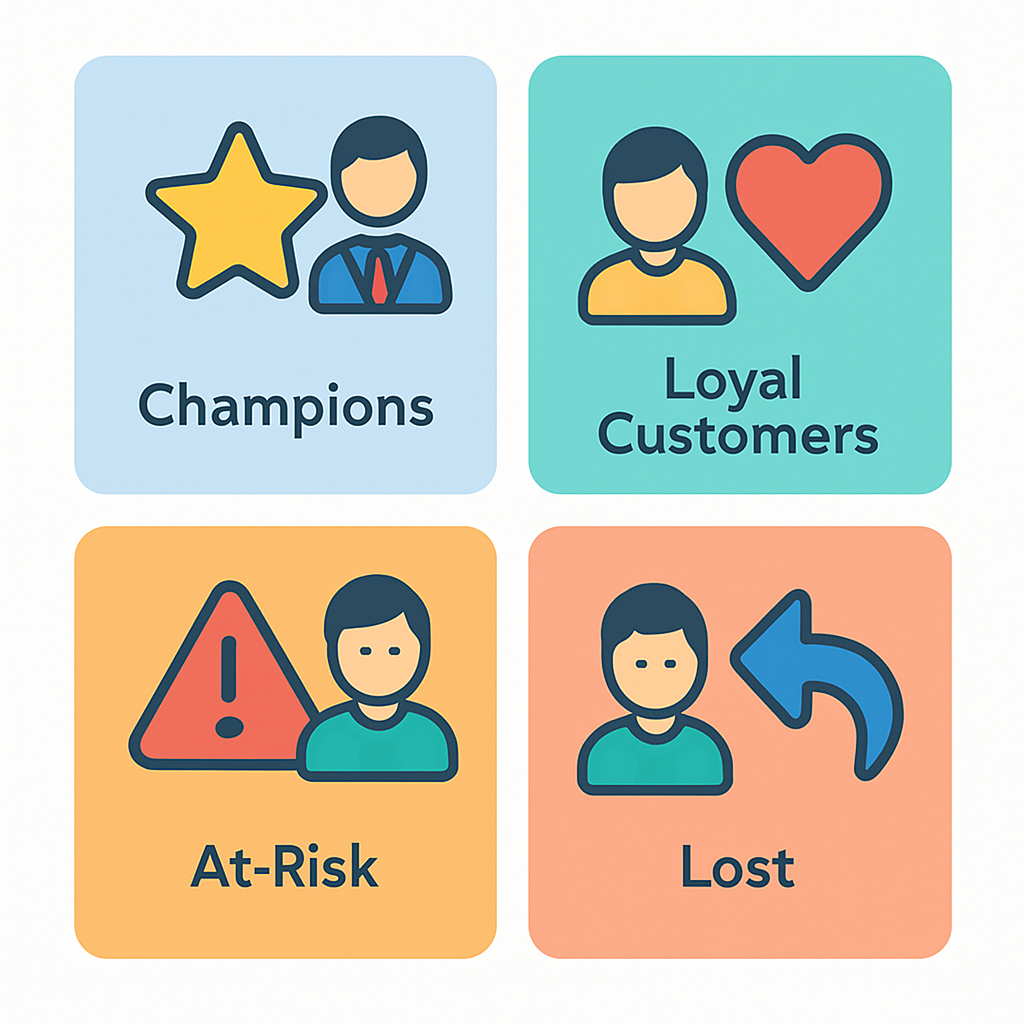
You don’t need dozens of segments to see results. Start with these five foundational groups:
1. Champions
Your best customers. They buy frequently, recently, and spend well. These are the people who refer friends, leave glowing reviews, and respond to every campaign. Your goal with Champions: reward them, keep them happy, and turn them into advocates.
Tactics: VIP loyalty perks, early access to new services, personal thank-you messages, referral incentives.
2. Loyal Customers
Regular buyers who aren’t quite Champions yet. They’re consistent but not as engaged. With the right nudge, many will become Champions.
Tactics: Upsell and cross-sell campaigns, loyalty program enrollment, feedback requests.
3. Promising / New Customers
Recent first-time buyers with strong potential. The goal is to convert a single purchase into a habit. Most businesses lose new customers through silence — a single automated welcome sequence can double retention here.
Tactics: Onboarding sequences, second-purchase incentives, education content about your services.
4. At-Risk Customers
People who used to buy regularly but have gone quiet. If your data shows someone who purchased monthly but hasn’t shown up in 60 days — that’s a signal worth acting on immediately.
Tactics: Win-back campaigns, “We miss you” offers, direct outreach, satisfaction surveys.
5. Lost Customers
They’ve been gone a long time. Not every lost customer is worth chasing, but even a 10–15% reactivation rate from a well-crafted campaign is pure revenue from a list you already own.
Tactics: Last-chance offers, major discount or surprise gift, simple direct message asking why they left.
How AI Builds and Updates These Segments Automatically
Manual segmentation is a snapshot — accurate the day you do it, stale the next. AI segmentation is a living system. Here’s how it works in practice:
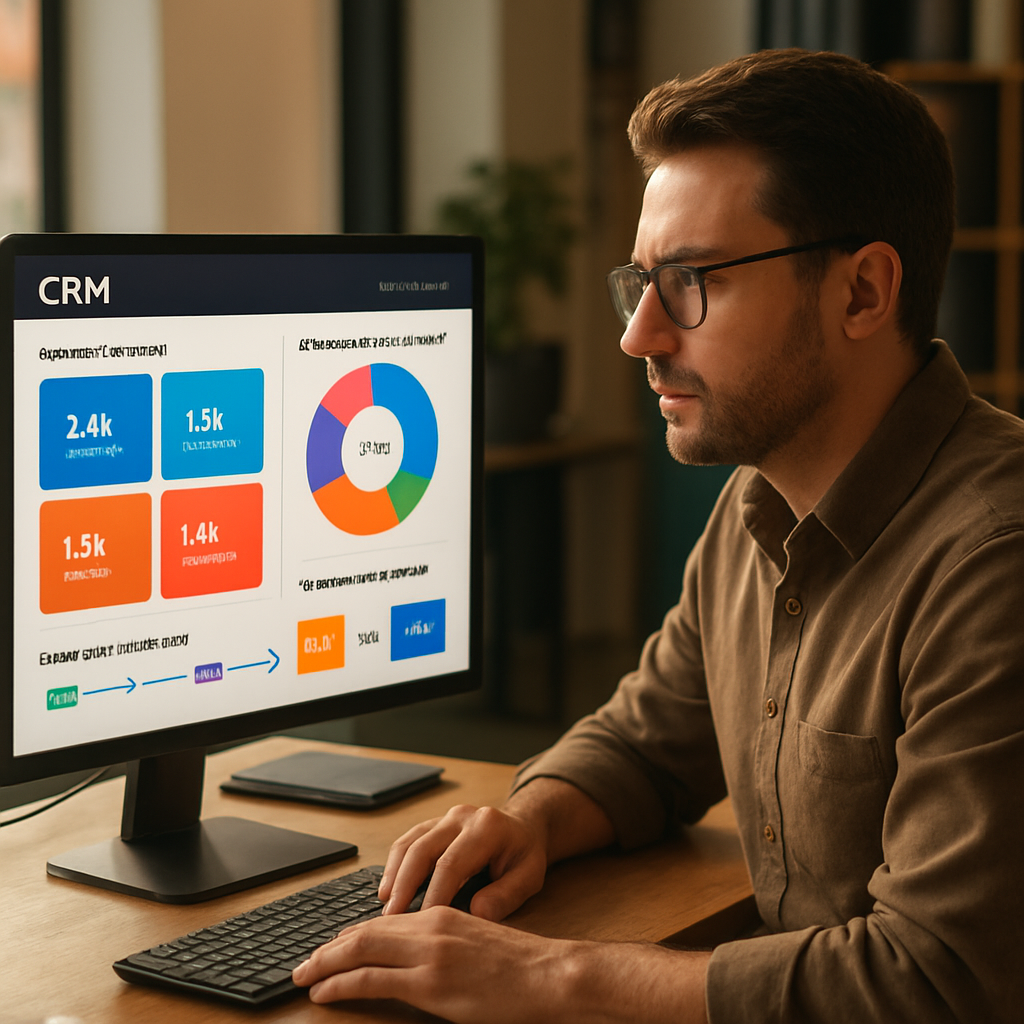
Your CRM collects behavioral data — purchases, email opens, website visits, appointment history, support tickets. Tools like ActiveCampaign, HubSpot, Klaviyo, and even platforms like GoHighLevel now have built-in AI that analyzes this data continuously.
The AI assigns segment membership based on rules you define or models it trains on your historical data. A customer who bought twice in 30 days and opened your last 4 emails? Champion. Someone who bought once six months ago and never opened an email since? At-risk or lost.
Segment changes trigger automated workflows. This is where the leverage lives. When a customer drops from “loyal” to “at-risk,” the CRM fires a re-engagement sequence — no one has to notice it happened and decide to do something. The system acts.
Reports show you which segments are growing or shrinking — so you know if your retention is improving, if you’re acquiring the right customers, or if a particular campaign is converting new buyers into loyalists.
The Real Impact: What Personalization Does to Your Numbers
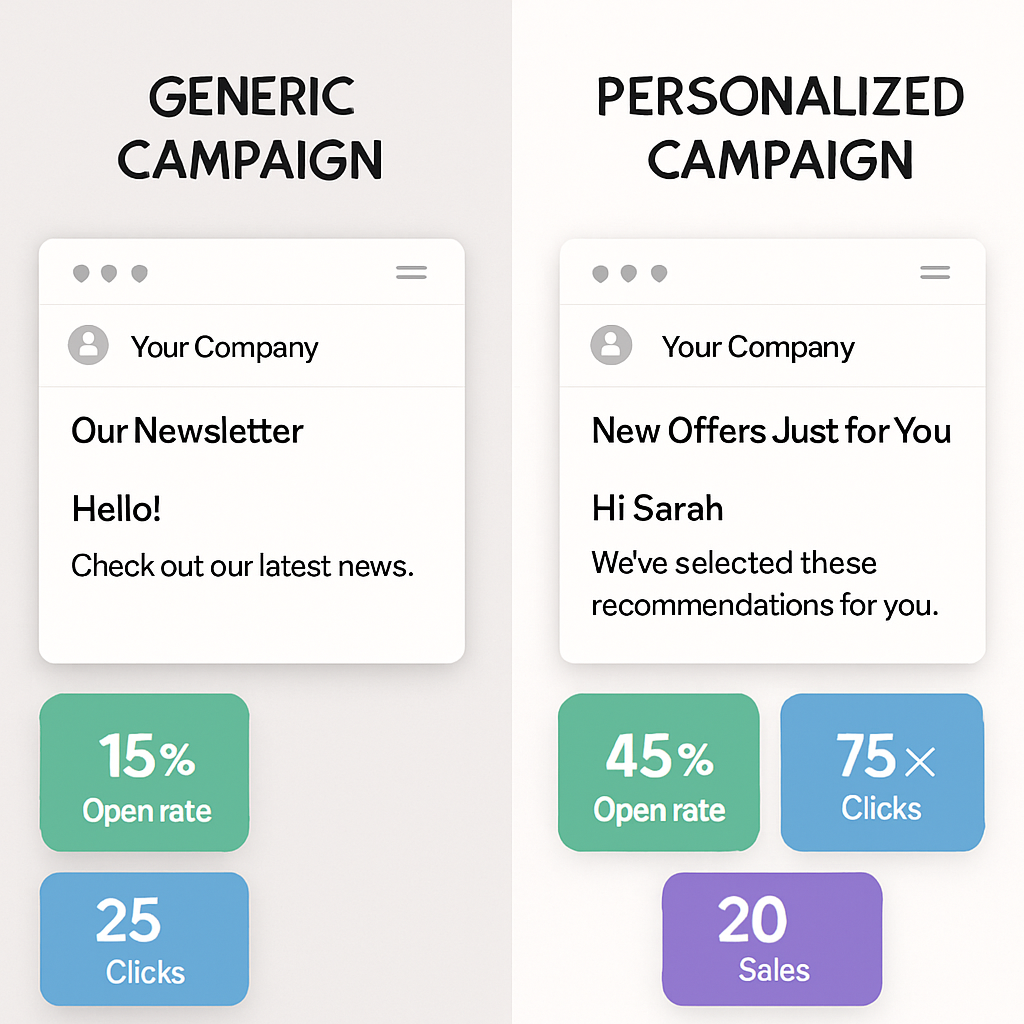
Generic marketing is getting harder to make work. Inboxes are crowded. Attention is scarce. The businesses winning the attention war aren’t the ones spending more — they’re the ones sending more relevant messages.
Here’s what the data consistently shows across industries:
- Segmented email campaigns generate 14–760% more revenue than broadcast campaigns to the full list
- Personalized subject lines lift open rates by 20–30%
- Behavior-triggered emails (like cart abandonment or post-purchase follow-up) convert 3–5x better than scheduled blasts
- Customers who feel personally acknowledged have higher lifetime value and refer more often
For a small service business — a med spa, a home services company, a fitness studio — these numbers translate directly to bookings, renewals, and referrals.
How to Implement AI Segmentation Without a Data Team
You don’t need a data scientist. Most modern CRM and email tools do this for you out of the box. Here’s how to get started:
Step 1: Get Your Customer Data in One Place
Segmentation only works when your data is consolidated. That means connecting your booking system, payment processor, email platform, and website analytics to a single CRM. Tools like Zapier or Make can bridge gaps between platforms that don’t natively integrate.
If your data lives in a spreadsheet, start there — export it into your CRM and map fields cleanly.
Step 2: Define Your Segments and Rules
Before you let AI run, decide what matters to your business. For most service businesses:
- Recency: When did they last buy or visit?
- Frequency: How many times in the last 6 months?
- Spend: What’s their total or average transaction value?
- Engagement: Do they open emails? Click? Respond to SMS?
Most CRMs let you create rule-based segments (e.g., “purchased 3+ times AND opened last 2 emails”) that automatically update membership in real time.
Step 3: Map Campaigns to Each Segment
Don’t just build segments and do nothing with them. Every segment needs at least one active campaign:
| Segment | Core Campaign |
|---|---|
| Champions | VIP rewards + referral ask |
| Loyal | Upsell / cross-sell + loyalty enrollment |
| Promising | Welcome sequence + second-purchase incentive |
| At-Risk | Win-back campaign + personal outreach |
| Lost | Last-chance offer |
Use automated follow-up sequences to handle this systematically — so when someone enters a segment, the campaign starts immediately.
Step 4: Let Behavior Drive the Timing
The most powerful segmentation isn’t based on dates — it’s based on actions (or inaction). Build triggers like:
- “Send a loyalty offer 3 days after a 3rd purchase”
- “Start win-back sequence if no purchase/visit in 45 days”
- “Send an upsell email 48 hours after a specific service”
This kind of CRM automation turns your customer database into a revenue engine that runs while you focus on everything else.
Step 5: Measure and Refine
Run each segment campaign for 30–60 days before adjusting. Track:
- Open and click rates by segment
- Conversion rates (bookings, purchases, form fills)
- Segment movement — are at-risk customers converting back?
- Revenue attribution — which segment campaigns generate the most return?
Use Google Analytics 4 and your CRM’s built-in reporting together to get the full picture.
Real-World Use Cases by Business Type
Med Spas and Aesthetic Practices
Segment by treatment history: Botox patients vs. filler patients vs. skin care clients. Send pre-season campaigns targeted to each group (“Summer is coming — refresh your glow”). Flag patients who haven’t rebooked in 90 days for a reactivation sequence. See patient reactivation strategies for the full playbook.
Home Services (HVAC, Plumbing, Landscaping)
Segment by job type and seasonal patterns. A customer who got an AC tune-up in spring should receive a winterization offer in the fall. Lapsed customers from two years ago might respond to a “We’re in your neighborhood” campaign.
Retail and E-commerce
Segment by product category and purchase frequency. Someone who bought running shoes should hear about new arrivals in that category, not unrelated products. Use AI to identify cross-sell opportunities based on what similar customers bought next.
Fitness Studios and Wellness Centers
Track attendance drop-off. A member who used to come 4 times a week but hasn’t shown up in 3 weeks is at risk. An automated SMS — “Hey, we miss you! Here’s a free class to get back on track” — can save that member.
The Tools That Make This Easy
You don’t need enterprise software to segment your customers with AI. Here are the platforms that small businesses actually use:
ActiveCampaign — Best-in-class behavior-based segmentation with powerful automation workflows. Great for email-heavy businesses.
Klaviyo — Built for retail and e-commerce. Predictive analytics and segment-based flows are its core strength.
HubSpot — Full CRM with segmentation, email, and reporting in one platform. Steeper learning curve but comprehensive.
GoHighLevel — Popular among agencies and service businesses. Solid segmentation + SMS + pipeline management in one tool.
Mailchimp — Accessible entry point with AI-powered send-time optimization and basic behavioral segments.
Most of these connect directly to booking tools like Mindbody, Jane App, or your Shopify/WooCommerce store — so the data flows automatically.
What to Avoid
Don’t over-segment. Starting with 15 micro-segments and 15 campaigns is a recipe for paralysis. Start with 3–4 core segments. Get those working before you add complexity.
Don’t set and forget. Segments drift. A campaign that crushed it last quarter might underperform today because your customer mix changed. Review quarterly.
Don’t skip the creative. Segmentation is the targeting. The message still has to land. Personalize the content, not just the list — use the customer’s name, reference their specific history (“It’s been 60 days since your last visit…”), and make the offer feel relevant.
Don’t ignore privacy. Be transparent about how you use customer data. Follow GDPR/CAN-SPAM guidelines for email, and give customers easy opt-out options. Good segmentation respects the relationship — it doesn’t exploit it.
Making Segmentation Work for Your Business
The shift from “send the same email to everyone” to “send the right message to the right person” is one of the highest-ROI moves a small business can make. You’re working with the same list — you’re just being smarter about it.
Start simple:
- Define 3–4 segments based on purchase recency and frequency
- Connect your CRM to your booking or payment platform
- Build one campaign per segment — even a simple 2-email sequence per group
- Let it run for 30 days and check the numbers
From there, you add layers — AI lead scoring, predictive churn models, personalized landing pages, dynamic ad audiences. But the foundation is the same: know your customers, talk to each group differently, and automate the follow-through.
Want help setting up customer segmentation for your business? Monsoft Solutions builds marketing automation systems for small businesses in Southwest Florida and beyond — from CRM setup to automated campaigns. Contact us to see what’s possible.