
Your practice delivers exceptional results. Your patients leave transformed. Yet somehow, potential patients searching for “best plastic surgeon near me” never find you. Meanwhile, competitors with inferior results dominate the first page of Google.
Digital marketing for plastic surgeons in 2026 requires a strategic blend of HIPAA-compliant automation, compelling visual content, and conversion-focused patient experiences. This comprehensive guide covers everything from building your online presence to automating patient communication—all while protecting patient privacy and maintaining the professional standards your specialty demands.
What Makes Plastic Surgery Marketing Different?
Marketing an aesthetic practice isn’t like marketing any other service. You’re selling transformation, confidence, and often life-changing results. Your prospective patients research extensively, compare providers meticulously, and need significant trust before booking a consultation for a $15,000+ procedure.
Three factors make plastic surgery marketing unique:
- High-stakes decisions — Patients invest weeks or months researching before committing
- Visual proof requirements — Before/after results drive decision-making more than any other factor
- HIPAA compliance — Every marketing touchpoint must protect patient health information
The practices winning in 2026 aren’t just the best surgeons—they’re the practices that master the intersection of clinical excellence and digital visibility.
Building Your Digital Foundation
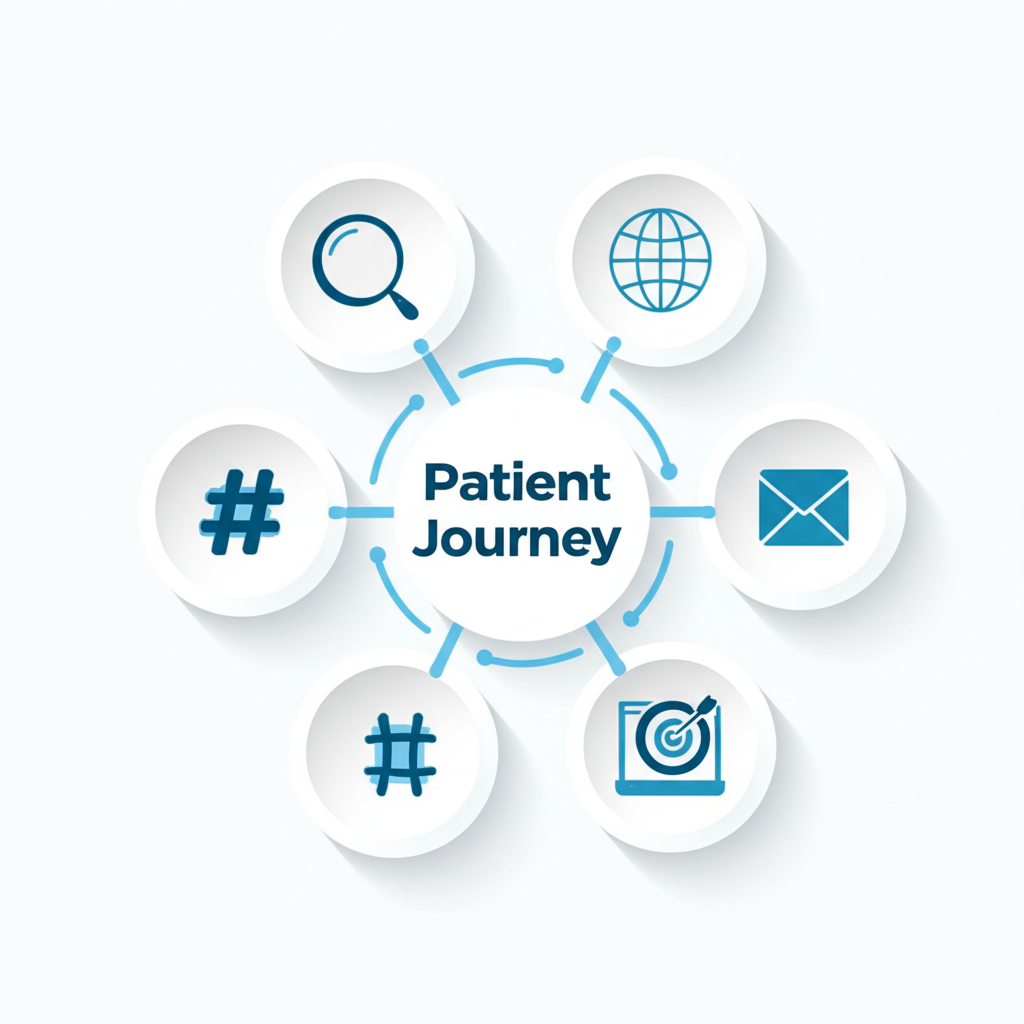
Before diving into tactics, your practice needs a solid digital foundation. Think of this as the infrastructure that makes every other marketing effort more effective.
Website Essentials for Aesthetic Practices
Your website is your 24/7 consultation coordinator. In 2026, patients expect:
Speed and mobile optimization — 67% of aesthetic procedure research happens on mobile devices. If your site takes more than 3 seconds to load, you’ve lost that potential patient to a competitor.
Clear procedure information — Each procedure page should answer the questions patients are afraid to ask: realistic recovery timelines, honest pricing ranges, and what results they can actually expect.
Prominent before/after galleries — According to our work with aesthetic practices, properly optimized before/after galleries generate 3-4x more consultation requests than practices with limited visual proof.
Frictionless booking — Every page should have a clear path to schedule a consultation. The best-performing practices see 40% higher conversion rates with single-click booking options.
HIPAA-compliant forms — All patient intake forms, contact submissions, and communication tools must use encrypted, compliant systems. There’s no marketing win worth a HIPAA violation.
Local SEO: The Foundation of Patient Acquisition
For most plastic surgery practices, the majority of consultations come from patients within a 50-mile radius. Local SEO ensures you appear when they search.
Google Business Profile optimization is non-negotiable. Your profile should include:
- Accurate practice information (hours, address, phone)
- High-quality photos of your office, staff, and results (with consent)
- Regular posts highlighting procedures and patient stories
- Active review management with timely, professional responses
Beyond Google, ensure your practice appears consistently across healthcare directories like Healthgrades, RealSelf, and Vitals. Inconsistent information (different phone numbers or addresses) damages your local search rankings.
Technical SEO for Medical Practices
Technical SEO may not be glamorous, but it determines whether Google trusts your site enough to rank it. Key areas for aesthetic practices:
Schema markup — Implement LocalBusiness, Physician, and MedicalBusiness schema to help search engines understand your practice. This also enables rich snippets showing ratings and business hours directly in search results.
Page speed optimization — Medical sites often struggle with speed due to high-resolution imagery. Use modern image formats (WebP, AVIF), lazy loading, and content delivery networks.
Security — HTTPS is mandatory. But beyond the basics, consider implementing additional security headers and regular vulnerability scanning. Patients trust sites that take security seriously.
Content Marketing That Converts
Content marketing for plastic surgeons serves two purposes: establishing expertise and answering the questions patients search for. The practices dominating organic search in 2026 publish consistent, patient-focused content.
Procedure-Focused Content Strategy
Each procedure you offer deserves comprehensive content coverage:
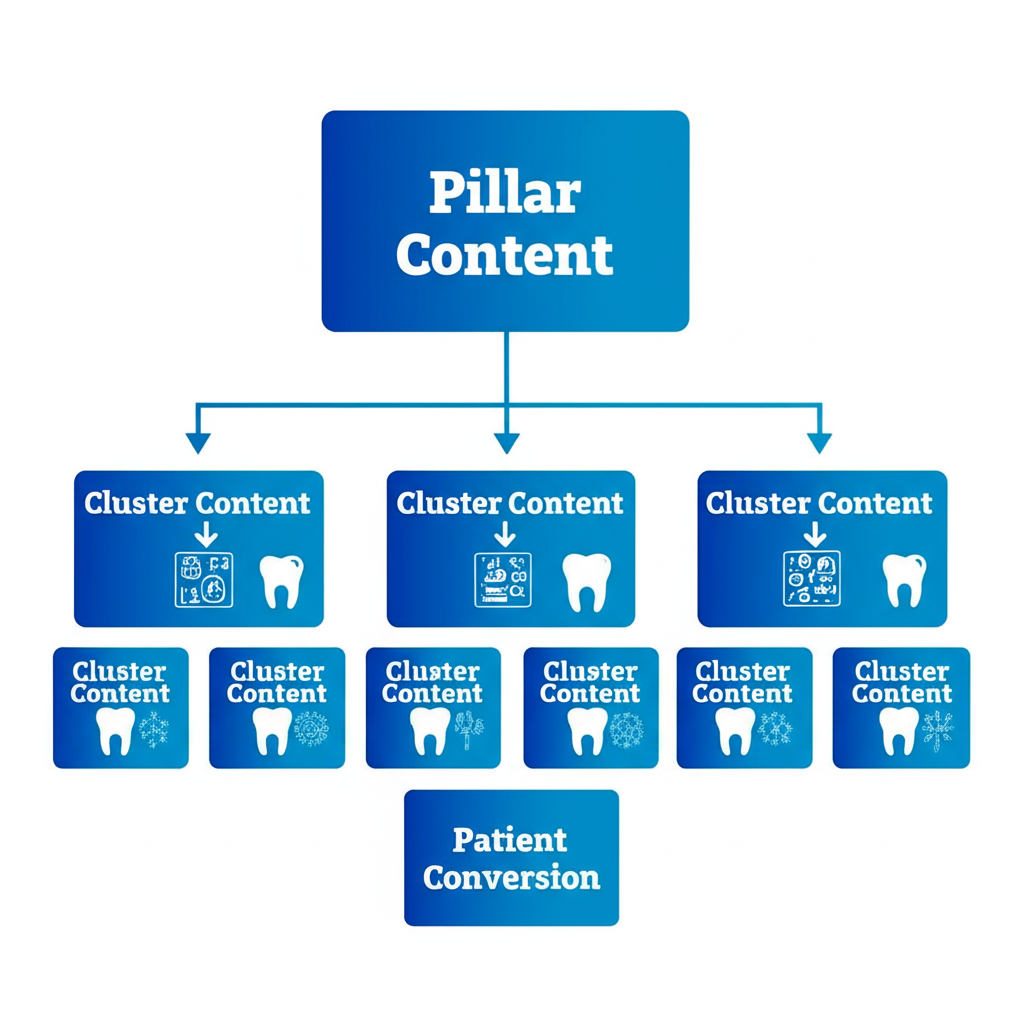
Pillar content — Create definitive guides for your most important procedures (rhinoplasty, breast augmentation, facelifts). These 3,000+ word resources should cover everything a prospective patient might ask.
Supporting content — Build clusters of articles around each pillar: recovery guides, cost breakdowns, candidate assessment, technique comparisons, and common concerns.
FAQ optimization — Structure content to capture featured snippets. When someone searches “how long is breast augmentation recovery,” you want your practice’s answer appearing at the top of Google.
Video Content: The Differentiator
Patients want to see you before they meet you. Video content builds trust faster than any other medium. For detailed strategies, see our guide on video marketing for aesthetic practices.
High-impact video content includes:
- Procedure explainers — Walk patients through what to expect, filmed in your office
- Patient testimonials — With written consent, share transformation stories (always HIPAA-compliant)
- Surgeon introductions — Let your personality and expertise come through
- Behind-the-scenes — Show your technology, your team, and your commitment to patient care
The aesthetic practices seeing the highest patient acquisition rates in 2026 publish at least 2-4 videos per month across YouTube, Instagram, and TikTok.
Blogging for Patient Education
Your blog isn’t about keywords—it’s about answering the questions keeping potential patients up at night. Effective blog topics include:
- Realistic recovery timelines for specific procedures
- How to evaluate before/after photos critically
- Questions to ask during a consultation
- Understanding surgical technique differences
- Post-operative care guides
Every blog post should link to relevant procedure pages and include clear calls-to-action for scheduling consultations.
HIPAA-Compliant Social Media Marketing
Social media is where aesthetic practices build relationships with prospective patients—but it’s also where HIPAA violations happen. Our comprehensive guide on HIPAA-compliant social media marketing covers this in depth, but here are the essentials:
Platform Selection for Aesthetic Practices
Not all platforms deserve equal attention:
Instagram remains the primary platform for aesthetic practices in 2026. Visual before/afters, educational Reels, and Stories showing daily practice life all perform well. Focus 50-60% of your social efforts here.
TikTok reaches younger demographics considering preventative treatments. Educational content performs better than promotional content—explain procedures, debunk myths, and show your personality.
Facebook still matters for patients 45+, who represent a significant portion of facelift and body contouring consultations. Your Facebook presence should emphasize credibility and patient testimonials.
YouTube is technically a search engine, not just social media. Optimize videos for search terms like “[procedure] recovery day by day” or “what does [procedure] cost in [city].”
Content That Works (and Stays Compliant)
The golden rule: Never share patient information without explicit, documented written consent. This includes photos, procedure details, testimonials, and even acknowledging someone is a patient.
Safe, high-performing content categories:
- Educational procedure information
- Technology and technique demonstrations (without patients)
- Staff introductions and practice culture
- General aftercare tips (not patient-specific)
- Responses to common questions (generic, not directed)
With proper consent forms, you can share:
- Before/after galleries (face obscured or unobscured depending on consent level)
- Patient testimonial videos
- Transformation stories
Always maintain written consent documentation and implement a regular review process for social media compliance.
Social Media Automation (The Right Way)
Automation should enhance your social media presence, not replace genuine engagement. Compliant automation includes:
- Scheduling educational posts in advance
- Using approved response templates for common inquiries
- Automating post-consultation review requests (with proper consent)
- Tracking engagement metrics and sentiment
Never automate actual patient communication or responses that could inadvertently confirm patient status.
Patient Review Management
In plastic surgery, reviews directly impact revenue. A practice moving from 4.2 to 4.5 stars typically sees a 15-20% increase in consultation requests.
Generating Reviews Systematically
The best time to request a review is when patients are most satisfied—typically 2-4 weeks post-procedure when results are visible and recovery is complete.
Effective review generation approaches:
- Automated post-procedure follow-up — Send satisfaction surveys first; happy patients receive review links
- Staff prompts — Train your team to mention reviews during positive interactions
- Thank-you cards — Include review request cards with QR codes in post-procedure care packages
- Email sequences — Follow up at key milestones (1 week, 1 month, 6 months post-procedure)
For automation strategies, see our guide on review generation for local businesses.
Responding to Reviews Professionally
Every review deserves a response—positive or negative.
For positive reviews:
- Thank the patient sincerely
- Keep responses brief and professional
- Never confirm procedure details in public responses
- Personalize without revealing PHI
For negative reviews:
- Respond promptly (within 24-48 hours)
- Acknowledge their experience without being defensive
- Move the conversation offline (“Please contact our patient care team at…”)
- Never reveal patient information or procedure details
- Document everything for your records
A professional response to criticism often impresses prospective patients more than the original review concerns them.
Paid Advertising for Patient Acquisition
Organic strategies take time. Paid advertising accelerates patient acquisition when executed strategically.
Google Ads for Aesthetic Practices
Google Ads remain the highest-converting paid channel for plastic surgery practices. Key strategies:
Search campaigns — Target procedure-specific keywords (“rhinoplasty surgeon [city]”) and problem-aware keywords (“fix crooked nose”).
Performance Max campaigns — Google’s AI-driven campaigns can effectively reach patients across Search, Display, YouTube, and Gmail—but require proper conversion tracking and audience signals.
Remarketing — Website visitors who don’t convert immediately can be retargeted with display ads, keeping your practice top-of-mind during their research phase.
Important: Medical advertising on Google requires LegitScript certification for certain procedures. Ensure compliance before running ads for any restricted procedures.
Meta Advertising (Facebook/Instagram)
Meta platforms excel at generating awareness and demand among patients who haven’t started actively searching.
Interest-based targeting — Reach users interested in beauty, skincare, self-improvement, and related topics. Layer demographics (income, age, location) for efficiency.
Lookalike audiences — Upload your existing patient list (properly hashed and compliant) to find similar prospective patients.
Video ads — Video content outperforms static images by 30-50% in aesthetic advertising. Educational content performs better than promotional messaging.
Lead generation ads — Capture contact information directly within Facebook/Instagram without requiring a website visit. Follow up immediately—lead response time dramatically impacts conversion rates.
Budget Allocation Guidelines
For a practice investing $10,000/month in paid advertising, a typical effective allocation:
- 50-60% Google Ads (highest conversion intent)
- 25-35% Meta Ads (awareness and demand generation)
- 10-15% Retargeting across platforms
Track cost-per-consultation and cost-per-procedure (not just cost-per-click) to understand true ROI.
Marketing Automation for Patient Experience
The practices growing fastest in 2026 aren’t just marketing better—they’re automating the patient experience to ensure no lead falls through the cracks.
After-Hours Lead Capture
75% of patients research aesthetic procedures outside business hours. If your practice can’t respond until the next morning, competitors who respond immediately capture that consultation.
Solutions include:
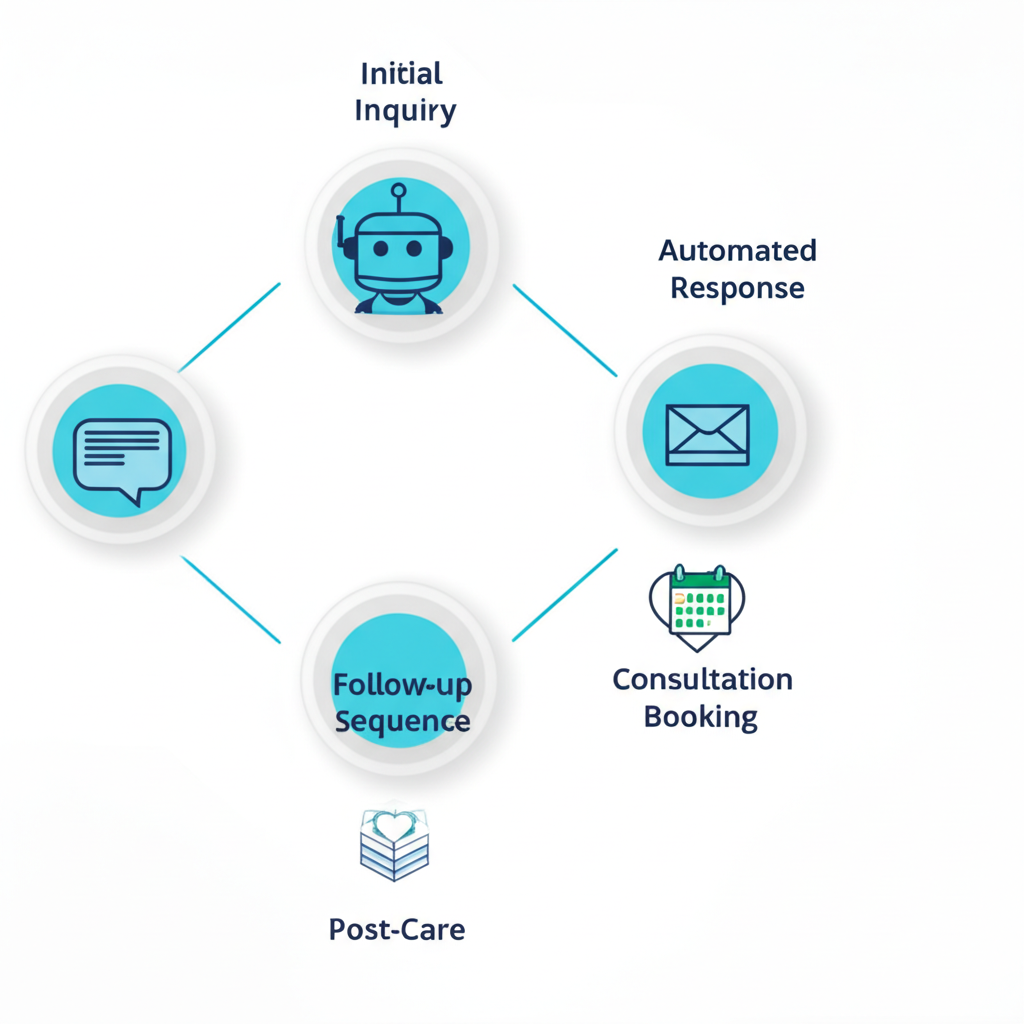
- AI-powered chat — Answer common questions and capture contact information 24/7
- Automated email responses — Acknowledge inquiries immediately with next-steps information
- Smart forms — Collect key information (procedure interest, timeline, contact preference) to enable effective follow-up
For implementation strategies, see our guide on after-hours lead capture.
Consultation Booking Optimization
Every step between inquiry and booked consultation is an opportunity for dropout. Optimization focuses:
Online scheduling — Allow patients to book consultations directly, without phone calls. Practices with online booking see 30-40% higher consultation rates.
Calendar optimization — Reduce scheduling conflicts and no-shows with smart availability management and automatic reminders.
Pre-consultation preparation — Send educational materials, forms, and expectations before the appointment. Prepared patients convert at higher rates.
For detailed booking strategies, see our consultation booking optimization guide.
Automated Follow-Up Sequences
Many patients need multiple touchpoints before committing to a consultation. Automated sequences maintain momentum:
Post-inquiry sequence:
- Immediate acknowledgment (email/SMS)
- Educational content related to expressed procedure interest
- Social proof (testimonials, before/afters)
- Consultation offer with clear booking path
- Follow-up at 3, 7, 14, and 30 days if no booking
Post-consultation sequence:
- Thank you and next-steps reminder
- Financing information
- Additional Q&A resources
- Gentle follow-up if no procedure scheduled
Automation should feel personal, not robotic. Use dynamic content, personalization, and appropriate timing. For implementation details, see our guide on automated follow-up sequences.
Patient Communication Automation
Beyond marketing, automation improves the entire patient experience:
- Pre-operative instructions and checklists
- Day-of-procedure reminders and preparation tips
- Post-operative check-ins and recovery guidance
- Milestone celebrations (1 month, 6 months, 1 year post-procedure)
- Recall campaigns for maintenance treatments
All automation must maintain HIPAA compliance. Patient health information should only flow through compliant, encrypted channels with proper business associate agreements.
For comprehensive automation strategies, see our guide on patient onboarding automation.
Measuring What Matters
Effective marketing requires measurement. But vanity metrics (social followers, website traffic) don’t pay the bills. Focus on metrics that correlate with revenue.
Key Performance Indicators for Aesthetic Practices
Lead volume — Total inquiries by channel (website, phone, social, paid)
Cost per lead — Marketing spend divided by lead volume, segmented by channel
Lead-to-consultation rate — Percentage of leads who schedule and attend consultations
Consultation-to-procedure rate — Percentage of consultations resulting in booked procedures
Average procedure value — Revenue per procedure, ideally tracked by referring source
Lifetime patient value — Total revenue from each patient relationship over time
Cost per acquisition — Total marketing cost to acquire a paying patient
Building Your Analytics Infrastructure
Most practices track too little or track the wrong things. Essential infrastructure includes:
Call tracking — Unique phone numbers per channel reveal which marketing generates actual calls
Form tracking — Connect website form submissions to marketing campaigns
CRM integration — Track leads through consultation to procedure with clear attribution
Revenue attribution — Connect marketing spend to actual procedure revenue, not just leads
Consider working with a marketing partner who understands healthcare analytics and can build proper tracking infrastructure.
Frequently Asked Questions
How much should a plastic surgery practice spend on marketing?
Most successful practices invest 8-15% of revenue in marketing, with newer practices or those in competitive markets often spending closer to 15-20% during growth phases. The key is tracking ROI—a $10,000 monthly investment generating $100,000 in procedures is far more valuable than a $3,000 spend generating nothing.
What’s the most important digital marketing channel for plastic surgeons?
Google search (organic and paid) typically drives the highest-intent traffic, but Instagram builds trust and desire that influences patient decisions. The most successful practices invest in both, using social media for awareness and search for conversion.
How do we balance patient privacy with showcasing results?
Always obtain explicit, documented consent before sharing any patient information. Create clear consent tiers (facility use only, website use, social media use, media use) and track consent status rigorously. When in doubt, don’t share.
How long until digital marketing shows results?
Paid advertising can generate leads within days. SEO and content marketing typically require 3-6 months of consistent effort before showing significant results. Most practices should plan for a 6-12 month horizon before evaluating overall digital marketing effectiveness.
Should we handle marketing in-house or hire an agency?
Practices with fewer than 3-5 surgeons typically lack the capacity for effective in-house marketing. Consider agencies or partners with specific healthcare and aesthetic practice experience—general marketing agencies often struggle with HIPAA compliance and medical advertising regulations.
Taking Action This Week
Digital marketing success doesn’t happen overnight, but it does happen through consistent action. Here’s where to start:
-
Audit your current presence — Google your practice and top procedures. What do patients see? Is your Google Business Profile complete and current?
-
Identify your biggest gap — Is it visibility (SEO/advertising), credibility (reviews/content), or conversion (website/follow-up)? Focus resources on the highest-impact area first.
-
Implement one automation — Even simple automations like automated appointment reminders reduce no-shows and improve patient experience.
-
Create a content calendar — Plan one month of social media content focused on education and trust-building.
-
Set up tracking — You can’t improve what you don’t measure. At minimum, track lead sources and consultation rates.
The practices thriving in 2026 aren’t necessarily the largest or most established—they’re the practices that treat marketing as essential infrastructure rather than an afterthought.
Ready to transform your practice’s digital presence? Contact our team to discuss HIPAA-compliant marketing automation tailored for aesthetic practices. Or explore our healthcare marketing services to learn how we help practices like yours grow.