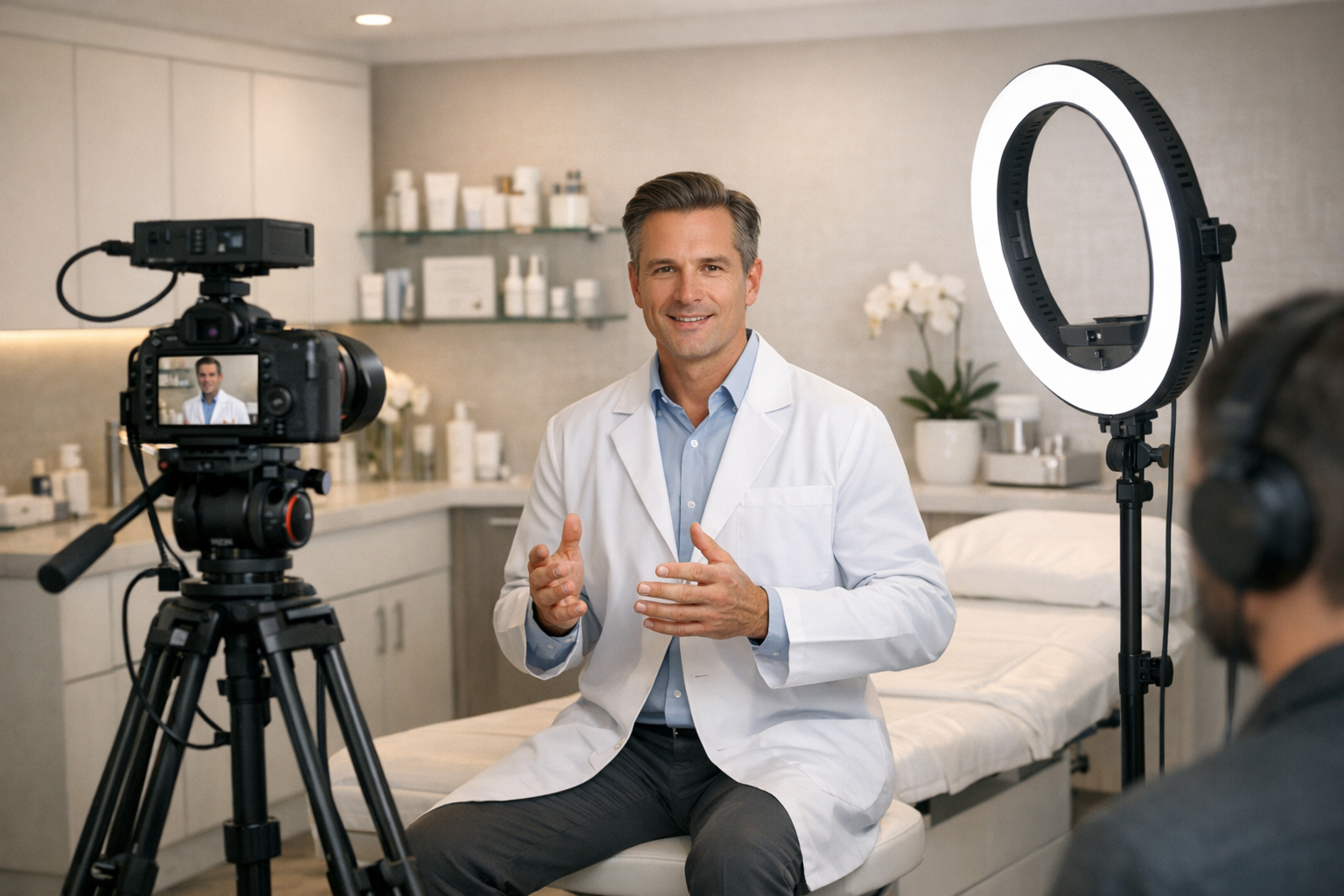
Video marketing for aesthetic practices is the strategic use of video content—patient testimonials, procedure explanations, before-and-after reveals, and educational content—to build trust with prospective patients and convert more consultations. In 2026, practices that leverage video effectively see 34% higher consultation booking rates and significantly stronger patient relationships before they even walk through the door.
If you’re running an aesthetic practice and relying solely on static images and written content, you’re leaving consultations on the table. Patients researching procedures like rhinoplasty, breast augmentation, or body contouring want to see the surgeon speak, hear from real patients, and understand exactly what to expect.
This guide covers the video content types that drive real results, HIPAA-compliant production strategies, and a practical implementation roadmap for practices of any size.
Why Video Outperforms Every Other Content Type
Aesthetic procedures are deeply personal decisions. Patients aren’t just buying a service—they’re trusting someone with their appearance and, often, their confidence. Video addresses this uniquely by:
- Building familiarity before the consultation: Patients feel like they already know you
- Demonstrating expertise visually: Show, don’t just tell
- Addressing anxieties proactively: Walk through procedures, recovery, what to expect
- Creating emotional connection: Real patient stories resonate far more than written reviews
The data supports this shift. According to recent healthcare marketing research, 84% of patients say video content influenced their choice of provider, and practices with video see an average 27% increase in website time-on-page—a key factor for SEO and conversion.
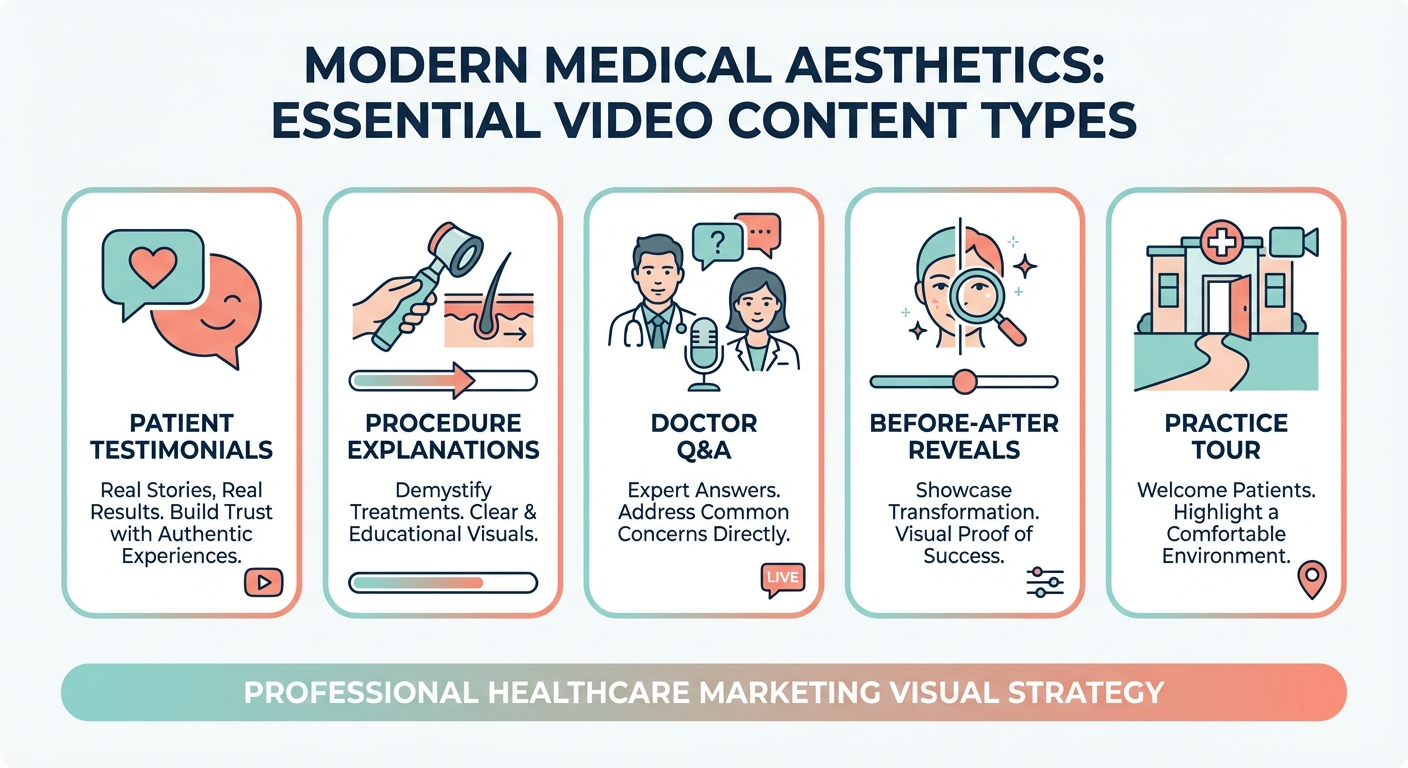
The 5 Video Types That Drive Consultation Bookings
Not all video content is created equal. Here are the formats that consistently perform for aesthetic practices:
1. Patient Testimonial Videos
Nothing converts like real patients sharing real experiences. A genuine testimonial where a patient describes their journey—from initial anxiety through recovery to results—creates social proof that no amount of marketing copy can match.
Best practices:
- Film 2-4 weeks post-recovery when results are visible and enthusiasm is high
- Ask patients to describe their initial concerns and how they were addressed
- Keep testimonials under 90 seconds for social media, 2-3 minutes for your website
- Always obtain written consent with explicit HIPAA-compliant authorization
2. Procedure Explanation Videos
Walk potential patients through what happens during a procedure. These videos answer questions patients are too embarrassed to ask during initial calls and position you as the educational authority.
What to include:
- Step-by-step overview (appropriate for patient viewing)
- Anesthesia options and what patients will feel
- Typical recovery timeline with realistic expectations
- Who is and isn’t a good candidate
3. Before-and-After Reveal Videos
Static before-and-after images are powerful, but video reveals create emotional impact. Consider slow transitions, multiple angles, and the patient’s own reaction to seeing their results.
HIPAA note: Always obtain explicit written consent that specifies video use, where it will be published, and for how long. Document this carefully—it’s different from general photo consent.
4. Surgeon Q&A and Educational Content
Address common questions in short, searchable videos. “What’s the difference between a mini facelift and a full facelift?” or “How long do breast implants last?” These rank in YouTube search and position you as the go-to expert.
5. Practice Tour and Team Introduction
Patients want to know what they’re walking into. A brief tour of your facilities—consultation rooms, operating suites, recovery areas—reduces anxiety. Introduce key team members so patients recognize friendly faces on arrival.
HIPAA Compliance for Video Marketing
Creating video content in healthcare requires careful attention to patient privacy. Here’s how to stay compliant:
Consent Requirements
- Written authorization: Use a specific video/photo release form, not just your general HIPAA consent
- Specify usage: Detail exactly where videos will be published (website, YouTube, Instagram, etc.)
- Time limits: Consider whether consent is perpetual or time-limited
- Revocation rights: Patients must be able to withdraw consent (though you can’t undo past usage)
Protected Health Information (PHI)
- Never include patient names, dates of birth, or other identifiers without explicit consent
- Be careful with background elements that might reveal PHI (charts, screens, paperwork)
- Review all footage before publishing for inadvertent disclosures
Third-Party Considerations
If using external videographers or editors, ensure they sign Business Associate Agreements (BAAs). This includes freelance editors, production companies, and even marketing agencies handling raw footage.
For a deeper dive into compliant patient communication technology, see our guide on AI chatbots for HIPAA compliance.
Production Quality: What Actually Matters
You don’t need a Hollywood production budget, but quality does matter. Here’s where to invest—and where to save:
Worth the Investment
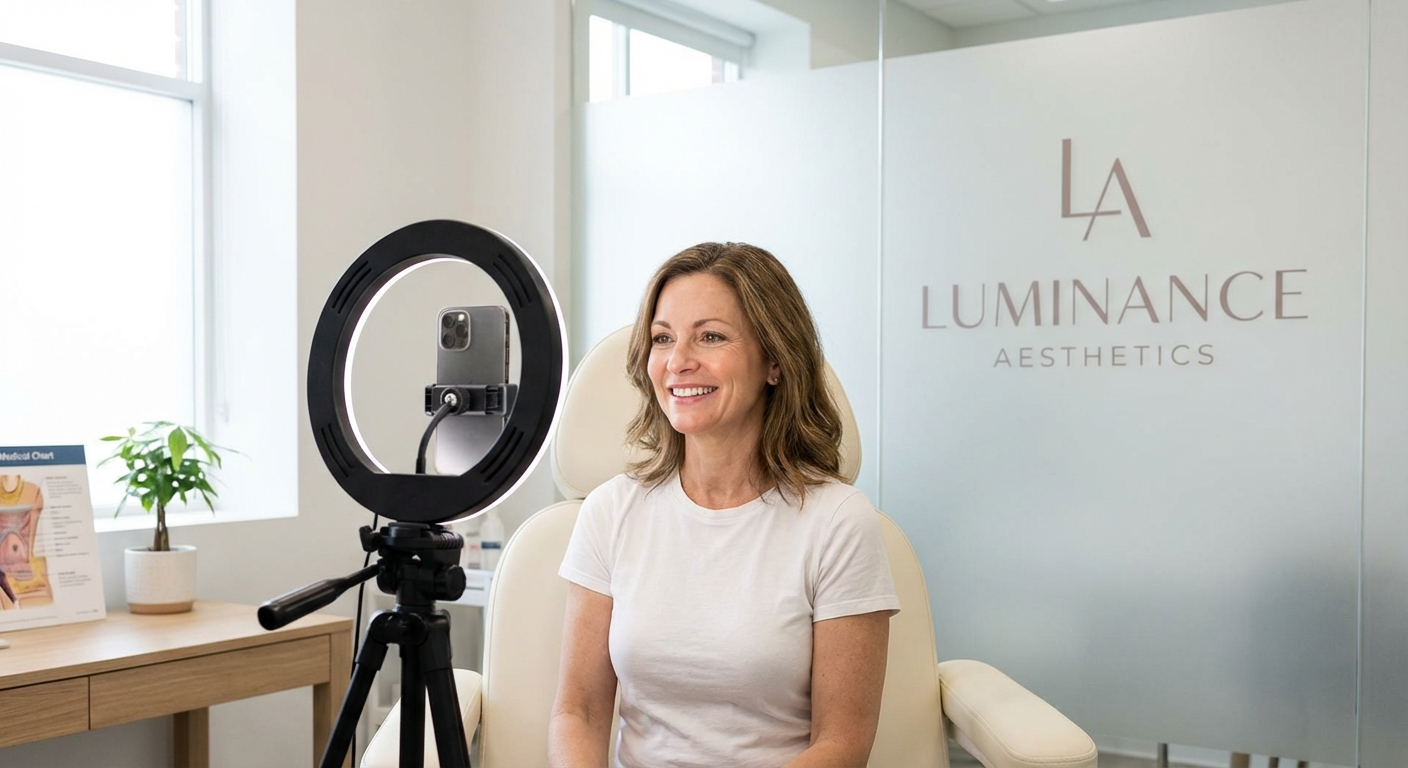
- Good lighting: A ring light or softbox setup makes anyone look professional ($50-200)
- Clear audio: A lavalier microphone for interviews ($30-100)
- Stable footage: A basic tripod or smartphone gimbal ($30-150)
- Clean backgrounds: Consistent, branded backdrop or well-organized office space
Skip These Early On
- Expensive cameras (modern smartphones shoot excellent video)
- Professional studios (your actual practice is more authentic)
- Heavy editing and effects (polished but genuine beats overproduced)
Practical Setup Recommendations
For patient testimonials: Ring light, lavalier mic clipped to patient, smartphone on tripod, clean consultation room background. Total equipment cost: under $200.
For procedure explanations: Same setup, with the surgeon using visuals or diagrams as needed. Consider a whiteboard or digital display for drawing.
For before-and-after reveals: Consistent lighting and positioning across all captures. Create a “photo station” with marked floor positions for repeatability.
Where to Publish Your Videos
Different platforms serve different purposes:
Your Website
- Embed on relevant service pages (rhinoplasty videos on rhinoplasty page)
- Create a dedicated “Videos” or “Patient Stories” section
- Use video on your homepage to increase engagement and reduce bounce rate
YouTube
- Second-largest search engine—optimize titles and descriptions for procedure-related searches
- Create playlists by procedure type
- YouTube videos rank in Google search results
Instagram and TikTok
- Short-form content (15-60 seconds) for awareness and engagement
- Behind-the-scenes content performs well
- Use for reaching younger demographics
- Longer-form content acceptable here
- Target local audiences through boosted posts
- Great for patient testimonials shared with consent
Measuring Video Marketing Success
Track these metrics to understand what’s working:
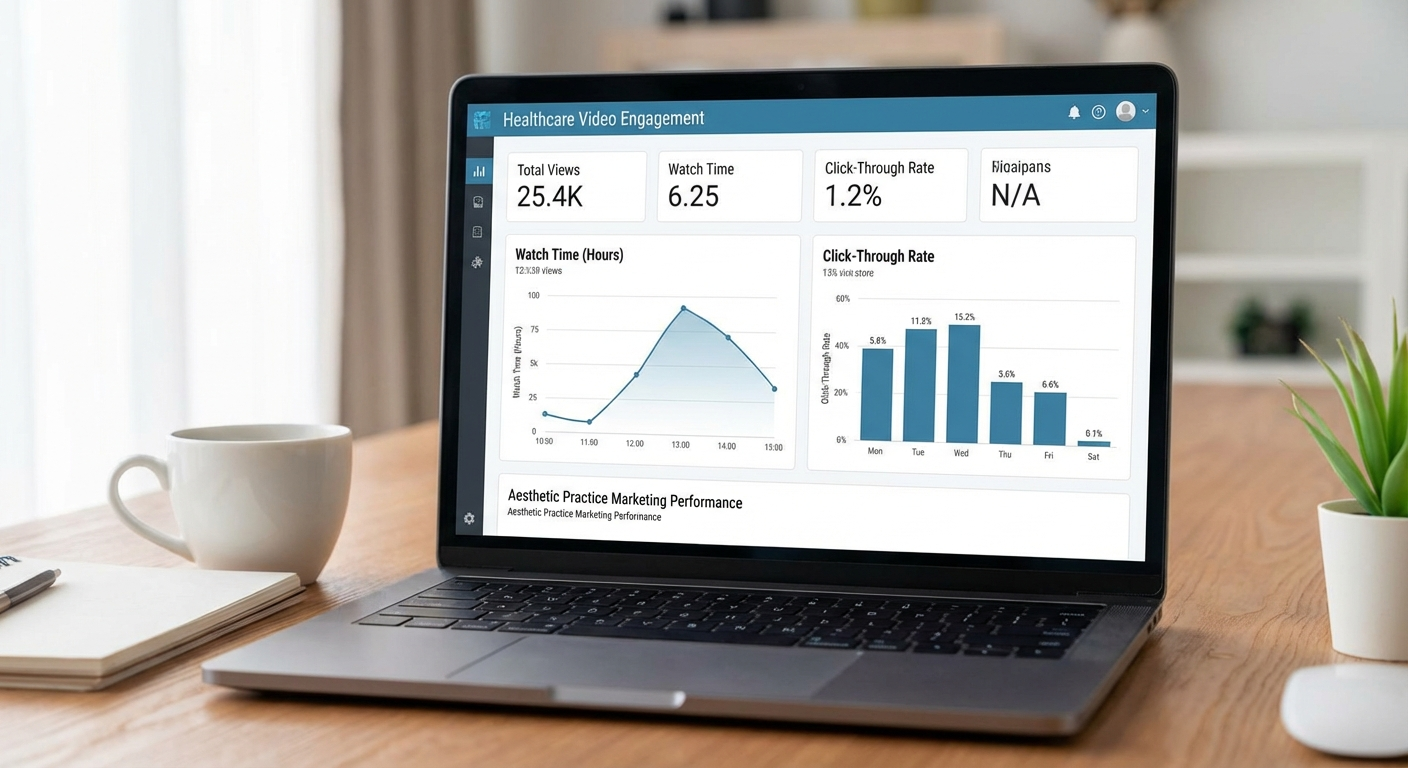
| Metric | What It Tells You | Target Benchmark |
|---|---|---|
| View count | Reach and awareness | Growth over time |
| Watch time | Content quality and relevance | 50%+ of video length |
| Click-through rate | Call-to-action effectiveness | 2-5% for healthcare |
| Consultation mentions | Direct attribution | ”I saw your video…” |
Attribution Strategy
Add a question to your consultation intake form: “How did you first learn about us?” Include “Watched a video online” as an option. This simple addition provides direct feedback on video ROI.
Getting Started: A 30-Day Implementation Plan
Don’t try to launch everything at once. Here’s a practical roadmap:
Week 1: Foundation
- Audit existing video assets
- Set up basic equipment (lighting, audio, tripod)
- Create consent forms and internal approval process
Week 2: First Production
- Film surgeon introduction/welcome video
- Record one procedure explanation for your most popular service
- Edit and publish to your website
Week 3: Patient Content
- Identify 2-3 patients willing to provide testimonials
- Film testimonials with proper consent
- Publish to YouTube with optimized titles/descriptions
Week 4: Distribution & Measurement
- Share content across social platforms
- Add video to relevant website pages
- Set up tracking and attribution questions
From there, build a sustainable rhythm: one new video per week is achievable for most practices and compounds over time.
Integrating Video with Your Marketing Automation
Video content is even more powerful when integrated with your automated follow-up sequences. Consider:
- Including procedure explanation videos in pre-consultation email sequences
- Sending patient testimonials to leads who’ve shown interest but haven’t booked
- Using video thumbnails in email to increase open and click rates
If you’re capturing leads through your website, make sure your online reputation management strategy includes prompting video testimonial requests from satisfied patients.
Frequently Asked Questions
How much does video marketing cost for an aesthetic practice?
Basic video marketing can start under $500 in equipment costs (smartphone, lighting, microphone, tripod). Production costs vary widely—DIY testimonials cost only your time, while professionally produced content might run $1,000-5,000 per video. Most practices see positive ROI within 3-6 months of consistent content creation.
Do I need professional equipment to create effective videos?
No. Modern smartphones (iPhone 13 and later, recent Samsung Galaxy models) shoot 4K video that’s perfectly suitable for marketing purposes. What matters more is good lighting, clear audio, and authentic content. Start with basic equipment and upgrade only as your video strategy matures.
How do I get patients to agree to video testimonials?
Ask patients at their follow-up appointments when they’re happiest with their results. Explain how their story might help others facing similar decisions. Offer to keep testimonials anonymous or show only partial face shots if preferred. Most satisfied patients are happy to help once asked directly.
What’s the best video length for aesthetic marketing?
It depends on platform and purpose. Social media (Instagram, TikTok): 15-60 seconds. YouTube and website: 2-4 minutes for educational content, 60-90 seconds for testimonials. Longer content (5-10 minutes) works for detailed procedure explanations that rank in search.
How do I ensure my video marketing is HIPAA compliant?
Use specific video release forms separate from general treatment consent. Clearly specify where videos will be published. Have patients sign BAAs if they share protected health information on camera. Review all footage for inadvertent PHI disclosure before publishing. When in doubt, consult with a healthcare compliance attorney.
Start Building Trust Through Video
Video marketing isn’t optional for aesthetic practices anymore—it’s expected. Patients researching high-consideration procedures want to see and hear from you before they commit to a consultation. The practices that deliver that experience win the consultation.
The good news: you don’t need a production studio or massive budget. You need a smartphone, decent lighting, and a commitment to authentic content. Start with one surgeon introduction video, one patient testimonial, and one procedure explanation. Build from there.
Ready to integrate video with a complete digital marketing strategy for your practice? Contact Monsoft Solutions to discuss how we can help you capture more consultations through strategic content and automation.