Most small businesses have a funnel problem. Not a traffic problem.
Leads come in through ads, search, referrals, or your website — and then most of them disappear. Not because they weren’t interested. Because nobody followed up in time. Because the nurture sequence was either nonexistent or generic. Because the gap between “someone expressed interest” and “someone talked to a real human” stretched into days.
AI changes the economics of that gap. Not by replacing your team, but by making sure no lead sits idle, no follow-up gets forgotten, and no customer relationship goes cold while you’re busy running the actual business.
This guide walks through how to build an AI-powered sales funnel from top to bottom — and how small businesses are using it to close more deals without more headcount.
What a Sales Funnel Actually Is (And Where Most Break)
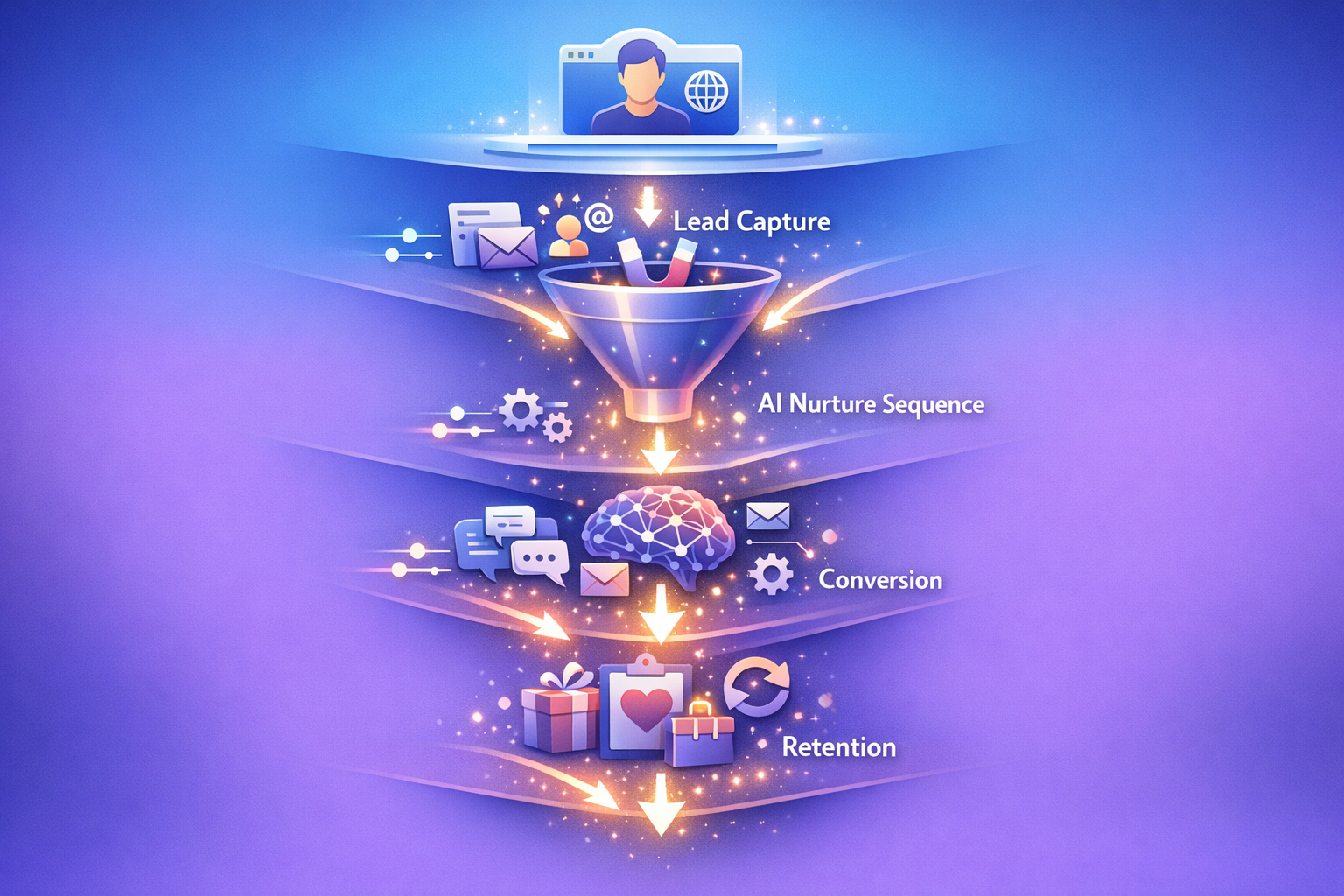
A sales funnel is just a map of the steps a stranger takes to become your customer. The classic model:
- Awareness — They discover you (Google, social media, word of mouth)
- Interest — They engage with your content, website, or offer
- Lead capture — They give you their contact info
- Nurture — You build trust and move them toward a decision
- Conversion — They buy, book, or sign
- Retention — You keep them and get referrals
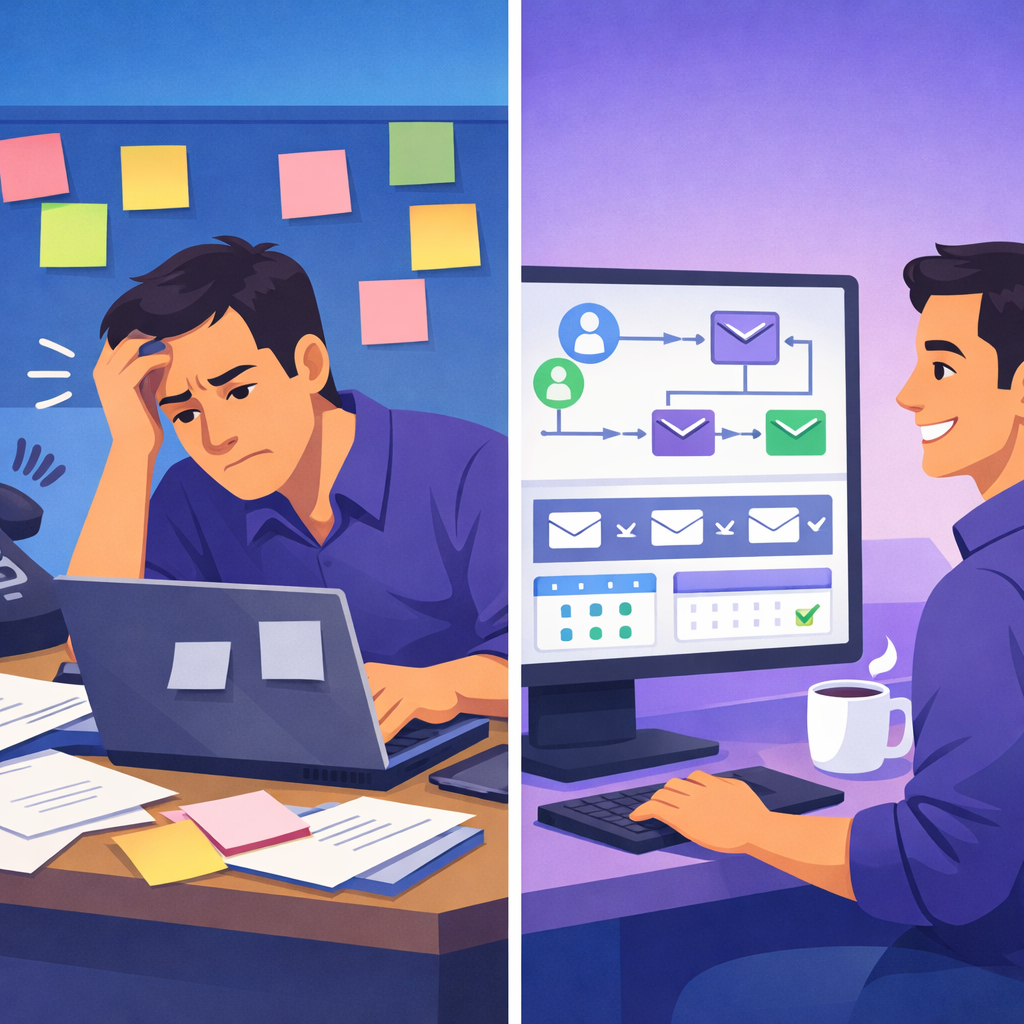
The painful truth: most small businesses handle steps 1–2 reasonably well and then fall apart at 3–6. A lead fills out a contact form and waits 24 hours for a response — which in today’s market feels like abandonment. A free consultation is booked, then forgotten because the reminder didn’t go out. A customer makes a first purchase and never hears from you again.
These aren’t people problems. They’re systems problems. And systems are exactly what AI is built to solve.
Stage 1: Automated Lead Capture
Lead capture is the entry point to your funnel. Someone lands on your website or clicks an ad. What happens next determines whether you ever hear from them again.
The old way: Hope they fill out a contact form. Wait.
The AI-powered way: Multiple capture pathways, all automated from the moment of contact.
AI Chat for After-Hours Lead Capture
The majority of small business website visits happen outside of business hours. An AI chatbot that can answer questions, collect contact info, and qualify interest in real time captures leads that a contact form never would.
A plumbing company in Naples can have a chatbot that handles “I need someone to look at my water heater” at 11pm — collecting the address, explaining pricing ballpark, confirming availability, and booking the site visit. By 8am, the technician’s schedule is full from leads that came in overnight.
This matters more than most owners realize. Response time to an inbound lead is the single biggest predictor of conversion. Leads contacted within 5 minutes convert at 9x the rate of those contacted after an hour. With 24/7 AI lead capture, your effective response time is near-instant regardless of when someone reaches out.
Lead Magnets + Automated Capture Sequences
High-value content downloads (free guides, checklists, templates relevant to your service area) are one of the best lead capture mechanisms in small business. Someone downloads your “Local Home Renovation Cost Guide” — they’re clearly interested in home improvement services. That download triggers an immediate automated sequence: a confirmation email, a brief intro to your business, a case study, and a soft offer for a free estimate.
The AI layer here is personalization. Modern email automation tools can tailor these sequences based on what the person downloaded, what pages they visited, and how they engaged with previous emails. Segment-specific content outperforms generic blasts by 3–5x in open rates and 7–10x in click-through.
Forms That Don’t Feel Like Forms
Standard contact forms convert at 1–2%. Multi-step conversational forms — which use a chat-like interface to ask questions one at a time — convert at 5–12%. The psychological difference is significant: a single-field question feels easy; a wall of fields feels like work.
Tools like Typeform, Jotform, and Tally all support this pattern. The key is to integrate them directly with your CRM so the lead data flows automatically — no manual exports, no CSV imports, no dropped contacts.
Stage 2: AI-Powered Lead Nurture
Lead nurture is where most small businesses lose. They capture the lead — and then send them a monthly newsletter that could apply to anyone anywhere on the planet. That’s not nurture. That’s broadcasting.
Real nurture is: the right message, at the right time, based on where this specific person is in their decision-making process. AI makes that possible at scale.
Behavior-Triggered Email Sequences
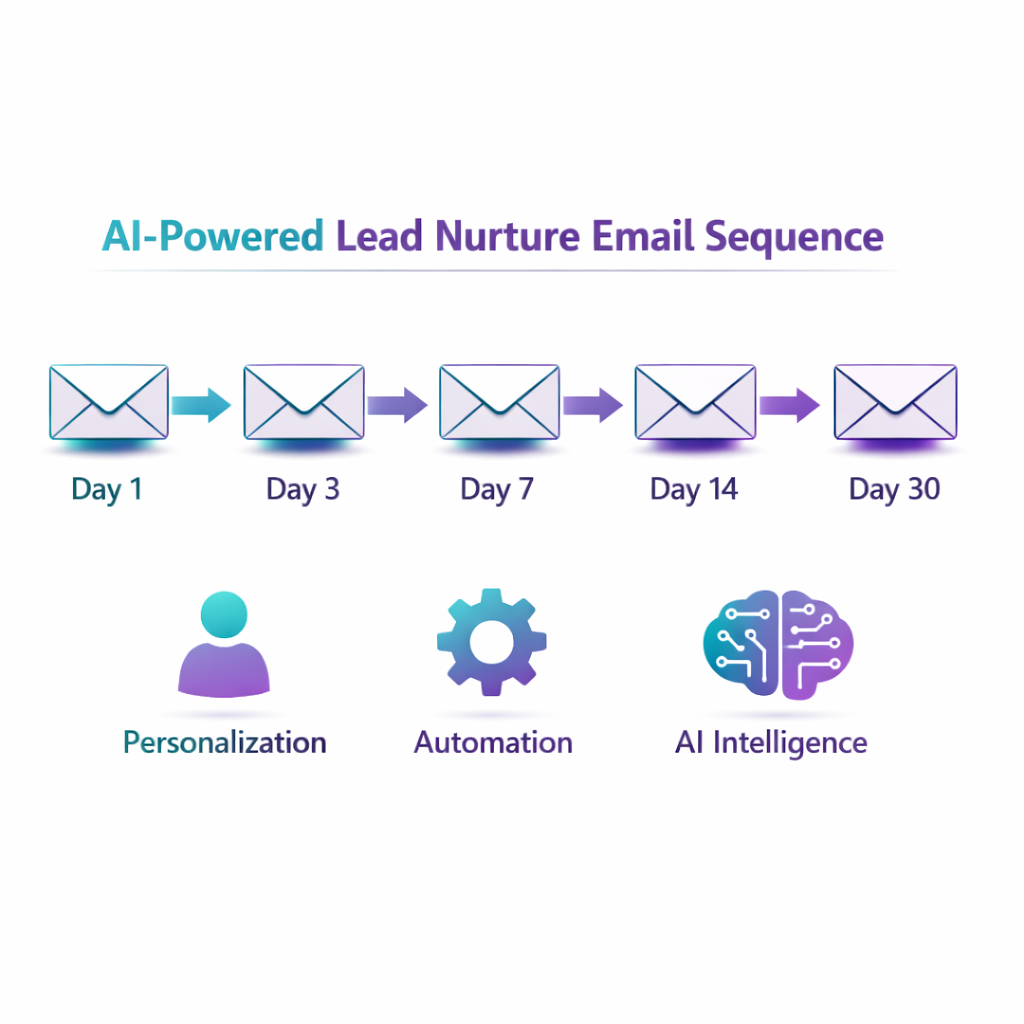
The difference between a nurture sequence that converts and one that doesn’t is triggers. Static sequences (email at Day 1, Day 3, Day 7) are better than nothing. Behavior-triggered sequences are dramatically better.
Examples:
- A lead opens your email but doesn’t click → 3 days later, a different angle on the same offer lands in their inbox
- A lead clicks the pricing page → They immediately get a case study showing ROI with specific numbers
- A lead opens 3 emails but doesn’t book → An SMS check-in triggers: “Hey [name], noticed you’ve been checking us out — anything I can answer before you decide?”
These sequences feel attentive and human because they respond to behavior rather than a calendar. They’re set up once in your CRM and run forever, automatically.
Lead Scoring + Priority Routing
Not all leads are equal. Some are ready to buy tomorrow. Some need three months of education. AI lead scoring helps you tell them apart so your team spends time where it counts.
Lead scoring assigns points based on: pages visited (pricing page = high intent), email engagement (opens, clicks, time spent), content downloaded, job title or business type, and explicit signals like requesting a quote or booking a consult.
A lead that scores 80+ gets flagged for immediate personal outreach from your sales team. A lead that scores 30 stays in the automated nurture track. No one falls through the cracks, and your team isn’t wasting time on leads that aren’t ready.
We covered the mechanics of this in our full AI lead scoring guide — worth reading alongside this one.
SMS in the Nurture Mix
Email is essential. SMS is faster. The best nurture sequences use both, strategically.
SMS isn’t for every touchpoint — it’s for high-intent moments and time-sensitive situations. An automated SMS 24 hours before a booked consultation (“Looking forward to talking tomorrow — here’s the link if you want to move it or need to reschedule”). An SMS when a quote hasn’t been responded to in 72 hours (“Hey [name], just checking — any questions about the estimate I sent over?”).
Response rates on well-timed, relevant SMS messages routinely hit 30–45%. Compare that to email’s 20–25% open rate, and you understand why SMS as a secondary channel in your nurture stack pays for itself quickly. Our SMS automation guide has the setup details.
Stage 3: Conversion Automation
Nurture gets leads ready. Conversion closes them. The AI layer here is about eliminating friction and ensuring the right people get personal attention at the right moment.
AI-Assisted Appointment Booking
For service businesses, the appointment or consultation is the conversion event. Every barrier between “I want to book” and “I’m booked” costs you customers.
An AI-powered booking flow:
- Embeds directly on your website (no clicking to a third-party page)
- Shows real-time availability based on your calendar
- Collects intake information automatically
- Sends confirmation and reminders without any manual work
- Reschedules via text or chat without requiring a phone call
The difference between a smooth AI booking flow and a “call us during business hours” instruction is, in many markets, the difference between getting the customer and not.
Automated Quote and Proposal Follow-Up
The average service business sends a quote and then waits. Days pass. The follow-up, if it happens at all, comes from whoever remembers to do it.
AI-powered CRM automation changes this: when a quote is sent, a follow-up sequence triggers automatically. Day 2: a check-in email. Day 4: a case study showing the outcome of similar projects. Day 7: an SMS asking if they have questions. Day 10: a final “I can hold this pricing through the end of the week” message.
This alone — automating the post-quote follow-up — can increase close rates by 15–30% without changing anything about the quote itself.
Retargeting + AI Personalization
For businesses with meaningful ad spend, AI-powered retargeting puts your message back in front of people who engaged but didn’t convert. Modern ad platforms use machine learning to identify which creative, audience segment, and offer combination maximizes conversion for your specific business — no manual A/B testing required.
The most effective retargeting sequences match the message to where the person dropped off. Someone who visited your pricing page but didn’t contact you sees a different ad than someone who watched your explainer video. This specificity is what makes AI-driven retargeting meaningfully more effective than generic “we noticed you visited us” ads.
Stage 4: Retention and Expansion Automation
Getting a new customer costs 5–7x more than keeping an existing one. The retention stage of your funnel is often the most neglected — and the highest-ROI.
Post-Purchase Automation
The moment after a customer converts is the highest-trust moment in your relationship. That’s exactly when most businesses go silent — the sale is done, attention moves to the next lead. AI automation makes sure that moment gets used well.
A post-purchase sequence might look like:
- Day 1: Thank you + onboarding resource or welcome guide
- Day 3: A check-in asking how things are going
- Day 14: A value-add (a tip, a how-to, a relevant resource they didn’t ask for but will appreciate)
- Day 30: A soft ask for a review or referral
- Day 60: An offer for complementary service or an upsell
These touchpoints feel like good customer service. They’re also how you turn a one-time transaction into a relationship — and relationships are what generate reviews, referrals, and repeat business.
Churn Prediction and Win-Back
AI can identify customers who are drifting away before they’re actually gone. A customer who used to book monthly and hasn’t been in for 60 days. A subscription holder whose engagement has dropped to near zero. A client who stopped opening your emails.
Behavioral signals like these feed AI models that score each customer’s churn risk — and trigger targeted win-back campaigns before they’re lost. A well-timed “We miss you — here’s 15% off your next visit” hits very differently when it arrives at exactly the right moment vs. as a generic mass promo. Our predictive analytics guide covers this in depth.
Automated Review Generation
Reviews are one of the most powerful sales tools a local business has. They’re also one of the most neglected because asking for them manually is awkward and easy to forget.
Automated review request sequences — triggered by a completed service, closed ticket, or 5-star rating in a satisfaction survey — take the awkwardness out of asking and make sure no happy customer slips by without a request. See our review generation automation guide for the exact setup.
Putting It All Together: Your Funnel Tech Stack
You don’t need a massive tech budget to build a functioning AI-powered funnel. Most small businesses can run an effective version on under $300/month:
Lead Capture:
- AI chatbot: Tidio, Intercom, or a custom AI assistant for around $50–100/month
- Conversational forms: Typeform or Tally (free to $50/month)
CRM + Automation backbone:
- GoHighLevel, HubSpot, or ActiveCampaign ($100–200/month) — the center of gravity for your whole funnel
- Zapier or Make for connecting tools that don’t natively integrate ($20–50/month)
Email + SMS:
- Usually included in your CRM, or add Klaviyo or Brevo for heavy email senders
- SMS platform: Twilio, SimpleTexting, or your CRM’s built-in SMS
Appointment booking:
- Calendly, Acuity, or your CRM’s booking module (often included)
Analytics:
- Google Analytics 4 (free) for web funnel tracking — our GA4 guide covers setup
The key is integration. Each tool should feed data into your CRM, so you have one source of truth for every lead’s journey. Siloed tools produce siloed results.
The Right Way to Start
Don’t try to build the whole funnel at once. That path leads to paralysis and half-finished automations.
Week 1: Pick one stage of your funnel that’s clearly broken. For most small businesses, it’s post-lead-capture follow-up — leads come in and then wait too long. Build a simple 5-email welcome + nurture sequence in your CRM and connect it to your lead capture form.
Week 2–3: Add booking automation. If people have to call to schedule, add online booking with automated confirmation and reminder sequences.
Month 2: Add lead scoring. Tag leads by behavior and route high-intent leads to personal outreach.
Month 3: Add post-purchase automation. Build your retention and review request sequences.
Ongoing: Measure, iterate, and improve. The funnel that’s 50% automated and running is more valuable than the perfect funnel that never got built.
What to Measure
The metrics that tell you your funnel is working:
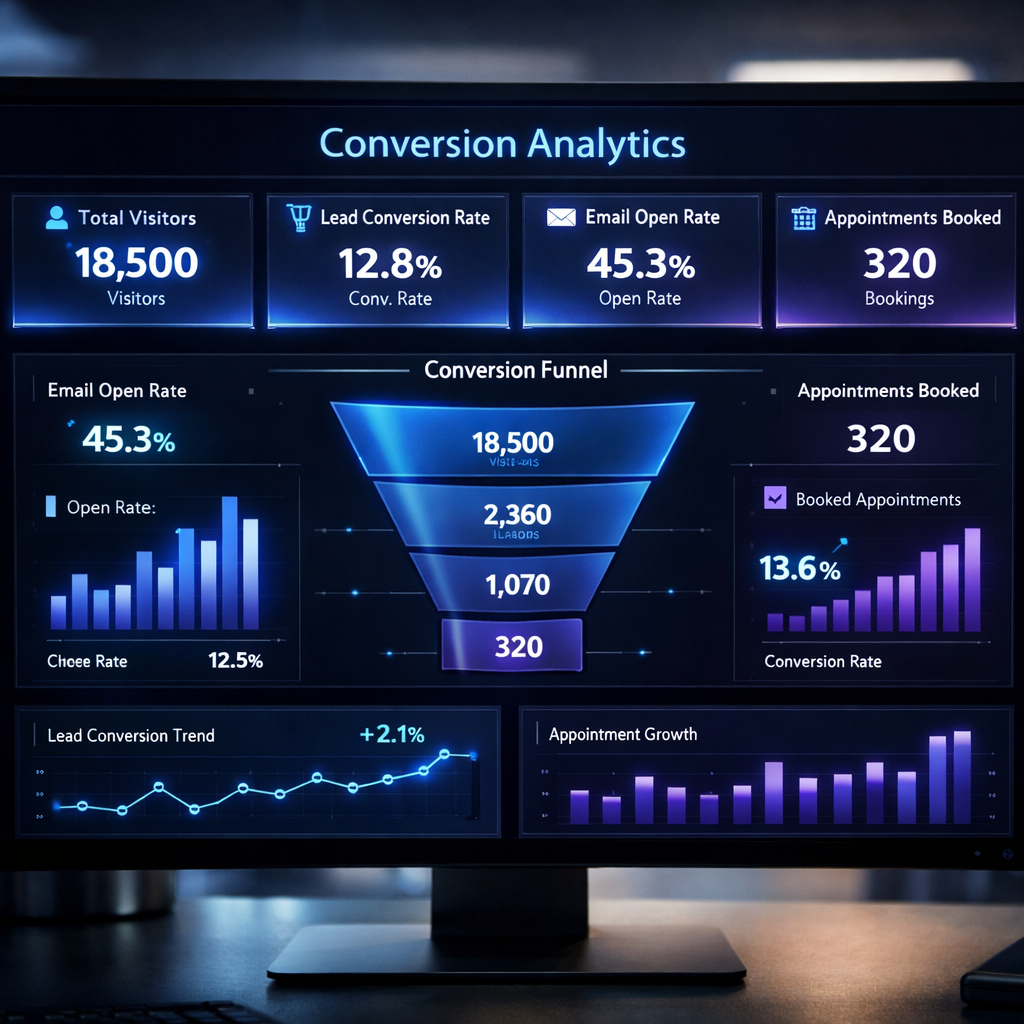
- Lead capture rate: What % of website visitors become leads? Below 1% suggests friction or mismatch in messaging. Above 3% is strong.
- Lead-to-appointment rate: Of captured leads, what % book a call or consultation? Target 20–40% for a well-nurtured sequence.
- Close rate: Of completed consultations or proposals, what % convert? Track this pre- and post-automation to see impact.
- Time-to-first-response: How quickly does a new lead hear from your business? With automation, this should be under 5 minutes, 24/7.
- Customer lifetime value: Are customers spending more over time? If retention automation is working, LTV should increase.
Set up these metrics in your CRM and review them monthly. Small improvements compound fast — a 5% increase in lead capture rate combined with a 10% increase in close rate can double revenue without touching ad spend.
Building an AI-powered sales funnel isn’t about replacing what makes your business human. It’s about making sure the humans in your business spend their time on the things only humans can do — building relationships, solving complex problems, delivering the actual service — while automation handles everything around it.
The businesses winning in 2026 aren’t necessarily the ones with the biggest budgets. They’re the ones that respond fastest, follow up most consistently, and make every lead feel like they were remembered.
That’s what automation enables. Not impersonality — reliability.
Ready to build a funnel that works while you sleep? Talk to the Monsoft team — we help small businesses set up the automation infrastructure that turns consistent lead flow into consistent revenue growth. You can also explore our small business automation guide and CRM automation guide for more context on the tools involved.