GLP-1 medications like semaglutide and tirzepatide didn’t just change the weight loss industry—they handed aesthetic practices a massive growth opportunity. The practices that figured this out early are now running at full capacity. The ones still thinking about it are watching their competitors sign up patients who could have been theirs.
If your med spa isn’t offering medical weight loss, or isn’t marketing it effectively, this guide is for you. We’ll walk through how to position your program, attract the right patients, stay compliant, and turn weight loss clients into long-term aesthetic patients.
Why Medical Weight Loss Is the Growth Lever of 2026
Let’s start with the business case—because it’s significant.
GLP-1 medications have created a new patient category. People who are losing 15–25% of their body weight in 6–12 months now need exactly what med spas offer: skin tightening, body contouring, facial rejuvenation, and muscle preservation treatments. They’re motivated, engaged, and actively seeking solutions to the side effects and transition issues that come with rapid weight loss.
The data backs this up:
- Over 40 million Americans have taken a GLP-1 medication as of early 2026
- “Ozempic face” searches have increased 400% over two years
- Body contouring revenue at practices offering integrated weight loss programs is growing at 3x the rate of practices that don’t
- Average patient lifetime value for a weight loss + body contouring combo patient is estimated at $8,000–$15,000+
You don’t need a prescribing physician on staff to capitalize on this. You need a smart positioning strategy, the right referral relationships, and marketing that speaks directly to what these patients actually want.
Understanding Your Weight Loss Patient
Before you write a single piece of marketing copy, understand who you’re talking to.
The GLP-1 starter — Just beginning their weight loss journey. Excited, slightly nervous, not sure what the full process looks like. Needs education and trust-building. Your marketing should meet them with information and confidence, not overwhelm them with treatment options immediately.
The midpoint patient — 10–20 lbs down, starting to see results and starting to see concerns. Loose skin, loss of facial volume, muscle tone loss. This is your highest-converting segment. They have a real problem. They have money (they’re paying for GLP-1 prescriptions which can run $800–$1,200/month without insurance). They’re actively searching for solutions.
The post-weight loss patient — Reached their goal weight. Now dealing with the aftermath: body contouring needs, skin laxity, facial hollowing. Often referred to as “Ozempic body” patients. High value, long treatment journeys, excellent for building loyalty programs and package sales.
The non-GLP-1 patient — Still wants to lose weight but isn’t a candidate for GLP-1s, or prefers a different approach. Interested in nutrition programs, body contouring, and lifestyle support. Don’t overlook this segment—they’re underserved and often ready to invest.
Positioning Your Program
How you position your medical weight loss offering determines who responds to it—and who doesn’t.
Two common mistakes:
-
Leading with the medication. “We offer semaglutide!” is not a marketing message. It’s a commodity. Every telehealth provider and weight loss clinic says the same thing. You need to lead with the transformation.
-
Hiding behind clinical language. “Metabolic optimization protocols” might sound professional, but it doesn’t connect emotionally. Patients want to feel understood, not processed.
What actually works: Position around the patient’s real goal.
They don’t want semaglutide. They want to feel confident in their clothes. They want to stop saying no to photos. They want energy back. They want to recognize themselves in the mirror.
Your positioning should look something like this:
“Most weight loss programs give you the medication and nothing else. We build a complete plan around you—treating the whole picture from your first consultation through your final results, so you don’t just lose weight. You look like yourself again.”
This works because it differentiates you from telehealth mills while speaking directly to the patient’s deeper motivation.
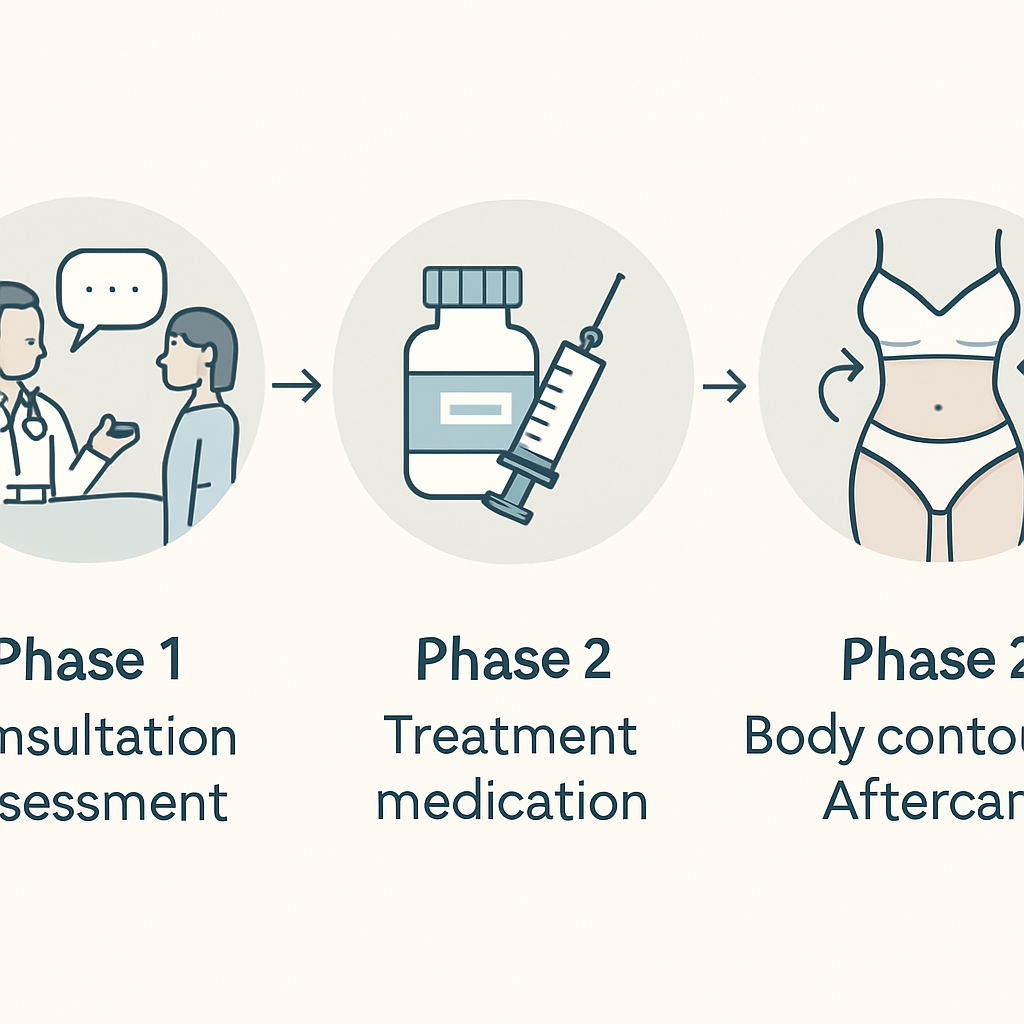
The 4-Phase Marketing Funnel for Weight Loss Patients
Phase 1: Awareness — Getting Found
Weight loss patients start searching online. Make sure they find you.
Local SEO targets to optimize for:
- “medical weight loss [your city]”
- “semaglutide [your city]”
- “GLP-1 program near me”
- “weight loss med spa [your city]”
- “Ozempic consultation [your city]”
- “body contouring after weight loss [your city]”
Update your Google Business Profile to include weight loss in your services, categories, and posts. Add before-and-after photos (with proper HIPAA consent). Post weekly Google Business updates about your program.
Content that attracts weight loss patients:
- “What to Expect During the First 90 Days on a GLP-1”
- “How We Treat Ozempic Face at Our Med Spa”
- “The Right Order for Treatments During Weight Loss”
- “Skin Tightening vs. Body Contouring: Which Is Right After Weight Loss?”
These aren’t just blog topics—they’re the questions your patients are already asking Google.
Social media for awareness: Instagram and TikTok are enormous for weight loss content. Educational reels about skin changes during weight loss, patient journey content (with consent), and provider Q&As all perform exceptionally well in this niche. This is one space where your clinical expertise becomes content gold.
Phase 2: Consideration — Building Trust Before the Call
A patient finds your website or social media. Now you have about 90 seconds to make them confident enough to reach out.
Your website needs:
- A dedicated weight loss program page (not just a services list)
- Clear explanation of what’s included (consultation, bloodwork, medication, follow-up, aesthetic support)
- Provider credentials and photos — weight loss patients specifically want to know who they’re working with
- Before-and-after gallery (HIPAA-compliant, patient-consented)
- Reviews that specifically mention weight loss results
- Clear pricing or “starting at” ranges — hidden pricing is a major conversion killer in this market
Social proof is critical here. See our guide on building social proof for aesthetic practices — the same principles apply, with extra emphasis on patient journey storytelling and authentic transformation results.
Email nurture for leads who don’t book: Many patients research for weeks before committing. Set up a simple automated follow-up sequence that delivers:
- Day 1: “Your Questions About Our Weight Loss Program Answered”
- Day 3: Patient success story
- Day 7: “How Weight Loss and Body Contouring Work Together”
- Day 14: Special consultation offer or free phone consultation
Phase 3: Conversion — Turning Inquiries Into Patients
The consultation is where you win or lose the patient. Most practices lose them through a combination of poor follow-up speed and a consultation that doesn’t clearly communicate the full program value.
Speed matters enormously. Research shows that responding to a lead within 5 minutes vs. 30 minutes increases conversion by up to 8x. If your front desk can’t respond that fast, set up an AI chatbot or automated text/email that acknowledges the inquiry immediately while a human follows up.
Structure your consultation around the patient’s story:
- Understand their weight loss history and current stage
- Assess what they’re noticing physically (skin, energy, body composition)
- Explain your program holistically — medication, monitoring, aesthetic treatments, nutrition support
- Present a clear treatment pathway with timeframes and investment ranges
- Offer options — not a single take-it-or-leave-it price
Package pricing converts better than à la carte. A “6-Month Complete Transformation” package at a clear price point will outperform a menu of individual services. It frames you as a partner in their journey rather than a vendor of procedures.
Phase 4: Retention — Keeping Patients and Growing Their Lifetime Value
This is where the real money is. A weight loss patient who gets great results will:
- Continue aesthetic maintenance treatments
- Refer friends and family who are on their own weight loss journey
- Be your most authentic ambassador on social media
Structured follow-up protocols are non-negotiable. In the weight loss space, dropping the ball on follow-up has real clinical consequences—and serious marketing ones. Patients who feel abandoned don’t just leave, they leave reviews.
Build automated check-ins using your CRM:
- Week 2: Medication tolerance check-in
- Month 1: Progress review invitation
- Month 3: Mid-program milestone message with complementary treatment recommendation
- Month 6: Results review and next phase planning
- Ongoing: Quarterly touchpoints for maintenance patients
Membership programs work exceptionally well for weight loss patients. A monthly membership that includes your medication management, one aesthetic treatment per quarter, and priority booking gives patients a reason to stay connected year-round. See our med spa membership programs guide for a full setup framework.
Compliance and Advertising Rules
Marketing medical weight loss requires extra care. Here’s what you need to know:
FDA and FTC requirements for weight loss advertising:
- You cannot guarantee specific weight loss results (“Lose 30 pounds in 30 days” is not permitted)
- All before-and-after results must be “typical” or clearly labeled as “individual results may vary”
- Medication claims must be accurate and not misleading
- You cannot claim a prescription medication is safe for everyone without proper individual assessment language
Scope of practice clarity: Unless you have a licensed prescriber (MD, DO, NP, or PA) on staff or have a formal collaborative agreement, you cannot prescribe GLP-1 medications yourself. Many med spas partner with a supervising physician or telehealth prescribing service. Be explicit in your marketing about your model — patients want to know who’s managing their medication.
HIPAA in weight loss marketing: Before-and-after photos, testimonials, and patient journey posts require specific written authorization. Your HIPAA consent forms need to be updated to include weight loss content rights. See our HIPAA-compliant social media marketing guide for specifics on what consent language you need.
Platform advertising restrictions:
- Google Ads has specific policies around medical procedures — you’ll need to apply for a “Healthcare and Medicines” certification
- Meta (Facebook/Instagram) restricts “before-and-after” ads and ads targeting body image; educational content typically performs better and faces less restriction
- Nextdoor is often underutilized and is excellent for hyper-local weight loss program promotion with virtually no ad restrictions
Building Referral Relationships That Fill Your Funnel
The most sustainable patient acquisition channel for medical weight loss isn’t paid ads — it’s referrals from primary care physicians, endocrinologists, and OB/GYNs who are prescribing GLP-1 medications in your area.
Most physicians prescribing these medications have no idea what to do with the patients who come back asking about skin tightening and body contouring. That’s your opening.
How to build these relationships:
- Identify the top GLP-1 prescribers in your area (search local clinic websites, healthcare directories)
- Send a professional introduction letter explaining your complementary services
- Offer a complimentary consultation for their referred patients
- Create a simple referral tracking system so you can report outcomes back to the referring physician
- Host a quarterly “lunch and learn” at their office about aesthetic treatments during weight loss
This positions you as a clinical partner rather than a competitor — and referrals from physicians convert at dramatically higher rates than cold advertising leads.
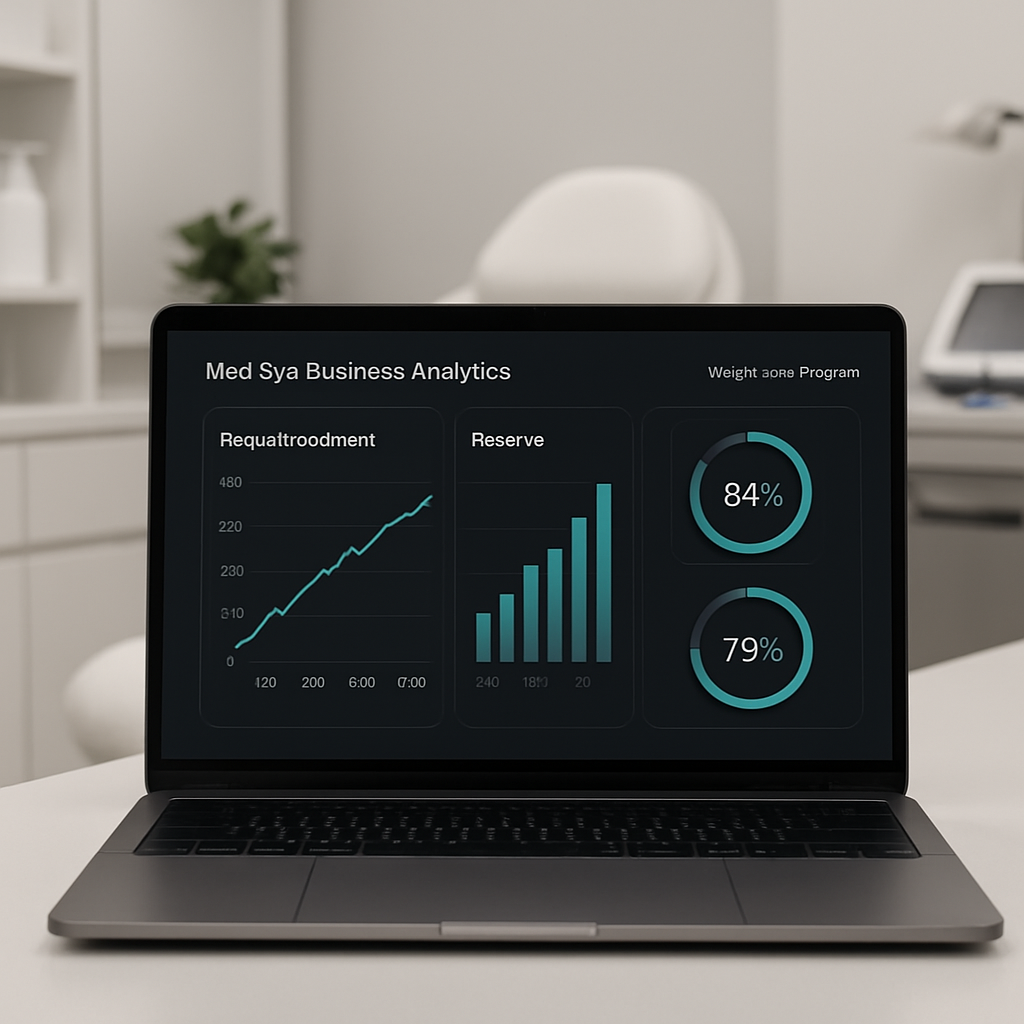
Metrics to Track for Your Weight Loss Program
| Metric | Target | Why It Matters |
|---|---|---|
| Consultation booking rate | 30–40% of inquiries | Measures lead quality and landing page effectiveness |
| Consultation-to-patient conversion | 50–65% | Measures consultation quality and pricing presentation |
| Average program revenue | $3,000–$6,000 | Baseline for package structure decisions |
| 6-month patient retention | 60%+ | Weight loss patients who stay active become your highest-LTV patients |
| Referral rate | 20–30% of active patients | GLP-1 communities are tight-knit; referrals compound quickly |
| Complementary treatment attach rate | 40%+ by month 3 | Measures how well you’re integrating aesthetic treatments |
| Google review velocity | 2–4 per month specifically mentioning weight loss | SEO and social proof fuel |
Common Mistakes to Avoid
Treating weight loss as a standalone silo. The real money is in the integration. If your weight loss team and your aesthetic team never communicate, you’re leaving enormous revenue on the table. Every weight loss patient is a future body contouring, skin tightening, or facial rejuvenation patient — but only if your team actively makes that connection.
Underpricing to compete with telehealth. A telehealth-only provider can sell a semaglutide prescription for $200/month. You can’t and shouldn’t try to compete on price. Compete on the comprehensive, in-person, monitored experience. Patients who want the cheapest option aren’t your patients.
Ignoring the “Ozempic face” angle. This is one of the most searched aesthetic concerns of the last two years. If your website doesn’t directly address it — with educational content and specific treatment recommendations — you’re invisible to a massive, high-intent audience.
Skipping the follow-up system. Weight loss is hard. Patients who feel unsupported drop out. Every dropout is lost revenue and a potentially negative review. Automation is your safety net — see our guide on automating patient communication for a full system setup.
Not collecting and using data. Which marketing channels are actually bringing patients in? Which treatment pathways produce the highest retention? Use your CRM and Google Analytics 4 to answer these questions and double down on what works.
30-Day Launch Plan
Week 1: Foundation
- Audit your website for weight loss-specific content gaps
- Update your Google Business Profile services and posts
- Set up a weight loss inquiry form and automated response sequence
- Draft your program positioning statement
Week 2: Content and Outreach
- Write your core weight loss program page
- Create 3–5 educational social media posts about GLP-1 and aesthetic concerns
- Identify 10 local physicians to contact about referral relationships
- Send introduction letters or emails to your referral targets
Week 3: Systems
- Build out your consultation framework for weight loss patients
- Set up automated follow-up sequences for new weight loss leads
- Create a simple referral tracking process
- Train front desk on weight loss inquiry handling and response scripts
Week 4: Launch
- Announce your program to existing patients via email
- Activate Google Ads or Meta ads targeting weight loss keywords
- Post your first “patient journey” content (with consent)
- Review your first week of inquiry data and adjust response systems
Frequently Asked Questions
Do I need a physician on staff to market a weight loss program? You don’t need one to market a weight loss program, but you do need one (or a physician collaborative agreement) to actually prescribe GLP-1 medications. Many med spas partner with a supervising physician or work with a prescribing telehealth service while managing the aesthetic component in-house. Be transparent about your model in all marketing materials.
How do I handle before-and-after photos compliantly? You need written HIPAA authorization specifically permitting you to use the patient’s photos in marketing materials. General HIPAA consent doesn’t cover this. Use a separate, specific photo release form for each patient, stored in their chart. Never post photos that could identify a patient without explicit, documented consent.
What’s a realistic ROI for GLP-1 program marketing? Practices that invest $2,000–$5,000/month in marketing and establish solid referral relationships typically report 10–20 new weight loss patients per month within 90 days. At an average program value of $3,000+, that’s $30,000–$60,000/month in new program revenue — before the downstream aesthetic treatment revenue that follows.
Should I compete with telehealth GLP-1 providers? No. Compete with your in-person, comprehensive, aesthetic-integrated experience. Telehealth providers cannot do body contouring, skin tightening, or facial rejuvenation. That’s your exclusive value. Position your program as the complete solution for the whole journey.
How long does it take to rank for weight loss keywords in my area? With consistent content production and Google Business Profile optimization, you can expect to see meaningful organic traffic improvements in 3–6 months. Paid search (Google Ads) can deliver results in days. Most practices run both concurrently — ads for immediate patient flow, SEO for long-term compounding growth.
The medical weight loss space is one of the most significant growth opportunities aesthetic practices have seen in a decade. The patients are already out there, already looking, already spending money. Your job is to make sure they find you — and that when they do, what they see makes choosing you feel obvious.
Ready to build a marketing strategy for your weight loss program? Talk to the team at Monsoft Solutions — we work exclusively with aesthetic practices and know exactly what it takes to get patients in the door.