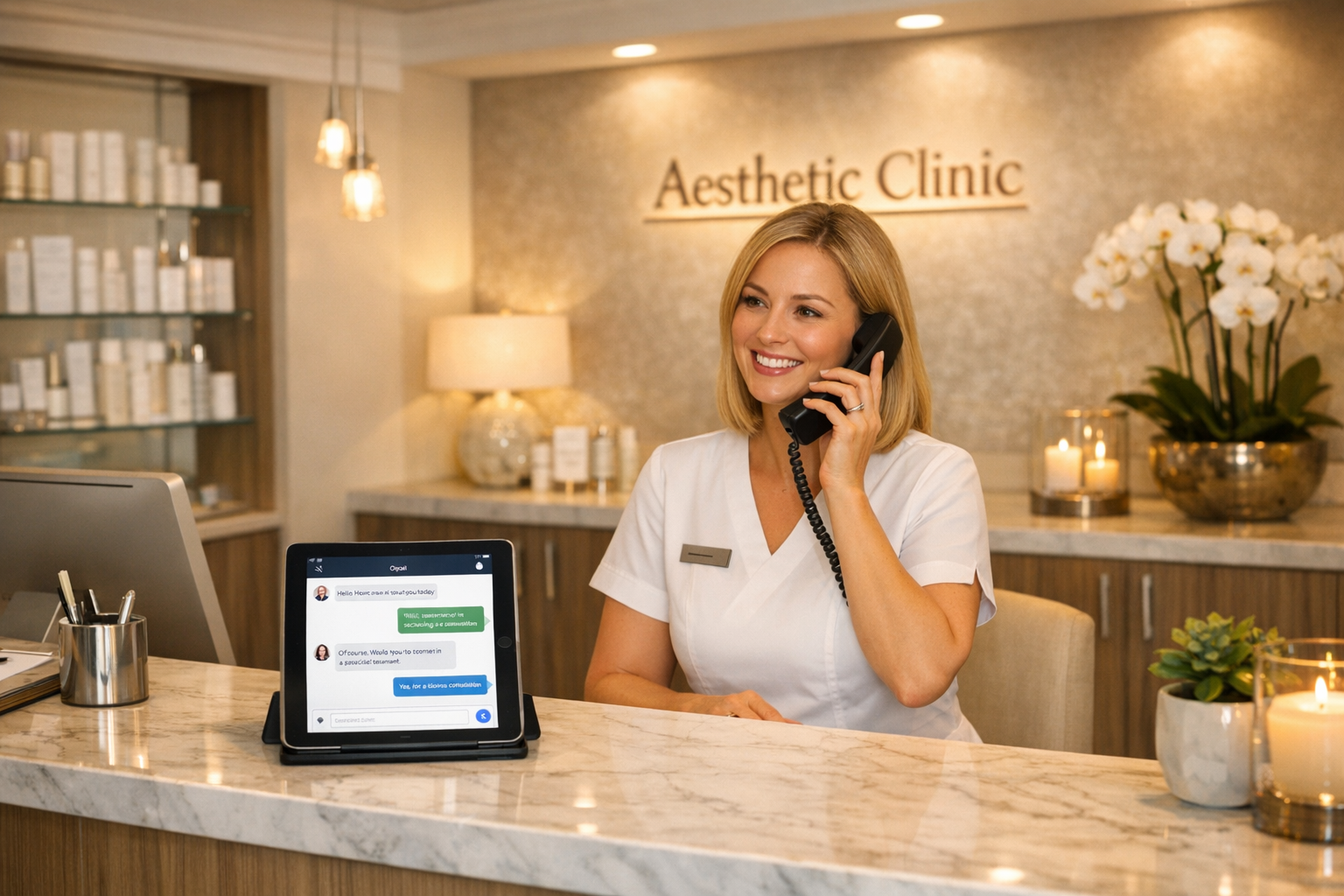
A potential patient visits your website at 10 PM, interested in rhinoplasty. They have questions. Your office is closed. They fill out a contact form and… wait. By morning, they’ve already booked a consultation with the practice down the street that answered them instantly.
This scenario plays out thousands of times daily across aesthetic practices. The solution seems obvious: deploy an AI chatbot to respond 24/7. But here’s where most practices freeze—how do you capture patient inquiries without violating HIPAA?
The good news: HIPAA-compliant AI chatbots aren’t just possible—they’re becoming essential for competitive aesthetic practices. The key is understanding what compliance actually requires and implementing chatbots that meet those standards from day one.
What Makes an AI Chatbot HIPAA-Compliant?
A HIPAA-compliant AI chatbot is an automated messaging system that can communicate with patients while protecting their Protected Health Information (PHI). Compliance requires secure data transmission, proper access controls, audit logging, and a Business Associate Agreement (BAA) with the technology provider.
The chatbot itself doesn’t need to avoid health information—it needs to handle it securely. That distinction is critical for aesthetic practices where patients often share procedure interests, medical history, and concerns through initial inquiries.
The Three Pillars of Chatbot Compliance
Understanding HIPAA compliance for chatbots comes down to three core requirements:
-
Technical Safeguards — End-to-end encryption, secure data storage, automatic session timeouts, and access controls that limit who can view conversation histories.
-
Administrative Safeguards — Documented policies for chatbot use, staff training on handling escalated conversations, and regular compliance audits.
-
Physical Safeguards — Secure data centers, controlled access to backend systems, and proper data backup procedures (handled by your chatbot vendor).
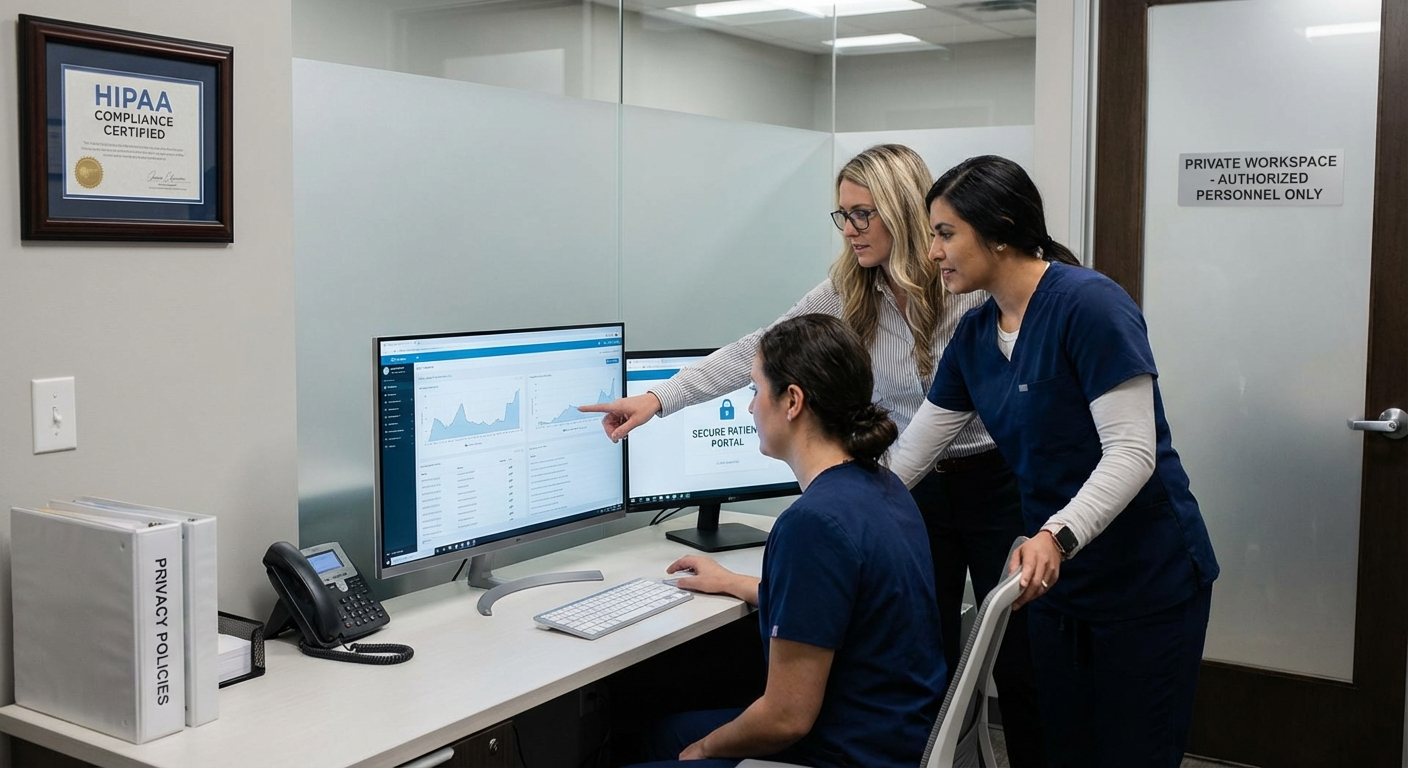
Most practices focus only on the first pillar. That’s a mistake. Without documented policies and proper vendor agreements, even a technically secure chatbot creates compliance risk.
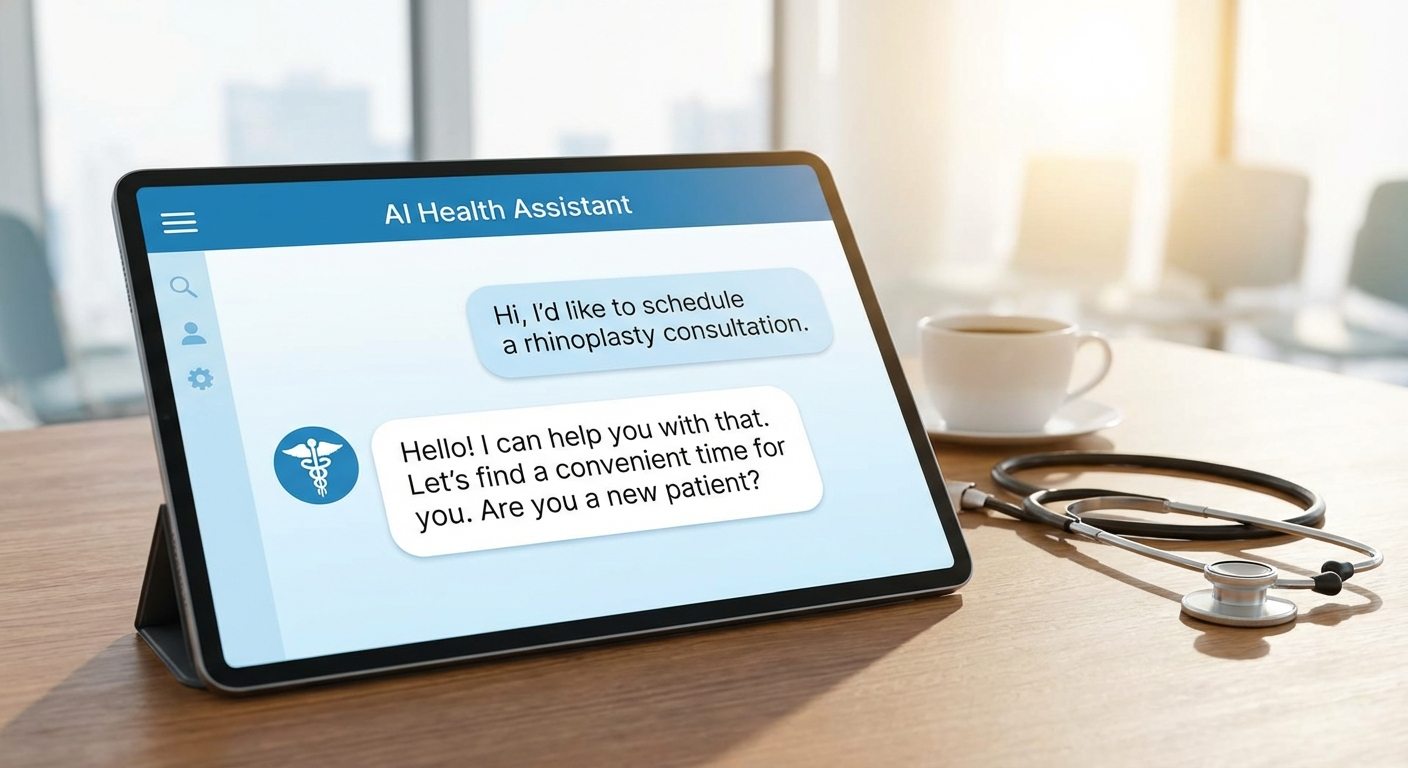
Why Aesthetic Practices Need AI Chatbots
The aesthetic industry has unique challenges that make AI chatbots particularly valuable:
The After-Hours Problem
63% of cosmetic procedure inquiries happen outside business hours. Patients research procedures at night, on weekends, and during lunch breaks—times when your staff isn’t available. Every unanswered inquiry is a potential consultation that goes to a competitor.
Traditional solutions like after-hours answering services are expensive ($500-2,000/month) and often lack the knowledge to answer procedure-specific questions. They can take messages, but they can’t engage meaningfully with a patient comparing rhinoplasty approaches.
The Response Time Gap
Studies consistently show that responding within 5 minutes makes you 21 times more likely to qualify a lead than waiting 30 minutes. For aesthetic practices where consultations often exceed $500 and procedures can reach $20,000+, the revenue impact of slow response is enormous.
Consider this math: If you receive 100 inquiries monthly and convert 20% to consultations with instant response versus 8% with next-day response, you’re looking at 12 additional consultations per month. At an average procedure value of $8,000, that’s potentially $96,000 in monthly revenue difference.
The Staffing Reality
Most aesthetic practices can’t afford dedicated staff for around-the-clock communication. AI chatbots fill this gap by handling initial inquiries, answering FAQs, collecting basic information, and qualifying leads—all while your team focuses on patients in the office.
Choosing a HIPAA-Compliant Chatbot Platform
Not all chatbot platforms are created equal when it comes to healthcare. Here’s what to evaluate:
Must-Have Features
| Feature | Why It Matters |
|---|---|
| Business Associate Agreement (BAA) | Legal requirement—no BAA means no HIPAA compliance |
| End-to-End Encryption | Protects data in transit and at rest |
| Audit Logging | Creates required documentation trail |
| Access Controls | Limits who can view patient conversations |
| Data Retention Controls | Enables compliance with records requirements |
| Automatic PHI Detection | Flags sensitive information for special handling |
Red Flags to Avoid
- No BAA offered — This is non-negotiable. Walk away from any vendor that won’t sign a BAA.
- Consumer-grade platforms — Tools like standard ChatGPT, Intercom, or Drift aren’t designed for healthcare without significant configuration.
- Unclear data storage — You need to know exactly where patient data lives and who can access it.
- No healthcare-specific training — Generic chatbots don’t understand procedure terminology or patient communication needs.
Recommended Approach
Work with vendors that specialize in healthcare AI or have established HIPAA-compliant tracks. Solutions like Klara, Podium (healthcare version), and specialized practice management integrations offer the compliance infrastructure you need.
If you’re considering automation services for your practice, ensure any chatbot solution integrates with your existing patient management systems while maintaining compliance barriers.
Implementing Your Chatbot: Step-by-Step
Here’s how to deploy a HIPAA-compliant chatbot without disrupting your practice operations:
Step 1: Define the Chatbot’s Scope
Start by identifying what your chatbot should and shouldn’t handle:
Chatbot Should Handle:
- General procedure information (non-personalized)
- Office hours, location, and contact details
- Consultation scheduling
- FAQ responses
- Initial inquiry collection
- Directing patients to appropriate resources
Chatbot Should Escalate:
- Specific medical questions requiring clinical judgment
- Existing patient concerns about their care
- Emergency situations
- Requests for pricing on specific procedures (often requires consultation)
Clear boundaries prevent compliance issues and ensure patients get appropriate responses.
Step 2: Create Compliant Conversation Flows
Your chatbot scripts need to balance helpfulness with compliance. Here’s an example:
Compliant Approach:
“I’d be happy to help you learn about rhinoplasty. I can share general information about the procedure, typical recovery timelines, and help you schedule a consultation with Dr. Smith. What would be most helpful?”
Risky Approach:
“Tell me about your nose concerns and any previous procedures you’ve had, and I’ll let you know if rhinoplasty is right for you.”
The first approach provides value without collecting PHI. The second solicits medical history without proper safeguards in place.
Step 3: Configure Privacy Protections
Implement these technical safeguards before going live:
- Session timeouts — Automatically end conversations after inactivity (15-30 minutes recommended)
- Disclaimer displays — Show privacy notices at conversation start
- PHI detection — Flag conversations that may contain sensitive information for human review
- Secure handoffs — When escalating to staff, transfer conversation context through secure channels
Step 4: Train Your Team
Staff training is a HIPAA requirement, not a suggestion. Ensure your team knows:
- How to access chatbot conversation histories securely
- When and how to take over from the chatbot
- What information can and cannot be shared via chat
- How to document chatbot interactions in patient records
Step 5: Document Everything
Create written policies covering:
- Chatbot purpose and scope
- Data handling procedures
- Staff responsibilities
- Incident response protocols
- Regular compliance review schedules
These documents are essential for HIPAA audits and demonstrate your commitment to compliance.
Common HIPAA Chatbot Mistakes (And How to Avoid Them)
In our work with aesthetic practices, we’ve seen the same compliance mistakes repeatedly:
Mistake 1: Using Consumer Chat Tools
Many practices start with tools like Facebook Messenger or standard website chat widgets. These platforms lack the security infrastructure HIPAA requires and create significant liability.
Solution: Use healthcare-specific platforms from day one, even if they cost more. The potential fines ($100-$50,000 per violation) far exceed the subscription cost difference.
Mistake 2: Collecting Too Much Information
Chatbots that ask for medical history, medications, or specific health concerns before establishing secure communication channels are collecting PHI without adequate protection.
Solution: Design chatbots to gather only what’s needed for scheduling (name, contact info, general inquiry topic). Detailed medical information should be collected through your secure patient portal.
Mistake 3: No Human Escalation Path
AI chatbots should augment your team, not replace clinical judgment. Practices that let chatbots handle complex medical questions create both compliance and patient safety risks.
Solution: Build clear escalation triggers. When patients ask about specific medical situations, complications, or express urgent concerns, route them to qualified staff immediately.
Mistake 4: Ignoring Audit Requirements
HIPAA requires you to maintain logs of who accessed patient information and when. Chatbot conversations are no exception.
Solution: Ensure your platform maintains comprehensive audit logs and that you review them regularly. Most HIPAA-compliant platforms handle this automatically.
Mistake 5: Missing the BAA
Some practices assume using a healthcare-marketed platform means compliance. Without a signed Business Associate Agreement, you have no legal protection if the vendor mishandles data.
Solution: Request and review the BAA before implementation. Keep signed copies with your other compliance documentation.
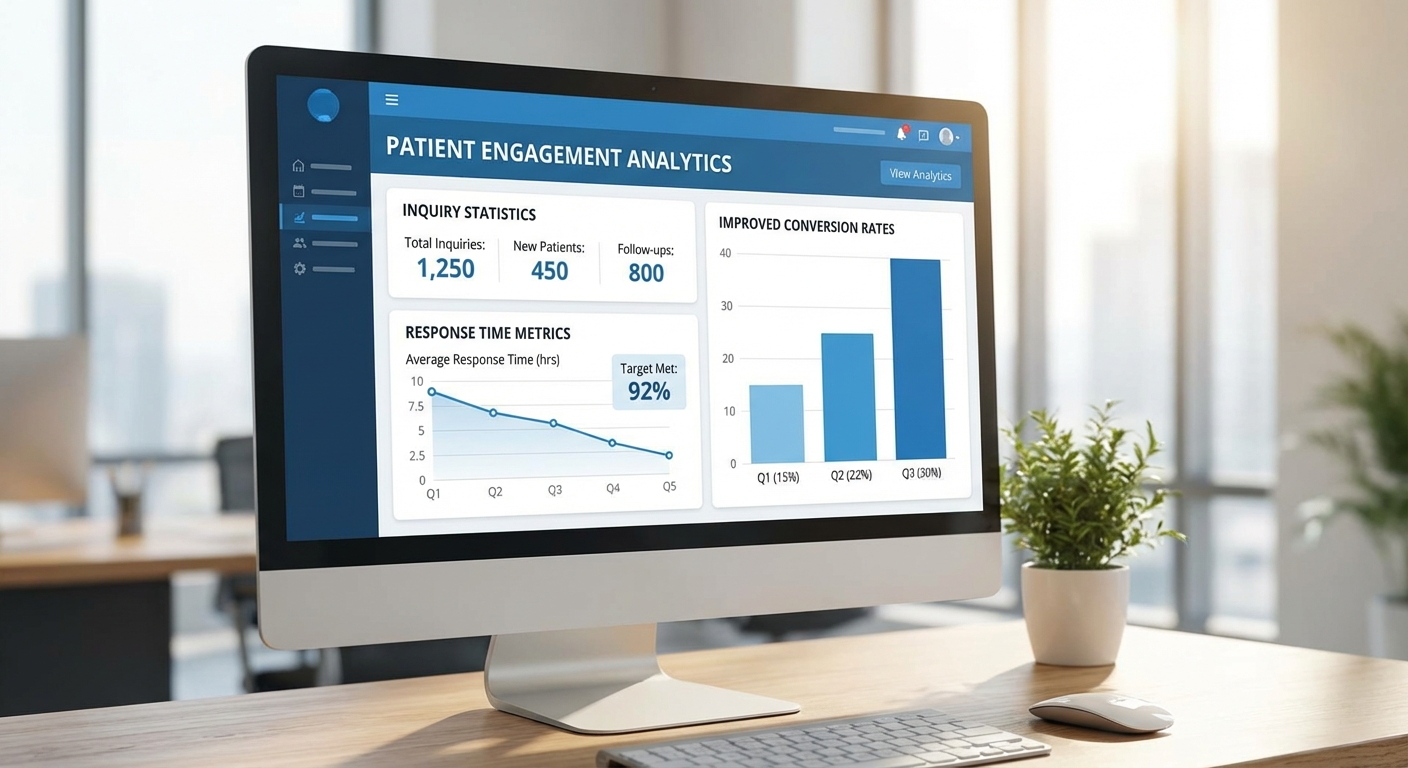
Measuring Chatbot Success
Track these metrics to evaluate your chatbot’s performance and ROI:
Engagement Metrics
- Conversation volume — How many patients are using the chatbot?
- Completion rate — What percentage of conversations reach intended outcomes?
- Handoff rate — How often are conversations escalated to staff?
- After-hours captures — How many leads come in when you’re closed?
Business Impact Metrics
- Lead response time — How quickly are inquiries receiving initial responses?
- Consultation conversion rate — Are chatbot-qualified leads converting better?
- Staff time savings — How much time is your team saving on routine inquiries?
- Cost per lead — Has chatbot implementation reduced acquisition costs?
Compliance Metrics
- PHI incidents — Any conversations flagged for potential compliance issues?
- Escalation compliance — Are appropriate conversations being routed to staff?
- Audit log completeness — Are all required records being maintained?
Integrating Chatbots with Your Practice Systems
The most effective chatbot implementations connect with your existing technology stack:
Patient Management Integration
Your chatbot should feed directly into your practice management system. When a patient provides contact information and scheduling preferences, that data should flow automatically—no manual re-entry that creates errors and delays.
CRM Connection
For practices using customer relationship management tools, chatbot interactions should create or update contact records. This gives your team full context when following up and enables better lead nurturing. Understanding automated follow-up sequences can help you maximize the value of chatbot-captured leads.
Scheduling Sync
Direct calendar integration allows chatbots to offer real consultation availability rather than generic “we’ll call you back” responses. Patients can often self-schedule, reducing administrative burden while improving conversion.
Analytics Dashboard
Aggregate chatbot data with your other marketing metrics to understand the full patient acquisition picture. Which channels drive chatbot conversations? What questions do patients ask most? Where are you losing potential consultations?
The ROI Case for Compliant Chatbots
Let’s build a realistic ROI model for an aesthetic practice considering chatbot implementation:
Assumptions:
- Monthly inquiries: 150
- Current conversion to consultation: 15% (23 consultations)
- Average procedure value: $8,000
- Consultation-to-procedure rate: 40%
- Monthly procedures from inquiries: 9
- Monthly revenue from inquiries: $72,000
With AI Chatbot:
- Improved conversion (instant response): 25% (38 consultations)
- After-hours capture increase: +20 additional consultations (58 total)
- Same consultation-to-procedure rate: 40%
- Monthly procedures from inquiries: 23
- Monthly revenue from inquiries: $184,000
Investment:
- HIPAA-compliant chatbot platform: $300-800/month
- Implementation and training: $2,000-5,000 (one-time)
- Ongoing optimization: 2-4 hours staff time monthly
Result: Potential revenue increase of $112,000/month from improved lead capture and conversion. Even accounting for the most conservative estimates (50% of this impact), the ROI is substantial.
Getting Started This Week
Ready to implement HIPAA-compliant AI chatbots for your practice? Here’s your action plan:
-
Audit current response times — Track how long it takes to respond to inquiries. This becomes your baseline.
-
Research compliant platforms — Request demos from 2-3 healthcare-focused chatbot providers. Ask specifically about their BAA, encryption, and audit capabilities.
-
Define your scope — Document what the chatbot should handle versus what requires human response.
-
Draft conversation flows — Create scripts for your most common inquiry types that provide value without collecting unnecessary PHI.
-
Plan your integration — Map how chatbot data will flow to your existing systems.
-
Train your team — Ensure everyone understands the new workflows and their compliance responsibilities.
-
Launch in phases — Start with basic FAQs and scheduling before expanding functionality.
Next Steps
AI chatbots represent a significant competitive advantage for aesthetic practices—but only when implemented correctly. The practices seeing the best results combine compliant technology with thoughtful conversation design and proper staff training.
If you’re looking to automate patient communication while maintaining HIPAA compliance, the investment pays for itself quickly in captured leads and consultation bookings.
For practices unsure where to start, our team specializes in implementing compliant automation solutions for aesthetic practices. Contact us to discuss how AI chatbots could work for your specific situation and patient communication needs.
Frequently Asked Questions
Can AI chatbots be HIPAA compliant?
Yes, AI chatbots can be fully HIPAA compliant when properly implemented. Compliance requires using platforms that offer Business Associate Agreements, end-to-end encryption, audit logging, and access controls. The chatbot must also be configured to handle Protected Health Information appropriately, with clear escalation paths for sensitive medical discussions.
What questions can a HIPAA-compliant chatbot answer?
HIPAA-compliant chatbots can answer general procedure information, office hours, location details, and frequently asked questions. They can also collect basic contact information for scheduling purposes. However, conversations involving specific medical history, diagnosis, or treatment recommendations should be escalated to qualified clinical staff through secure channels.
How much does a HIPAA-compliant chatbot cost?
HIPAA-compliant chatbot platforms typically range from $300-800 per month for aesthetic practices, plus one-time implementation costs of $2,000-5,000. Some enterprise solutions cost more. The ROI typically justifies the investment within 1-2 months through improved lead capture and reduced staff time on routine inquiries.
Do I need a BAA for my chatbot vendor?
Yes, a Business Associate Agreement is legally required under HIPAA whenever a third party handles Protected Health Information on your behalf. This includes chatbot platforms that store or transmit patient conversations. Never use a chatbot platform that won’t sign a BAA—the compliance risk isn’t worth it.
Last updated: February 2026