
You don’t need to out-spend national chains. You need to out-local them.
Hyperlocal marketing is the strategy of targeting customers in a tightly defined geographic area — your neighborhood, your zip code, your stretch of a city. It’s about showing up in exactly the right place at the right moment, when someone nearby is ready to buy. And for small businesses competing against bigger brands with deeper pockets, it’s often the single most effective weapon available.
This guide covers what hyperlocal marketing actually is, why it works, and — most importantly — how to execute it with the tools available to any small business in 2026.
What Is Hyperlocal Marketing?
Hyperlocal marketing is the practice of targeting potential customers based on their precise, real-time location — typically within a few miles or even a few blocks of your business. Unlike broader local SEO or regional advertising, hyperlocal marketing narrows focus to the area where you can realistically serve customers and where your community presence gives you a natural edge.
The strategy works because proximity matters. When someone searches “plumber near me” or “best coffee Naples FL,” they’re not comparison-shopping nationally — they want someone close, available, and trustworthy. Hyperlocal marketing puts your business at the front of that search, in their neighborhood, right when they need you.
For Southwest Florida businesses — from Naples to Fort Myers and Cape Coral — hyperlocal is especially powerful. SWFL’s patchwork of distinct neighborhoods, seasonal population swings, and tight community networks reward businesses that position themselves as community anchors, not just service providers.
Why Bigger Isn’t Better in Local Markets
National chains have marketing budgets that would make your eyes water. They don’t have what you have: genuine local roots.
When a customer in East Naples chooses between a national pest control franchise and a family-owned operation they’ve seen at the farmers market and whose truck they recognize in the neighborhood — the local business wins if they’ve done the work to stay visible.
Hyperlocal marketing is how you do that work systematically, not just by accident.
Three reasons it outperforms broad advertising for small businesses:
Higher intent. Someone searching “HVAC repair Cape Coral” right now has an immediate need. A hyperlocal ad or search result that catches them in that moment converts at dramatically higher rates than a generic brand awareness campaign.
Lower cost per acquisition. When you target tightly, you stop paying to reach people who can’t or won’t buy from you. A Naples restaurant running ads shown only to people within five miles will spend less and book more than one running countywide.
Community compounding. Every local customer you win becomes a potential neighbor referral. A happy customer in your target neighborhood is your best salesperson. That compounding effect doesn’t work at scale — it works block by block.
Step 1: Define Your Hyperlocal Target Area
Before you run a single ad or optimize a single page, get specific about your geography.
Most small businesses serve a surprisingly tight radius — typically 3–10 miles from their location. Some serve even tighter: a downtown Naples salon primarily draws from downtown, Old Naples, and Port Royal. A plumber in Estero draws most jobs from Estero, Bonita Springs, and southern Fort Myers.
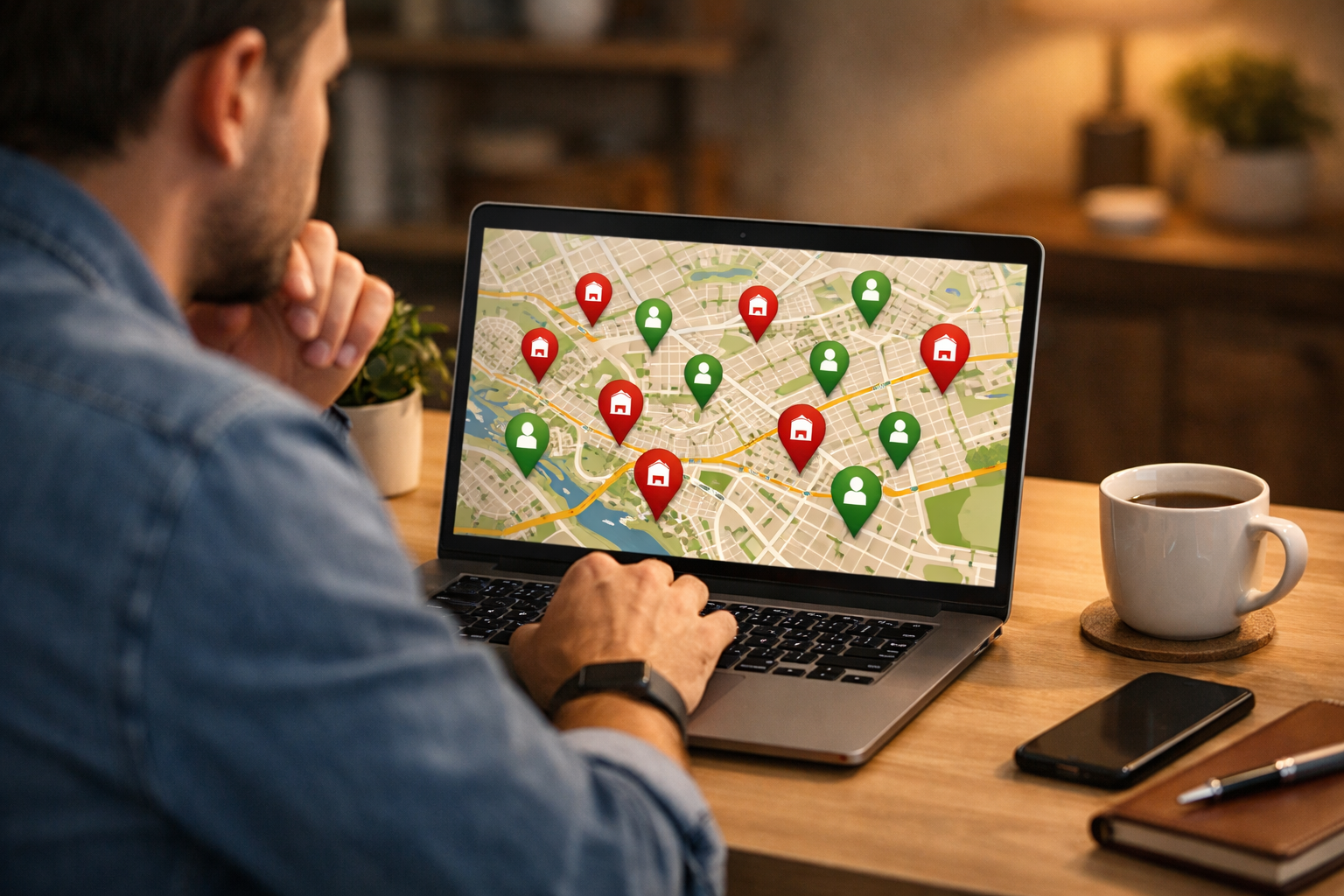
Map your actual customers. If you have a CRM or booking system, pull the zip codes of your last 100 customers. You’ll almost certainly find that 70-80% come from the same 3-4 neighborhoods or zip codes. Those are your hyperlocal targets.
Once you know your zones, you can make smarter decisions about:
- Where to invest in Google Business Profile optimization
- Which neighborhoods to target with paid social ads
- Which local events to sponsor or attend
- Which community Facebook groups to participate in
Don’t try to be everywhere. Being the most recognizable business in two or three neighborhoods beats being vaguely known across an entire metro area.
Step 2: Dominate Your Google Business Profile
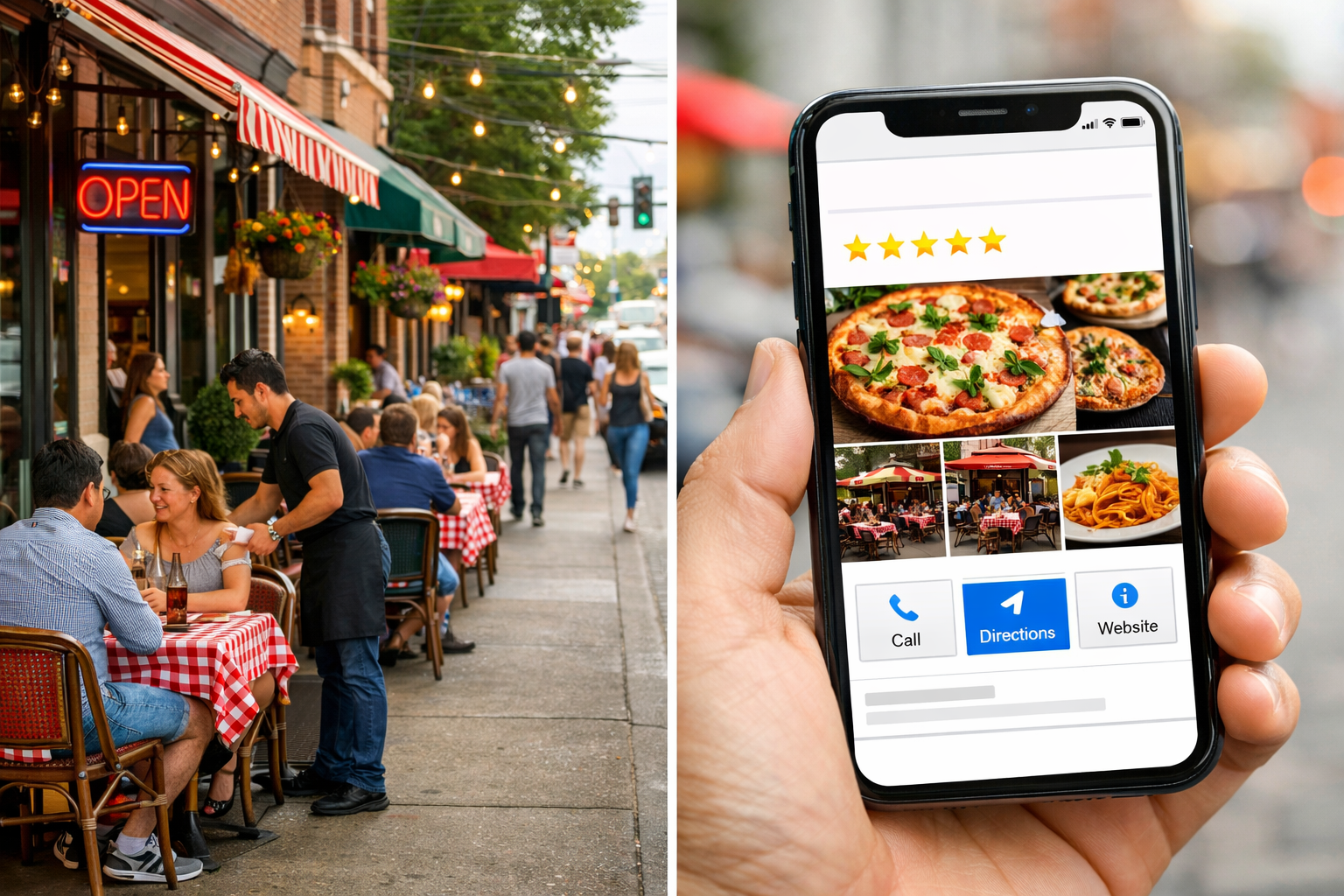
For hyperlocal marketing, your Google Business Profile (GBP) is the single highest-ROI asset you control. It’s free. It drives direct calls and direction requests. And it’s the primary way people discover local businesses in real-time.
Most businesses set it up once and forget it. That’s a mistake. The businesses that dominate hyperlocal search are the ones actively managing their GBP week over week.
Fill out every section completely. Business description, hours (including holiday hours), services, attributes, Q&A — all of it. Google rewards completeness with better visibility.
Post weekly updates. Google Posts appear directly in your business listing. A weekly post — a promotion, a behind-the-scenes photo, a new service — signals to Google that your business is active and engaged. Most competitors don’t do this. It’s a cheap edge.
Respond to every review. All of them — five stars and one star. Responding to reviews increases your listing’s authority and shows potential customers that you’re attentive. A polite, professional response to a negative review often impresses readers more than the complaint hurts you. Our online reputation management guide covers review response strategy in detail.
Add photos regularly. Businesses with more photos get more clicks. Aim for at least one new photo per week — your team, your work, your shop, happy customers (with permission). Real photos outperform stock images in every way.
Use the Q&A section strategically. You can ask and answer your own questions. Add the questions customers ask most often: “Do you serve Cape Coral?” “Is there parking?” “Do you offer same-day service?” This controls the narrative and improves your visibility for those queries.
Step 3: Build Neighborhood-Specific Content
Generic content doesn’t rank locally. Neighborhood-specific content does.
If you’re a landscaping company in Fort Myers, a blog post titled “Landscaping Tips for Fort Myers Homeowners” will outperform “General Landscaping Guide” every time in local search — because Google serves location-relevant content to users searching with local intent.
This isn’t about stuffing city names into every paragraph. It’s about genuinely addressing the concerns and context of your specific market.
Practical ways to create hyperlocal content:
- Write posts addressing local conditions: “Hurricane Season Prep for Your Cape Coral Lawn” or “Maintaining Your Naples Home During Snowbird Season”
- Create neighborhood-specific landing pages if you serve multiple distinct areas:
/services/naples,/services/bonita-springs, etc. - Reference local landmarks, events, and organizations naturally in your content
- Answer questions specific to your market: “What’s the best time of year to repave in Southwest Florida?” (answer: not hurricane season)
This type of content does something generic content can’t: it signals to Google — and to readers — that you actually know and serve this specific community. That trust is hard to replicate and nearly impossible for an out-of-market competitor to fake.
Step 4: Run Hyperlocal Paid Ads
Organic visibility takes time. Paid ads let you appear immediately for high-intent local searches and reach specific neighborhoods on social media.
Google Local Search Ads are the most direct option. They appear at the top of local search results and integrate directly with your Google Business Profile. You set a radius around your location and only pay when someone clicks. For service businesses, these convert exceptionally well because you’re catching people with active need.
Start narrow. A 5-mile radius around your business will typically outperform a 20-mile radius for both conversion rate and cost efficiency. Expand only once you’ve validated performance in your core zone.
Meta (Facebook/Instagram) Radius Targeting lets you reach people living in or recently in a specific geographic area. You can target by zip code, city, or a custom radius around a pin. For businesses that sell to residents (as opposed to intent-based searches), this is powerful: you’re building awareness with people who are genuinely in your market.
Use neighborhood-relevant creative. An ad that mentions the customer’s neighborhood or references a local landmark performs meaningfully better than generic imagery. “Serving Naples homeowners since 2018” reads differently to a Naples resident than a generic headline.
Google Local Service Ads (LSAs) deserve a mention for service businesses — plumbers, electricians, cleaners, landscapers, contractors. LSAs appear above regular search ads with a “Google Guaranteed” badge. They’re pay-per-lead rather than pay-per-click, and they dramatically increase trust with potential customers. If you’re eligible, they’re worth setting up.
Step 5: Own Your Community Online
The most underestimated hyperlocal marketing channel isn’t Google — it’s your community’s online social ecosystem.
Nextdoor is the neighborhood social network, and it’s where residents ask for local business recommendations. A verified Nextdoor business profile lets you post about your services, respond to neighbor questions, and be visible when someone asks “who’s a good electrician in Pelican Bay?” Many small businesses get significant revenue from Nextdoor referrals without spending a dollar on advertising.
Local Facebook Groups operate similarly. Most cities and neighborhoods have active groups where residents ask for recommendations. Participating in these groups — genuinely, helpfully, not just promotionally — builds the kind of community credibility that translates directly to business.
The key word is genuinely. Don’t spam groups with promotions. Answer questions in your area of expertise. Be helpful. When someone asks for a plumber recommendation and you’ve been a helpful, knowledgeable presence in that group for six months, you’ll get the referral.
Community sponsorships and partnerships extend this principle offline. Sponsoring a local Little League team, a neighborhood association newsletter, or a charity event creates the kind of visibility that doesn’t expire when an ad budget runs out. It builds durable brand association with your neighborhood. Our local partnership marketing guide walks through how to structure these arrangements for mutual benefit.
Step 6: Make It Easy for Neighbors to Refer You
Word-of-mouth is hyperlocal marketing’s organic engine. Every satisfied customer in your target neighborhood is a potential referral source — but most businesses leave this almost entirely to chance.
A few simple systems dramatically increase referral volume:
Ask directly, at the right moment. The best time to ask for a referral is immediately after a positive interaction — when you’ve just completed a great job, when a customer compliments your work, when you send a thank-you message. “If you know anyone else who needs [service], I’d really appreciate the recommendation” is all it takes. Most customers are happy to refer; they just need the nudge.
Make it frictionless. Give customers something to forward: a text they can copy to a friend, a link to your Google listing, a digital referral card. The easier the action, the more people take it.
Incentivize referrals when appropriate. A small reward — a service credit, a gift card, a discount on the next visit — can meaningfully increase referral rates. Our referral program guide covers how to structure this without it feeling transactional.
Follow up and close the loop. When a referred customer converts, let the referrer know. “Hey Sarah, I just helped your neighbor Tom — thank you so much for sending him my way.” This closes the loop, reinforces the behavior, and deepens your relationship with both customers.
Step 7: Track What’s Actually Working
Hyperlocal marketing isn’t effective if you don’t know which parts are driving real results. A few metrics to track:
| Metric | How to Measure |
|---|---|
| GBP calls and direction requests | Google Business Profile Insights |
| Local search ranking | Google Search Console, BrightLocal |
| Referral lead source | Ask new customers how they found you; CRM tagging |
| Paid ad cost per lead | Google Ads / Meta Ads Manager |
| Neighborhood-level revenue | CRM zip code segmentation |
For businesses running paid ads, cost per acquisition by radius and neighborhood is the number that matters most. Some neighborhoods convert at 3x the rate of others for the same spend. Once you identify those high-performers, you can shift budget accordingly.
Google Business Profile Insights tells you how many people called you, asked for directions, or visited your website directly from your listing. Track this monthly — it’s one of the clearest signals of how your hyperlocal organic visibility is trending.
If you’re not yet using Google Analytics 4 to track your local landing page performance and ad traffic, the GA4 guide for small businesses is a good starting point.
Building a Hyperlocal Content Calendar
Consistency is what separates businesses that see results from ones that try something for a month and give up. A simple quarterly content calendar keeps your hyperlocal efforts on track.
For SWFL businesses, structure your calendar around the rhythms of the local market:
- November–April: Snowbird season. High traffic from seasonal residents. Prioritize GBP updates, paid ads, and community visibility. This is your peak acquisition window for many sectors.
- March–April: Festival and event season. Sponsor or attend local events. Create content around spring home prep, seasonal promotions, and community happenings.
- May–October: Local resident-focused season. Snowbirds are gone; lean into the permanent resident community. Emphasize local loyalty, neighborhood authority, and summer-specific offers.
- September: Back-to-school, local rebound. Strong time for home services, professional services, and family-focused businesses.
Overlay this onto your seasonal marketing calendar to make sure your hyperlocal activity aligns with your broader promotional calendar.

Automating Your Hyperlocal Follow-Up
One of the highest-leverage moves in hyperlocal marketing is automating the follow-up with new local leads. When someone submits a contact form from a neighborhood landing page, calls from your GBP listing, or engages with a local ad, the speed of your response determines whether you win the job.
Studies consistently show that leads contacted within five minutes of inquiring are dramatically more likely to convert than those contacted after an hour. But most small business owners are on a job, with a customer, or off the clock when leads come in.
Automation solves this. A simple workflow — triggered by a new lead — can send a personalized text within seconds, deliver your contact info, and even book a callback time. Your automated follow-up sequences can be segmented by neighborhood so residents of each area get messaging that references their specific location and concerns.
If you’re running multiple neighborhood-specific landing pages, this becomes even more powerful: a lead from your Naples page gets a Naples-specific welcome message; a Fort Myers lead gets one tailored to Fort Myers residents. The personal touch that used to require a full-time receptionist now runs automatically, 24/7.
Frequently Asked Questions
What’s the difference between local SEO and hyperlocal marketing?
Local SEO targets customers searching for businesses in a broader area — typically a city or region. Hyperlocal marketing narrows focus to a very tight geographic zone, often a few miles or a specific neighborhood. Hyperlocal uses a combination of local SEO, radius-targeted ads, community engagement, and location-specific content to dominate a small, defined area rather than compete citywide.
How small should my hyperlocal target area be?
Start with your actual customer data. Pull the zip codes of your most recent 50–100 customers and find where they cluster. For most small businesses, 70–80% of customers come from 2–4 zip codes or neighborhoods. Those are your primary hyperlocal targets. You can always expand once you’ve established dominance in your core zone.
Do I need a separate Google Business Profile for each neighborhood I serve?
No — one GBP per physical location is the standard. But if you have a service area business (plumber, electrician, landscaper) with no storefront, you can set a service area radius in your GBP. If you genuinely have multiple physical locations, each should have its own profile. For neighborhood targeting within a single service area, focus on neighborhood-specific landing pages and content rather than multiple profiles.
How long does hyperlocal marketing take to show results?
Paid ads (Google Local Search Ads, Meta radius targeting) can drive results within days of launch. Google Business Profile improvements typically show ranking impact within 4–8 weeks of consistent effort. Organic content and community-building efforts compound over 3–6 months before significant results are visible. The businesses that win long-term build all three tracks simultaneously.
Is Nextdoor worth the time investment for small businesses?
For most local service businesses and retail — yes. Nextdoor referrals are among the highest-quality leads available because they come pre-endorsed by a neighbor. A verified business profile and genuine participation in neighborhood discussions costs only time, and the trust level of a Nextdoor recommendation is hard to replicate through paid channels.
Hyperlocal marketing is the clearest path to outcompeting bigger businesses in your own backyard. You don’t need their budget — you need their customers’ neighbors to know your name.
The businesses that win in Southwest Florida’s local markets are the ones that show up consistently in the right neighborhoods, online and off, with the right message for the right moment. That takes a system, not just effort.
If you’re ready to build that system — from hyperlocal content and GBP optimization to automated lead follow-up — Monsoft Solutions helps small businesses across SWFL do exactly that. Reach out to see what a hyperlocal strategy looks like for your specific market.