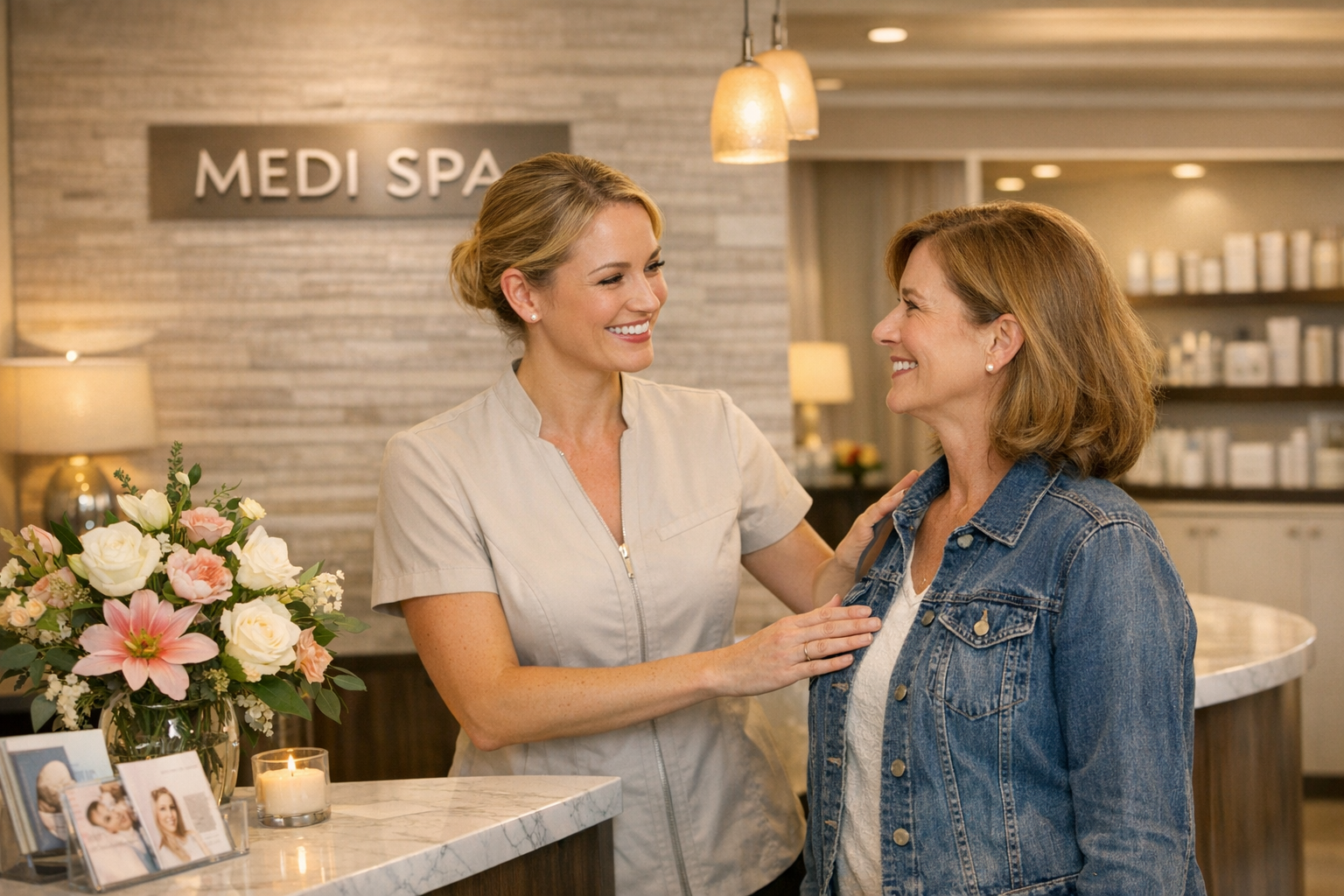
You’ve spent real money acquiring every patient on your list. Consultation marketing, Google Ads, social media, referral incentives — none of it comes free. So when a patient disappears after one or two visits, that investment walks right out the door with them.
The good news: most lapsed patients didn’t leave because they had a bad experience. They left because life got busy, they forgot, or no one reached out to remind them they were missed. That’s a recoverable situation. A well-built patient reactivation campaign turns dormant names in your CRM into booked appointments — often at a fraction of the cost of acquiring new patients.
This guide covers exactly how to build that system from scratch.
Why Patients Go Quiet (And Why It’s Not What You Think)
Before diving into tactics, it helps to understand why patients lapse in the first place. Exit surveys and industry research consistently point to the same culprits:
No follow-up. The most common reason by far. If your practice doesn’t have an automated follow-up sequence triggered by inactivity, patients simply drift. They don’t think about their next Botox appointment any more than they think about their next oil change — until something reminds them.
Timing and life circumstances. A patient might go quiet during a move, job change, pregnancy, or financial stretch. None of that means they’re gone forever. It means they need a reason to come back when the time is right.
Felt forgotten. Patients notice when they haven’t heard from you. If a year passes with no check-in, no birthday message, no “we miss you” email, the subconscious takeaway is that they weren’t important. A reactivation campaign signals the opposite.
Price sensitivity. Some patients genuinely want to return but are waiting for an offer that makes it feel worth it. A targeted promotion — not a public discount — can be the nudge they need.
Understanding these drivers shapes your reactivation strategy. You’re not trying to win back patients who hated their results or had a terrible experience (though those deserve a different kind of outreach). You’re reaching the much larger group who simply lost the habit.
Defining “Lapsed” for Your Practice
Before you can reactivate patients, you need to segment them. What counts as “lapsed” varies by treatment type:
- Botox/Dysport: Most patients return every 3–4 months. If they haven’t booked in 5–6 months, they’re lapsed.
- Fillers: Longevity varies (6–18 months), so lapsed might mean 18–24 months since last visit.
- Laser/skin treatments: Typically quarterly or semi-annually. Lapsed at 7–9 months.
- Body contouring: Often a series, then maintenance. Lapsed if no follow-up booked within 60–90 days of completing a series.
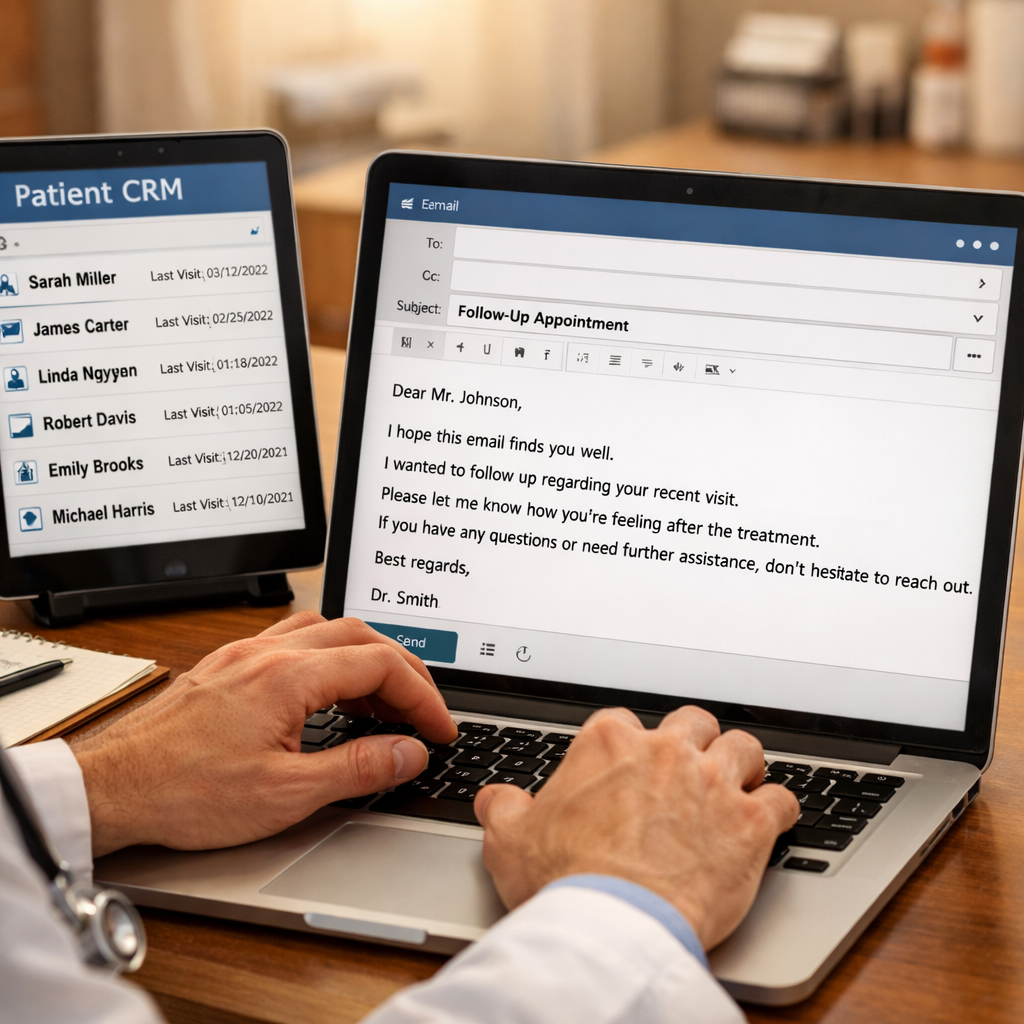
Set up segments in your CRM or practice management software that auto-populate based on these thresholds. You want a real-time list, not something you have to manually pull every quarter.
If your platform supports it, add a second tier for “at risk” — patients approaching the lapsed threshold who haven’t booked yet. Catching them before they officially lapse is even better.
Building Your Reactivation Sequence
A reactivation campaign is a series of touchpoints — not a single email blast. The goal is to get the patient’s attention, remind them of the value they’ve been missing, and give them a clear reason to act now.
A proven three-step sequence:
Step 1: The “We Miss You” Email (Day 0)
This first email is warm, personal, and low-pressure. No hard sell. Just a genuine check-in with a soft reminder of what they’ve been missing.
Subject lines that work:
- “It’s been a while, [First Name] — we’d love to catch up”
- “Your skin deserves some attention, [First Name]”
- “It’s been [X] months — ready for a refresh?”
Body copy elements:
- Personalize with their name and the treatment they last had
- Mention specific results or goals from their last visit if your CRM stores notes
- Brief reminder of what seasonal changes mean for their treatment (spring is ideal for skin refresh, summer prep)
- Soft CTA: “Browse our treatments” or “Check your current specials”
Avoid discount offers in this first email. A “we miss you” message with an immediate 20% off reads as desperate, not caring.
Step 2: The Value-Add Email (Day 7)
If the first email gets no response, follow up with something genuinely useful — not just another ask.
Options:
- A skincare tip relevant to their treatment history (“5 ways to extend your Botox results”)
- A seasonal guide (“What your skin needs this spring after winter dryness”)
- A patient success story or before/after (HIPAA-compliant, with consent)
- A new treatment or technology you’ve added since their last visit
End with a softer CTA: “Let’s build your spring treatment plan together. Book a complimentary consultation call.”
Step 3: The Reactivation Offer (Day 14–21)
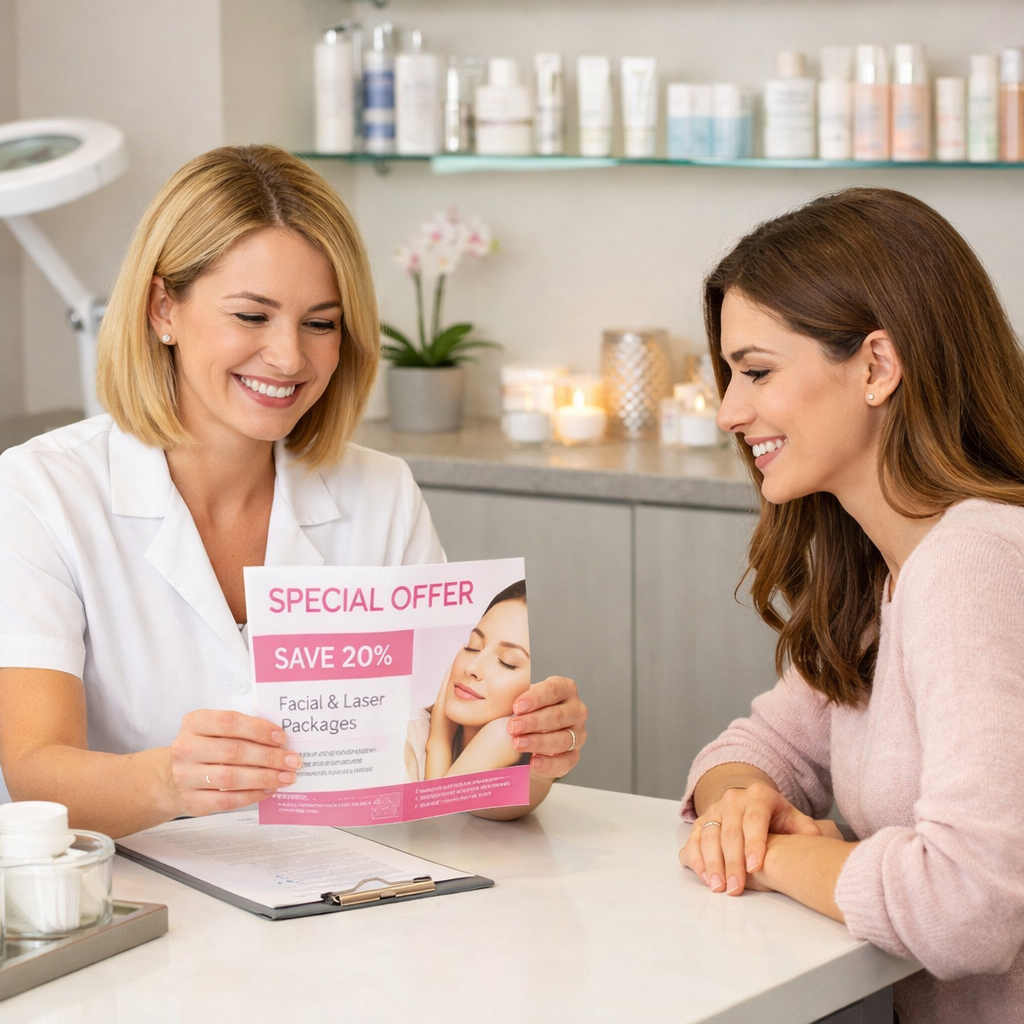
Now it’s time for the nudge. This touchpoint includes a clear, time-limited incentive exclusive to lapsed patients.
Effective reactivation offers:
- Complimentary add-on (lip flip, brow lift with Botox appointment)
- Discounted top-up session for existing filler patients
- “Welcome back” credit ($25–$50 toward their next visit)
- Bundle a treatment with a retail product they’ve purchased before
Keep the offer exclusive and expiring. “Book before April 15th” creates urgency without requiring a permanent discount structure.
Delivery: This step should include both email and SMS simultaneously, or SMS alone if email open rates have been low for a patient.
Optional Step 4: Personal Outreach (Day 30)
For high-value patients — those with significant lifetime spend or specific treatment loyalty — a personal phone call or direct message from their provider (or practice manager) can be incredibly effective. Most practices never do this, which means it stands out completely when you do.
SMS Reactivation: Short, Personal, Effective
Text messages have dramatically higher open rates than email — around 98% versus 20–30% for email. For reactivation campaigns, SMS works particularly well for the final step, but it needs to feel personal, not promotional.
What works:
“Hi [Name], it’s [Provider] at [Practice Name]. It’s been a while! We’re running a spring refresh special this month — [treatment] is on us when you book [main treatment]. Want to grab a time? [Link]”
What doesn’t work:
“SPRING SALE! 20% OFF ALL TREATMENTS! BOOK NOW! Reply STOP to opt out”
The second reads as spam. The first reads as a personal message from someone who knows you. Tone matters enormously in aesthetics — your patients chose you for a reason, and that reason usually isn’t price.
Make sure your SMS marketing platform supports personalization tokens and complies with TCPA regulations (opt-in only, easy opt-out). For med spas, also ensure any messaging with clinical context stays within your HIPAA compliance guidelines.
Automating Reactivation With Your CRM
Manual reactivation campaigns don’t scale. If you’re pulling lists and sending emails by hand, you’ll do it once and then abandon it when things get busy. Automation is what makes this sustainable.
Here’s how to build a basic automated reactivation flow:
Trigger: Patient hasn’t had an appointment in X days (based on your lapsed thresholds per treatment type)
Branch:
- Patients with email + SMS: Run full 3-step sequence
- Email only: Run email sequence, flag for manual follow-up at Day 30
- No contact on file: Flag for front desk outreach
Actions:
- Day 0: Send “we miss you” email
- Day 7: If no open or click → send value email; if opened → skip to Day 14 offer
- Day 14: Send reactivation offer email + SMS if no response to prior emails
- Day 30: Add to “high-value follow-up” task for manual outreach
Exit conditions:
- Patient books an appointment → removed from sequence immediately
- Patient replies or calls → removed and flagged for human response
- Patient unsubscribes → removed and flagged “no marketing” in CRM
Most major practice management systems (Aesthetic Record, Jane App, PatientNow, Nextech) have some built-in automation. For more advanced branching logic, tools like Zapier or Make can connect your PM system to email platforms like Klaviyo or ActiveCampaign.
Your CRM automation setup is the backbone of all of this. If you haven’t built that foundation yet, start there before layering on reactivation sequences.
Segmenting Your Reactivation List for Better Results
Not all lapsed patients are the same. A blanket reactivation email to everyone who hasn’t visited in 6 months is better than nothing — but a segmented approach will outperform it significantly.
Segment by lifetime value. Patients who’ve spent $2,000+ with you deserve more personalized outreach. They’re also more likely to return if you remind them of the relationship.
Segment by treatment type. A Botox patient shouldn’t get an email about body contouring, and vice versa. Your CRM should allow you to segment by last treatment or treatment history. Relevant messages convert better.
Segment by how recently they lapsed. A patient who’s been gone 6 months is much more likely to return than one who’s been gone 3 years. A tiered approach — warmer messaging for recent laps, more of an “are you still interested?” for older ones — allocates your effort where the ROI is highest.
Segment by channel preference. Some patients opened every email you sent. Others only engaged with texts. Use historical engagement data to route the right message to the right channel.
What to Say: Copy and Messaging That Works
Aesthetics is a deeply personal industry. Your reactivation copy should reflect that.
Lead with results, not discounts. “Your skin deserves a refresh going into summer” lands better than “Save 15% when you book this month.” Both might work, but the first one gets to why they care.
Use their treatment history. “Last spring you came in for [treatment] and loved the results — it’s been almost [X] months” is dramatically more effective than generic messaging. This requires good CRM notes, but the investment pays off.
Be human, not corporate. Your patients chose a med spa, not a box store. Write like a person talking to another person, not a marketing department sending a blast.
Create urgency without gimmicks. Real deadlines (spring before summer, holiday prep, pre-event timing) work better than fake countdown timers. If there’s a genuine seasonal hook, use it.
One CTA per email. Every reactivation email should have exactly one clear next step. “Book a consultation,” “Claim your offer,” “Reply to schedule” — not three different buttons pointing in three directions.
Tracking Reactivation Campaign Performance
You can’t improve what you don’t measure. These are the metrics that matter for reactivation campaigns:
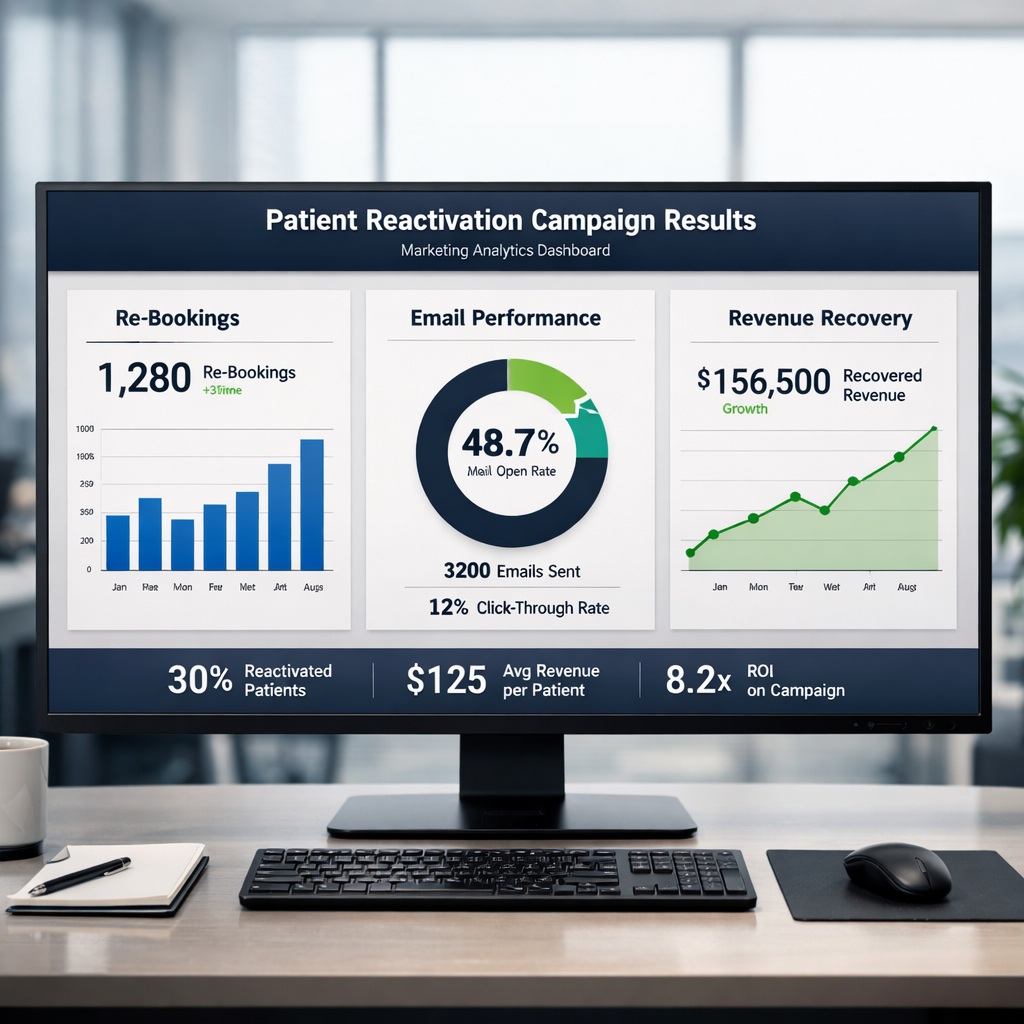
Reactivation rate: The percentage of lapsed patients who book an appointment after receiving your sequence. A benchmark to aim for: 10–15% is good; 20%+ is excellent.
Email open rate: Should be higher than your regular newsletter — lapsed patients who were previously engaged still remember you. Under 20% suggests subject line or list quality issues.
SMS response rate: For reactivation texts, 8–12% click-through is solid for a cold-ish list.
Revenue attributed to reactivation: What’s the total revenue generated from patients who re-engaged through this sequence? This is your ROI number.
Cost per reactivated patient: Divide total campaign cost (tools + offers + time) by number of re-bookings. Compare this to your cost per new patient acquisition — it should be significantly lower.
Track these monthly or quarterly and optimize your sequences over time. What subject lines get the best opens? Which offer drives the most bookings? Does SMS or email drive more re-bookings for different segments?
Pair this data with your Google Analytics 4 insights to understand which reactivated patients come back and keep coming back — versus those who take the offer and disappear again.
Preventing Lapse in the First Place
The best reactivation campaign is one you never have to run. While you’ll always have some natural attrition, a strong automated appointment reminder and follow-up system dramatically reduces how many patients slip through the cracks.
Key prevention touchpoints:
- Post-treatment follow-up: A check-in message 48–72 hours after any treatment (how are you feeling? any questions?) builds the habit of communication
- Treatment anniversary reminders: “It’s been 3 months since your last Botox — time to refresh?” sent automatically when the window opens
- Birthday messages: A personal happy birthday message with a small offer shows you remember patients as people, not appointments
- Seasonal check-ins: Spring, summer, fall — each season brings new treatment relevance. Use it
These automations are much simpler to build than a full reactivation sequence, and they keep the relationship warm so patients never fully lapse. Pair them with your email marketing automation for a complete retention ecosystem.
The Economics: Why Reactivation Beats Acquisition
Here’s the math that should make this a priority:
- Average cost to acquire a new med spa patient: $150–$400+ (Google Ads, social, referral incentives)
- Average cost to reactivate a lapsed patient: $20–$60 (email/SMS tools + offer value)
- Average reactivated patient’s lifetime value: Similar to a new patient — they already know and trust you
If your reactivation sequence costs you $30 per recovered patient (tools + offer) and generates an average first visit revenue of $350, you’re looking at a 10x return on that spend. And that’s before considering their future lifetime value.
Most aesthetic practices could generate an additional $15,000–$50,000 per year purely from reactivating patients who already exist in their system. That revenue is sitting dormant — it just needs a systematic process to wake it up.
Getting Started: Your First 30 Days
If you’re starting from zero, here’s a simple action plan:
Week 1: Pull your lapsed patient list from your practice management system. Define your segments by treatment type and time since last visit. Identify your top 50 highest-value lapsed patients for VIP outreach.
Week 2: Write your 3-step email sequence. Keep it simple first — one “we miss you,” one value email, one offer. Get it reviewed and ready to send.
Week 3: Set up your automation trigger in your CRM or email platform. Test the sequence with a small segment first.
Week 4: Launch. Monitor opens, clicks, and bookings daily for the first two weeks. Adjust based on what you see.
Once the automated sequence is running, it works for you in the background indefinitely. Every month, new lapsed patients enter the sequence. Appointments come back without you having to manually think about it.
Patient reactivation isn’t glamorous marketing — it doesn’t have the excitement of a new social campaign or the novelty of a new treatment launch. But it’s some of the most reliable, high-ROI activity any aesthetic practice can do.
Your patients already trust you. They’ve already experienced your results. They just need a reason to come back. Give them one.
Ready to build a reactivation system that runs itself? Get in touch with Monsoft Solutions — we help aesthetic practices and med spas set up the automation and CRM workflows that turn dormant patient lists into consistent monthly revenue.