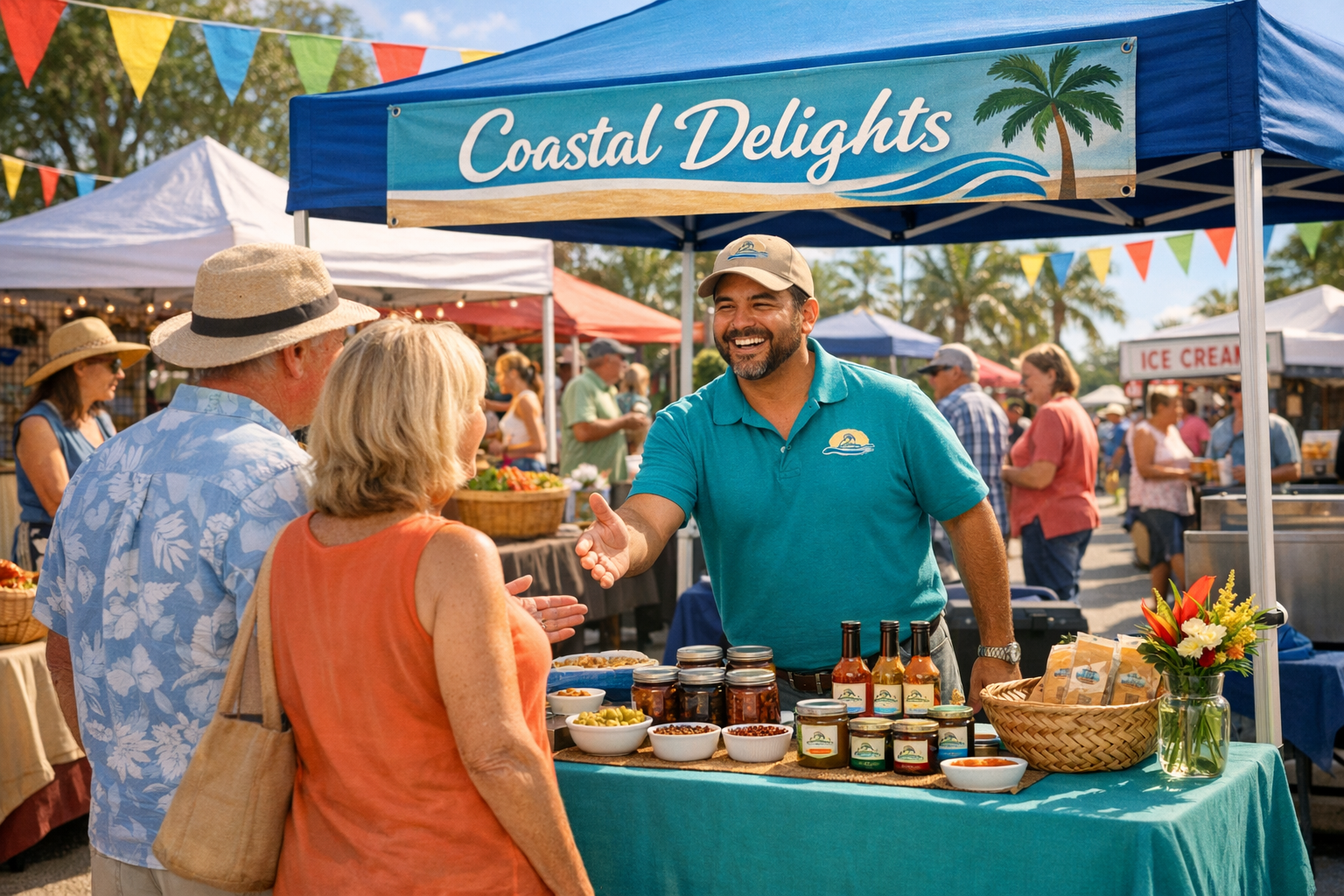
Most local events end the same way: you pack up your booth, drive home tired, and wonder if it was worth it. A handful of conversations, a stack of business cards nobody will call, and not a single new customer to show for it.
That’s not an event marketing problem. That’s a system problem.
When small businesses treat events as one-off appearances instead of lead-generation engines, they leave most of the value on the table. The businesses that consistently win at local events — farmers markets, festivals, chamber mixers, neighborhood fairs — do so because they show up with a plan, capture leads on the spot, and follow up before competitors even remember the event happened.
This guide breaks down exactly how to do that.
Why Local Events Still Work in 2026
Digital-first marketing has made local events more valuable, not less. When everyone’s inbox is flooded and ad costs keep rising, a face-to-face interaction with a prospective customer is worth more than ever.
Local events give you something a Facebook ad can’t: trust by proximity. When someone meets you in person at a neighborhood festival or chamber event, they’ve already decided they want to know more. You didn’t interrupt them — they walked up to you.
For Southwest Florida businesses in particular, the opportunity is significant. From Naples to Fort Myers and Cape Coral, SWFL hosts hundreds of community events throughout the year: art festivals, farmers markets, seasonal street fairs, charity fundraisers, and business networking events. The snowbird season (November through April) brings an influx of high-income visitors looking to discover local businesses. Events during this window can be especially lucrative.
The question isn’t whether events work. It’s whether you’re working them effectively.
Step 1: Choose the Right Events
Not every event deserves your time and money. Selective participation is how you stay profitable.
Evaluate events against three criteria:
Audience fit. Does this event attract your target customer? A luxury home services company should prioritize upscale neighborhood events and charity galas, not a student discount fair. An aesthetics practice should look for events where attendees have disposable income and care about appearance — art walks, boutique shopping events, wellness expos.
Expected attendance vs. booth cost. If it costs $500 to sponsor a booth and 200 people attend, you’re spending $2.50 per potential contact. Is that worth it for your average customer value? If your service is a $3,000 kitchen remodel, absolutely. If you sell $15 items, probably not.
Competition density. Some events pack in every service provider in town. Others have gaps. A landscaping company that’s the only one at a neighborhood home and garden show will outperform one sharing space with five other landscapers at a general vendor fair.
Start by identifying your best two or three recurring events for the year. Build systems around those before adding more.
Step 2: Build a Booth That Captures Attention
You have about three seconds to communicate what you do before someone walks past. Most booths fail this test.
The most effective setups share four elements:
A clear, benefit-focused headline. Not your business name — what you do for customers. “Never Miss a Call Again” beats “Southwest Florida Answering Services.” Lead with the customer’s problem, not your solution.
One dominant visual. Busy signage is invisible signage. Pick one striking visual — a before/after result, a customer photo, a clean product display — and make it large enough to see from 20 feet away.
A reason to stop. Demonstrations, giveaways, free assessments, and interactive elements give people permission to engage. A home cleaning company offering a free 5-minute decluttering consultation creates a natural reason to have a conversation.
A lead capture mechanism. This is the most important element and the one most businesses skip. More on this below.
Step 3: Capture Every Lead (Not Just Business Cards)
Business cards are dead as a lead-capture tool. People collect them, forget them, and throw them away. You need contact information directly in your system before the person walks away.
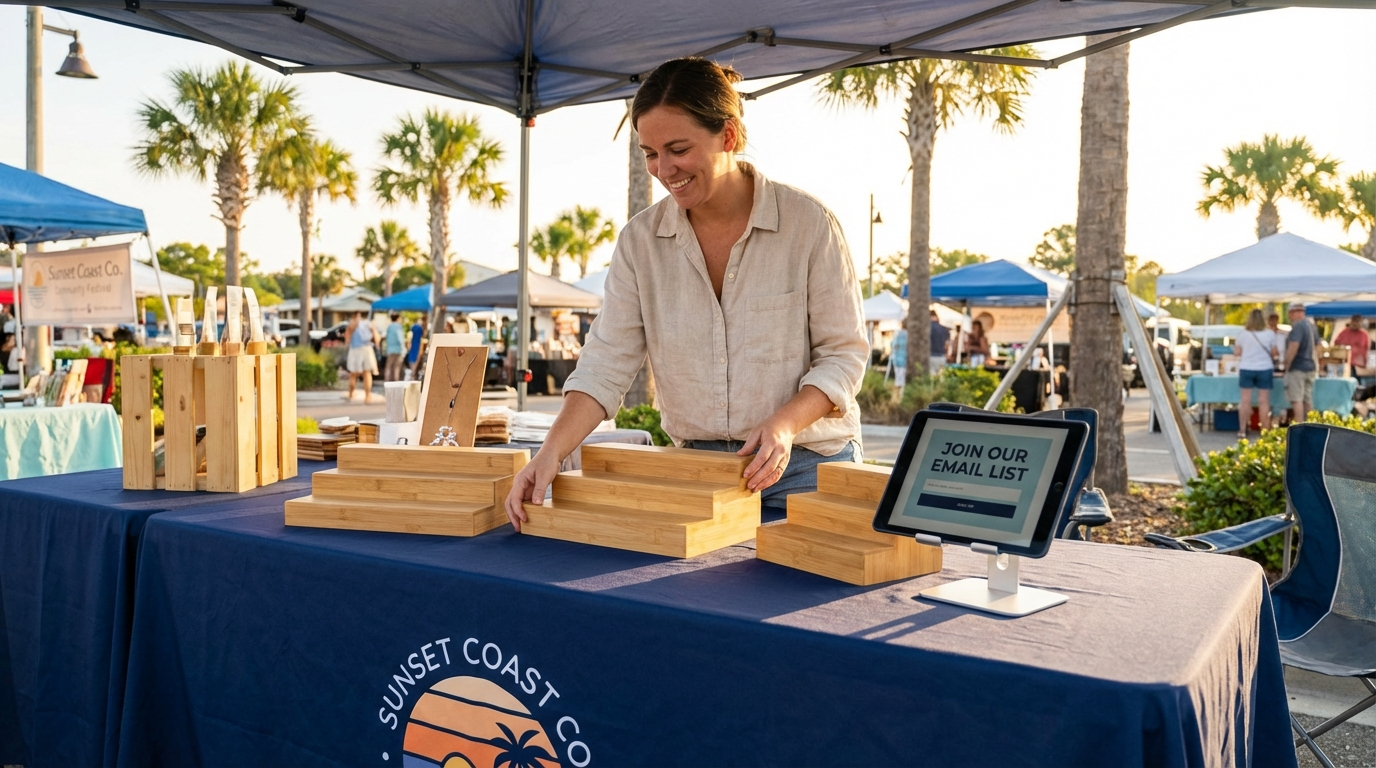
Set up a tablet or phone at your booth with a simple lead capture form — first name, email, and optionally phone number. Give people a clear reason to sign up:
- “Enter to win a free [service] — valued at $[X]”
- “Get our free [guide/checklist/resource] delivered to your inbox today”
- “Join our VIP list for exclusive discounts before they go public”
The giveaway or incentive doesn’t have to be elaborate. A $50–$100 prize generates remarkable participation at most local events. Even better: offer a service sample or consultation that has high perceived value but manageable cost to deliver.
If you use a CRM like HubSpot, ActiveCampaign, or even a simple email platform like Mailchimp, connect your form directly to it. New contacts should flow automatically into your system — tagged with the event name and date — so you can follow up immediately.
For businesses that use QR codes: make the URL destination something worth visiting. A landing page with a clear offer and one-click opt-in will convert far better than your homepage.
Step 4: Have a Conversation That Moves People Forward
The goal of an event conversation isn’t to close a sale on the spot — it’s to identify good prospects and get permission to follow up.
Train yourself and any staff to ask qualifying questions naturally:
- “What made you stop by today?”
- “Have you used [this type of service] before?”
- “What’s the biggest challenge you’re dealing with right now with [relevant problem]?”
Then listen. Most small business owners talk too much at events. The ones who listen more make more sales. When someone describes a problem you solve, you have a natural bridge to your service — and a concrete follow-up hook.
End every qualifying conversation by confirming their contact info is captured and setting a clear expectation: “I’ll send you a note tomorrow with [the thing you discussed]. If it looks interesting, we can set up a quick call.” That’s not pushy — it’s helpful. And it keeps you from chasing cold leads for weeks.
Step 5: Follow Up Faster Than Anyone Else
Here’s where most businesses waste everything they built at the event: they wait too long to follow up.
Same-day or next-morning follow-up is the standard. Leads go cold fast. Someone who was excited about your service at noon on Saturday will have forgotten most of the conversation by Monday morning if they haven’t heard from you.
Your follow-up sequence should work like this:
Email 1 (same day or next morning): Personalized but templated. Reference the event. Deliver whatever you promised — the guide, the offer, the free consultation booking link. Keep it short and friendly.
Text message (optional, if they opted in): A brief “Great meeting you today at [event]! Check your inbox for [the thing you promised]” message gets opened when email might not.
Email 2 (3–5 days later): Add value. A relevant tip, a short case study, or a simple question: “Did you get a chance to look at [resource]?” Not a hard sell.
Email 3 (7–10 days later): A clear, low-friction ask. “If you’re still thinking about [problem], I’d love to offer a free 20-minute call to walk through what that might look like for your business.”
If you’re using automation tools — and you should be — this sequence can be triggered automatically the moment someone submits your event form. Your automated follow-up sequences do the work while you focus on the next event or the next customer.
Step 6: Partner With Other Vendors
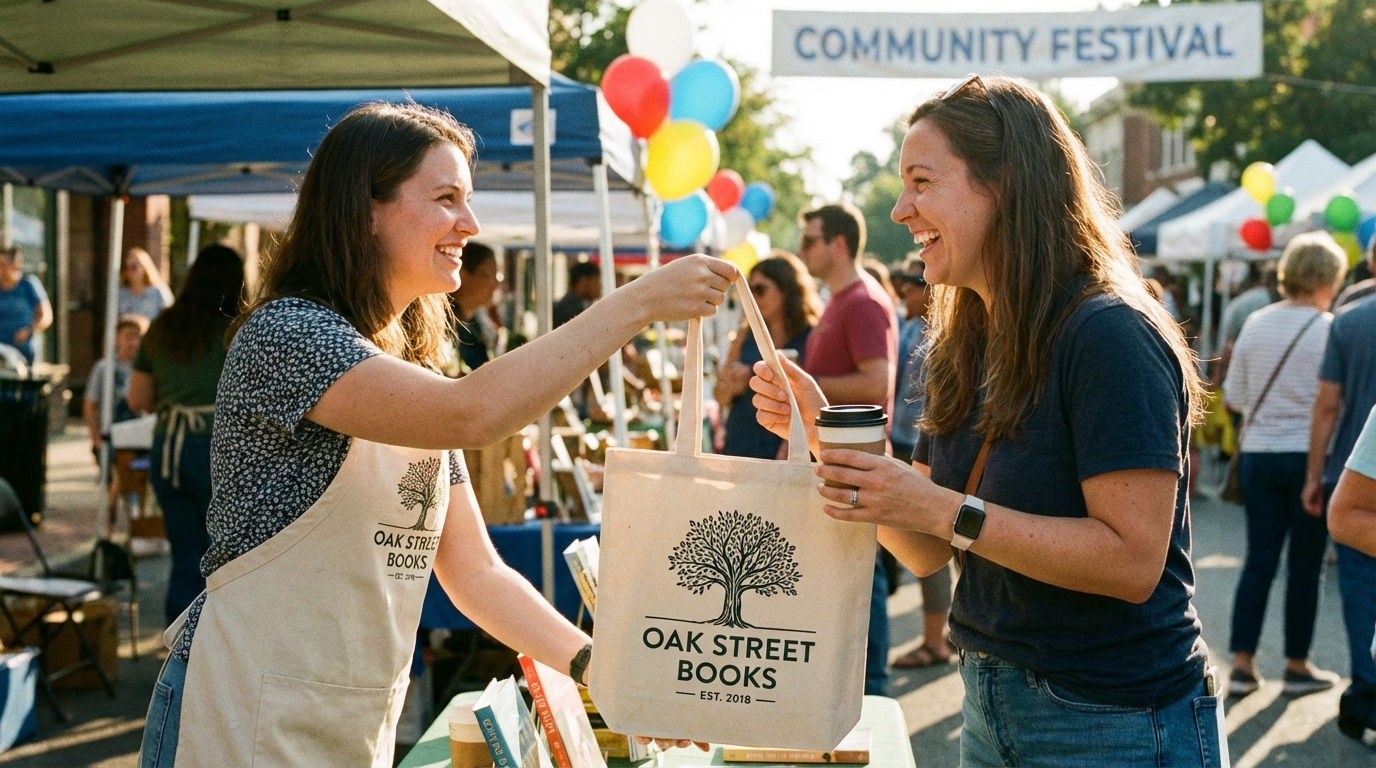
One of the most underused event marketing strategies is vendor collaboration. The businesses at the booth next to yours aren’t just neighbors — they’re potential referral sources.
Look for complementary (non-competing) businesses at the same events you attend. A home cleaning company and an interior designer serve the same homeowner. A med spa and a boutique fitness studio share overlapping clientele. A bookkeeper and a business attorney both need small business owner clients.
Before the event ends, swap contact information with two or three vendors who share your audience. Then follow up — not to pitch each other, but to explore genuine referral arrangements. If you send a customer to them and it works out, they’ll remember. Our local partnership marketing guide covers this in more detail, but events are often the best place to start these relationships.
Measuring What Actually Matters
Most small businesses measure event success by vibe: “It felt like a good day.” That’s not a measurement.
Track these numbers for every event:
| Metric | How to Measure |
|---|---|
| Leads captured | Form submissions in your CRM/email tool |
| Cost per lead | Total event cost ÷ leads captured |
| Conversion rate | New customers from event ÷ leads captured |
| Revenue attributed | Sales to contacts acquired at this event |
| Follow-up open rate | Email open/click rates from event sequence |
After three or four events, patterns emerge. Some events consistently deliver leads that convert. Others bring lots of conversations but few customers. Cut the underperformers, double down on what works.
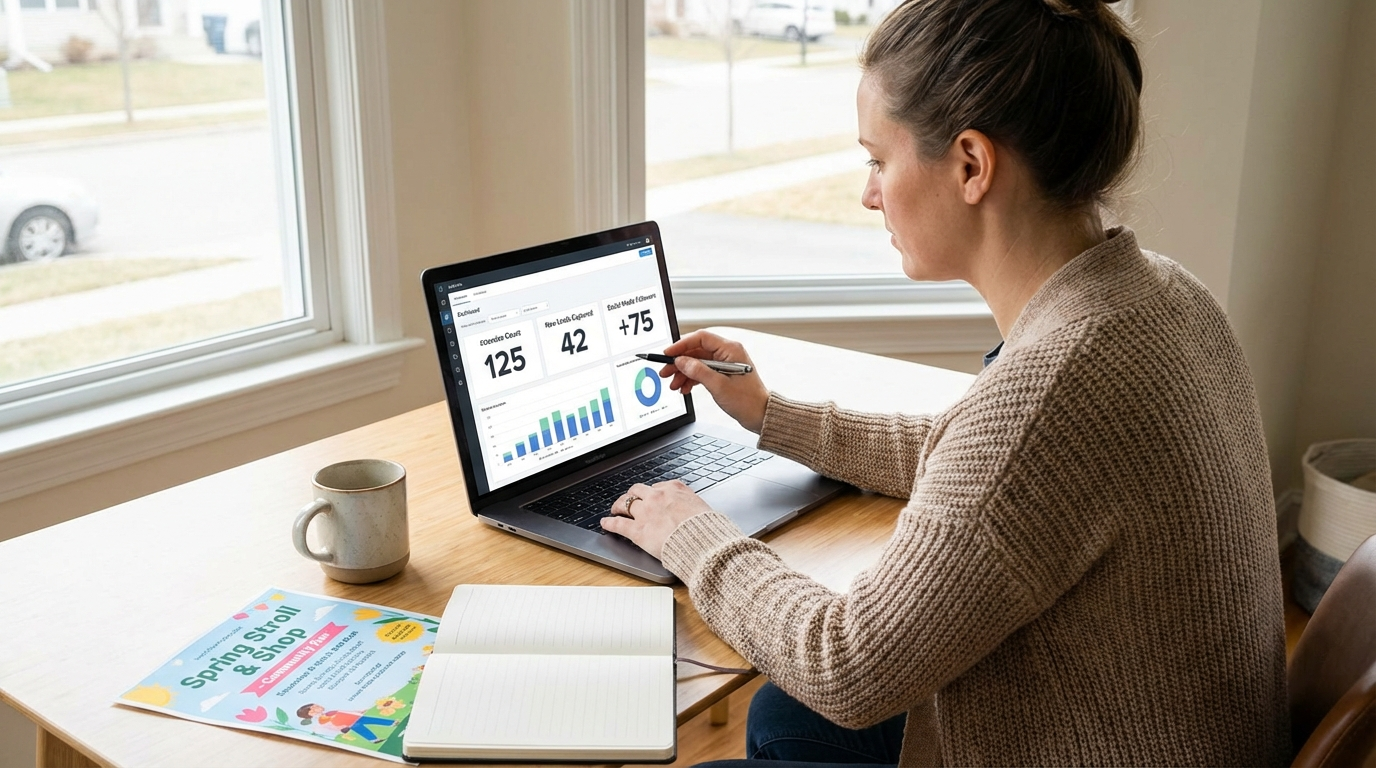
This is the same logic you’d apply to digital advertising — cost per acquisition, return on spend — applied to in-person marketing. If you’re already using Google Analytics 4 to track your digital marketing, add a UTM parameter to any event-specific landing pages so you can see event traffic alongside your other channels.
Building an Annual Event Calendar
Improvising event attendance is exhausting and expensive. The businesses that win at local event marketing plan their calendar 6–12 months in advance.
For SWFL businesses, consider building your calendar around these natural windows:
- November–April (snowbird season): High-traffic period. Premium events, higher lead quality for hospitality, home services, aesthetics, and retail.
- March–April (spring festivals): Art fairs, seafood festivals, outdoor markets. High attendance, family-oriented audiences.
- September–October (local rebound): Good for community-focused events as locals return from summer. Chamber events, neighborhood association meetups, school-related charity events.
- June–August (summer slowdown): Fewer events, but less competition. Niche events and smaller community gatherings can be cost-effective.
Layer your event calendar alongside your seasonal marketing calendar so you’re not overspending during slow revenue periods and under-investing during your peak season.
Getting More From Every Event With Technology
A few tools make a significant difference in how much revenue you extract from event marketing:
A CRM with event tagging. HubSpot (free tier), Pipedrive, or even a well-organized Airtable base lets you tag every lead by event source. This is how you measure ROI accurately and retarget event contacts with relevant campaigns later.
Email automation. ActiveCampaign, Mailchimp, or ConvertKit can trigger a complete follow-up sequence the moment someone submits your form. You don’t have to remember to follow up — the system does it for you.
A QR code generator + landing page builder. Tools like Linktree, Carrd, or your existing website can host an event-specific landing page. Your QR code links directly to it. Measure scan-to-submission rates to optimize your in-person pitch.
Text message follow-up. If you collect phone numbers with opt-in, a single text within an hour of the event can dramatically increase engagement with your email sequence. Services like SimpleTexting or Attentive handle compliant SMS outreach.
If this sounds like a lot to set up, it doesn’t have to be. Start with one: a Google Form connected to a Google Sheet, paired with a simple email sequence. Build from there. The CRM automation guide walks through setting up a basic system from scratch.
Frequently Asked Questions
How much should a small business budget for event marketing?
A reasonable starting budget is $200–$500 per event for booth fees and materials, plus 2–4 hours of staff time. Track your cost per acquired customer over several events to determine whether to increase or decrease spending. Events with strong audience fit often deliver better ROI than comparable digital ad spend.
What’s the best way to stand out at a crowded event?
Focus on the visitor’s first three seconds at your booth. A clear headline communicating the customer benefit, one dominant visual, and an interactive element (demo, sample, or activity) outperform elaborate displays with too much information. Simplicity and clarity win over complexity every time.
How long after an event should I follow up with leads?
Same day or next morning is ideal. Lead engagement drops sharply after 48 hours. If you’re using an email automation tool, set up your sequence to trigger immediately when the lead form is submitted — so the first email arrives while the event is still fresh in their mind.
Should I participate in events that don’t have a direct sales opportunity?
Yes — selectively. Chamber mixers, charity events, and neighborhood association meetings may not have vendor booths, but they create relationship opportunities that often lead to referrals and long-term business. Keep a modest presence at 2–3 community events per year that aren’t primarily sales-focused.
Events are one of the few marketing channels where you can go from unknown to trusted in a single afternoon. But they only work if you build a system around them — from the booth setup to the follow-up sequence to the measurement framework.
If you’re ready to stop leaving event leads on the table, Monsoft Solutions can help you build the automation and CRM systems that turn event contacts into paying customers — automatically, even after the event ends. Reach out to see what that looks like for your business.