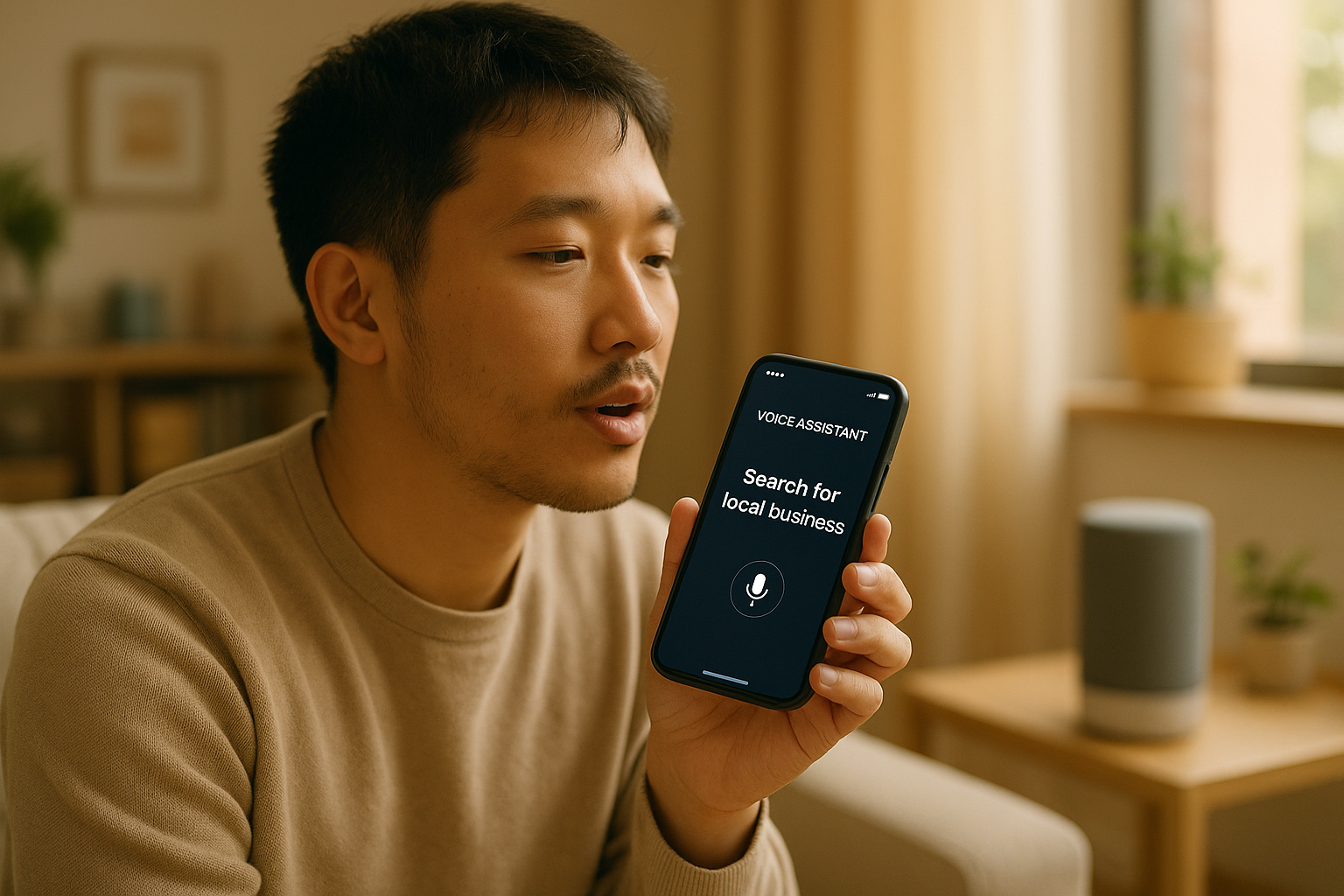
“Hey Siri, find a dentist near me.” “Alexa, what’s the best Italian restaurant open right now?” “OK Google, where can I get my car serviced today?”
These questions are being asked millions of times every day. And if your business isn’t showing up in the answers, you’re invisible to a rapidly growing segment of potential customers.
Voice search isn’t coming—it’s here. Over 50% of adults now use voice search daily, and for local businesses, this represents both an urgent challenge and a massive opportunity. The businesses that optimize for voice search today will capture customers their competitors never even see.
How Voice Search Is Different (And Why It Matters)
Before we dive into tactics, you need to understand why voice search requires a fundamentally different approach than traditional SEO.
Conversational Queries vs. Typed Keywords
When someone types a search, they use shorthand: “plumber Miami” or “pizza delivery 33133.” But when they speak, they use natural language: “Who’s the best plumber in Miami?” or “Where can I get pizza delivered to my address?”
This shift from keywords to questions changes everything about how you need to structure your content and local presence.
The Winner-Takes-All Reality
Here’s the critical difference: when someone types a search, they see ten results and choose one. When someone uses voice search, they typically hear one answer. Maybe two or three if they ask for more options.
That means ranking #4 in voice search might as well be ranking #400. You need to be the top result—or you get nothing.
Local Intent Dominates Voice Search
Studies consistently show that voice searches are 3x more likely to have local intent than typed searches. People use voice when they need something now, nearby. They’re in their car looking for gas stations, at home searching for emergency services, or walking around asking about nearby restaurants.
For local businesses, this is your arena. Voice search heavily favors businesses that can answer immediate, location-based needs.
The Foundation: Get Your Local Listings Right
Before optimizing content or implementing advanced strategies, you need the basics locked down. Voice assistants pull their information from specific sources, and if your business data is wrong there, nothing else matters.
Google Business Profile Is Non-Negotiable
Google Assistant powers the majority of voice searches on Android devices, and it pulls local business information directly from Google Business Profile (GBP). This is your most critical asset.
Essentials to verify and complete:
- Business name (exactly as it appears everywhere else)
- Address with precise formatting
- Phone number with area code
- Business hours—including special hours for holidays
- Primary and secondary business categories
- Service area if you serve multiple locations
- Complete list of services offered
- Business description with natural language keywords
The secret sauce: make sure your GBP description answers common voice queries naturally. Instead of “Professional plumbing services in Miami,” try “We’re a family-owned plumbing company that provides 24-hour emergency service throughout Miami-Dade County.”
Consistency Across All Platforms
Voice assistants cross-reference multiple data sources. Siri pulls from Apple Maps. Alexa uses Yelp data. Google checks its own listings against third-party directories.
Your NAP (Name, Address, Phone) must be identical everywhere:
- Google Business Profile
- Apple Business Connect
- Yelp
- Facebook Business Page
- Industry-specific directories
- Your website contact page
- Any local chamber of commerce or association listings
Even small discrepancies—“Suite 100” vs. “#100” or “Street” vs. “St.”—can create confusion that pushes you down in results.
Claim Your Apple Business Connect Listing
Many businesses focus exclusively on Google and forget that iPhone users—who tend to have higher purchasing power—default to Siri. Apple Business Connect (formerly Apple Maps Connect) lets you manage how your business appears in Apple Maps and Siri search results.
This takes ten minutes to set up and immediately expands your voice search visibility to the entire iOS ecosystem.
Optimizing Your Website for Voice Search
Your website plays a crucial role in voice search, especially for informational queries and when voice assistants need to pull detailed answers.
Structure Content Around Questions
Remember: voice searches are questions. Structure your content to provide direct answers.
Create an FAQ page that actually gets searched: Instead of generic questions like “What services do you offer?” use the actual questions people ask:
- “How much does a root canal cost in Miami?”
- “Do you offer emergency dental services on weekends?”
- “What’s the difference between Invisalign and traditional braces?”
Start each answer with a clear, concise response in 1-2 sentences (this is what voice assistants will read), then expand with more detail.
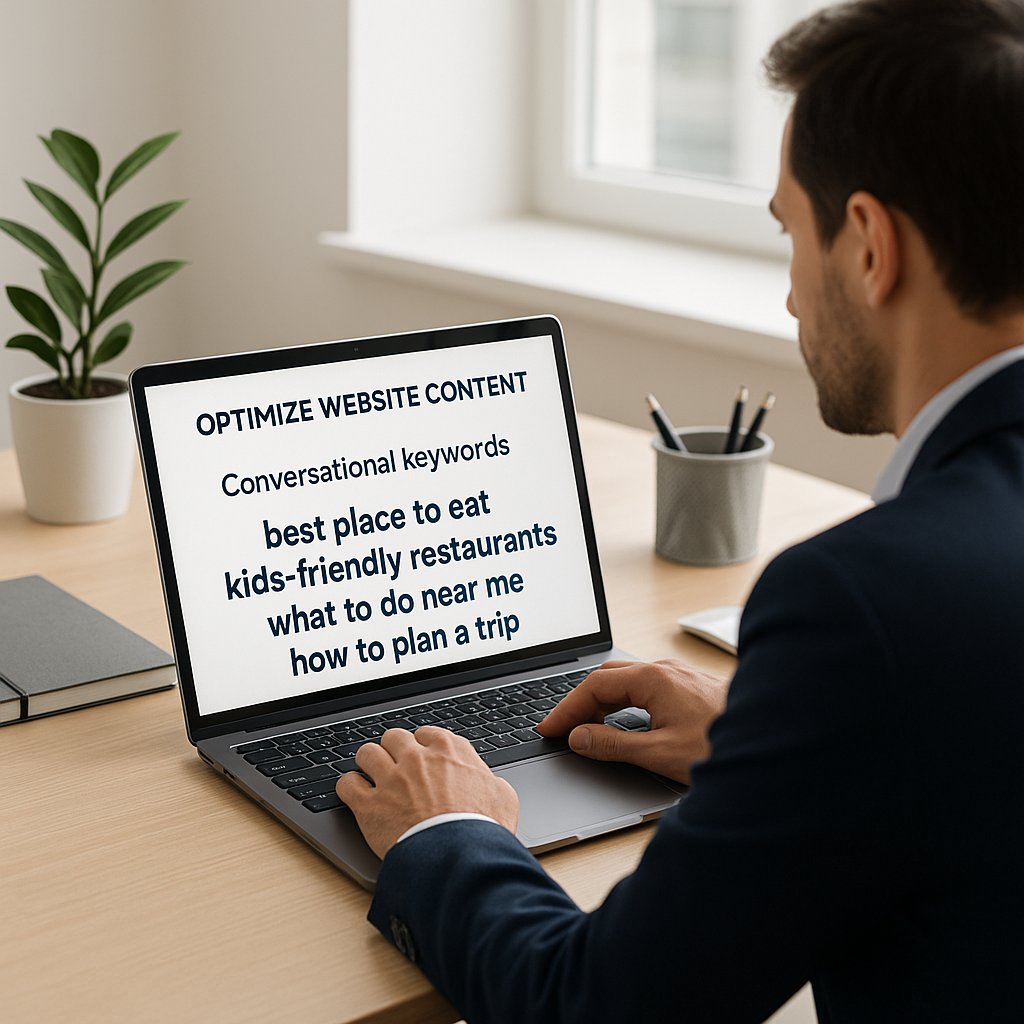
Target Long-Tail Conversational Keywords
Traditional SEO targets keywords like “Miami dentist” or “emergency plumber.” Voice search optimization targets phrases like:
- “Who is the best dentist for anxious patients in Miami?”
- “What plumber can come to my house right now in Coral Gables?”
- “Where should I take my car for an oil change near Brickell?”
Tools like AnswerThePublic, AlsoAsked, and even Google’s “People Also Ask” boxes reveal the actual questions people ask about your services.
Optimize for Featured Snippets
Featured snippets—those boxed answers at the top of Google results—are often what voice assistants read aloud. To earn featured snippets:
Use clear formatting:
- Start with a question as your heading
- Provide a concise 40-60 word answer immediately below
- Use bullet points or numbered lists for step-by-step answers
- Include relevant schema markup (more on this below)
Match search intent: If someone asks “How long does Botox last?” they want a direct answer (“Botox typically lasts 3-4 months”), not a sales pitch about your services.
Technical Optimization for Voice Search
Some voice search optimization happens behind the scenes, in your website’s code and structure.
Implement Local Business Schema Markup
Schema markup is code that helps search engines understand your content. For local businesses, LocalBusiness schema tells Google exactly what your business is, where it’s located, and what services you provide.
Essential schema properties for voice search:
@type(be specific: “Dentist” not just “LocalBusiness”)nameaddress(with full streetAddress, addressLocality, addressRegion, postalCode)telephoneopeningHoursSpecification(detailed hours for each day)priceRangeaggregateRating(your star rating)review(individual reviews if available)
You can generate schema markup using Google’s Structured Data Markup Helper or plugins if you’re on WordPress.
Speed Matters More for Voice
Page speed has always been important, but voice search raises the stakes. Voice assistants prioritize fast-loading pages because users expect instant answers.
Target metrics:
- First Contentful Paint under 1.8 seconds
- Time to Interactive under 3.9 seconds
- Mobile page speed score above 90
If your site is slow, voice assistants may skip you entirely in favor of faster competitors.
Mobile-First Is Voice-First
The majority of voice searches happen on mobile devices. If your site isn’t fully responsive and mobile-optimized, you’re fighting an uphill battle.
Check your site on actual phones, not just browser simulators. Make sure:
- Phone numbers are tap-to-call
- Maps are embedded and functional
- Forms work smoothly on touchscreens
- Text is readable without zooming
Building Voice Search Authority Through Reviews
Reviews directly impact your voice search visibility in two ways: they influence your local rankings, and they’re often cited in voice search responses.
Quantity and Recency Both Matter
Voice assistants favor businesses with:
- High overall ratings (4.0+ stars)
- Significant review volume
- Recent reviews (activity in the last 90 days)
A business with 200 reviews averaging 4.7 stars will typically outrank one with 20 reviews at 4.9 stars—the volume signals trustworthiness.
Reviews That Answer Questions
When voice assistants describe businesses, they sometimes pull from review content. Encourage reviews that naturally mention:
- Specific services used
- Location details
- Pricing context
- Experience highlights
“Dr. Smith was amazing with my dental anxiety. The office is easy to find on Main Street, and they got me in for an emergency appointment on Saturday” is far more valuable for voice search than “Great experience, highly recommend.”

Voice Search for Different Business Types
While the fundamentals apply universally, certain tactics work better for specific industries.
Service-Based Businesses (Plumbers, HVAC, Electricians)
Focus on emergency and availability keywords:
- “24-hour emergency plumber”
- “HVAC repair same day”
- “Electrician available now”
Make sure your GBP hours clearly indicate when you’re available, including emergency hours. Voice searchers in service categories often need help immediately.
Retail and Restaurants
Emphasize real-time information:
- Current hours (especially holidays)
- Whether you’re open “right now”
- Wait times or reservation availability
- Menu items and pricing
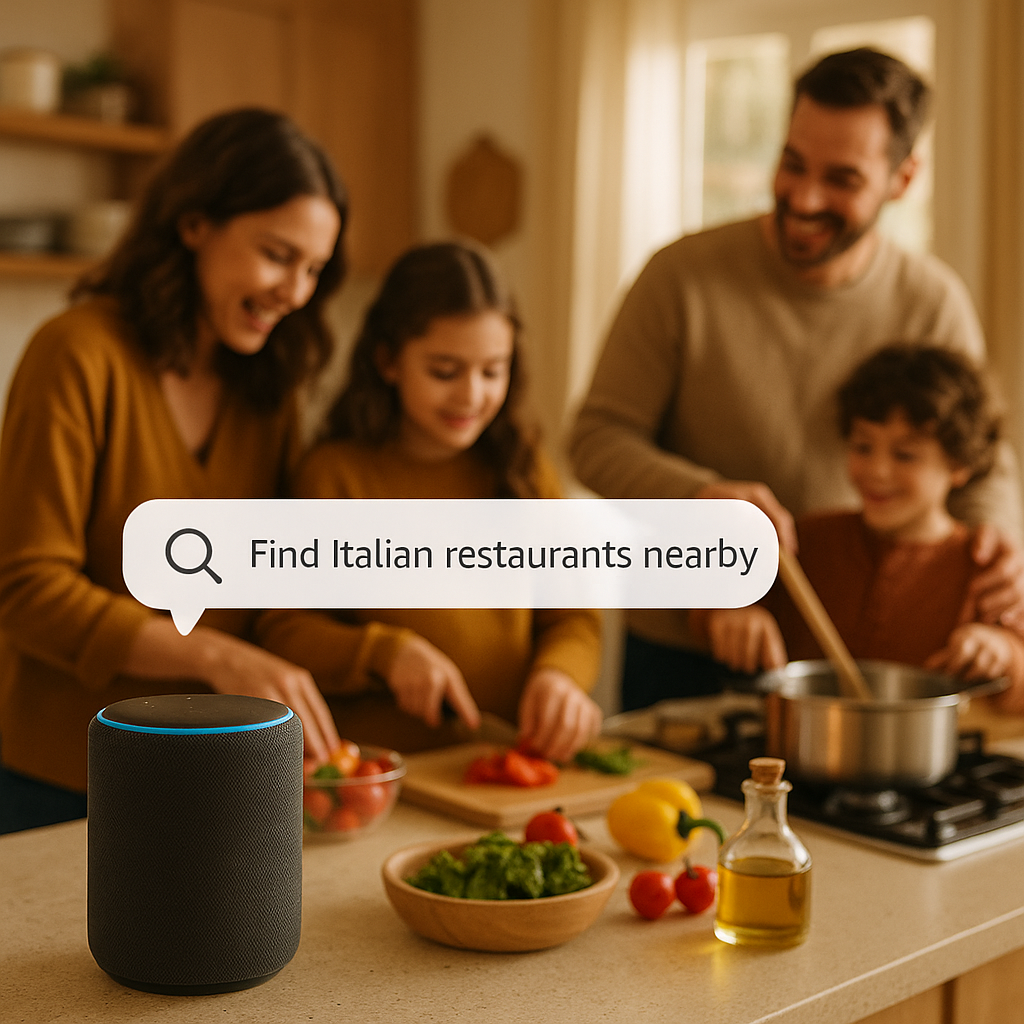
For restaurants, voice searches like “What Italian restaurant is open late near me?” are extremely common. Make sure your hours and cuisine type are crystal clear.
Healthcare and Professional Services
Build authority through content:
- Detailed FAQ pages addressing common patient/client questions
- Clear explanation of services, procedures, and what to expect
- Insurance and payment information
Healthcare voice searches often include qualifiers like “accepts Blue Cross” or “takes emergency patients”—make sure this information is prominent.
Measuring Voice Search Success
Voice search is harder to track than traditional SEO because you can’t see voice-specific analytics directly. However, you can monitor proxy metrics:
Indicators of Voice Search Traction
- Increased “near me” traffic in Google Analytics: Filter organic traffic for queries containing “near me” or question phrases
- More direct calls and directions requests: Voice searches often convert directly to calls
- Growth in featured snippet appearances: Track via Google Search Console
- Improved local pack rankings: Top 3 map results are where voice pulls answers
Tools to Help Track Progress
- Google Search Console (search queries and featured snippets)
- Google Business Profile Insights (calls, direction requests, queries)
- BrightLocal or Moz Local (local ranking tracking)
- SEMrush or Ahrefs (featured snippet monitoring)
Your Voice Search Optimization Checklist
Here’s your action plan to implement this week:
Day 1: Audit Your Listings
- Verify Google Business Profile is complete and accurate
- Claim Apple Business Connect listing
- Check Yelp and Facebook business pages
- Confirm NAP consistency across all platforms
Day 2-3: Website Quick Wins
- Create or update FAQ page with actual customer questions
- Add LocalBusiness schema markup
- Test mobile speed and fix critical issues
- Ensure phone number is tap-to-call
Day 4-5: Content Optimization
- Rewrite service page descriptions in conversational language
- Add question-format headings throughout key pages
- Create content targeting “near me” and local question queries
Ongoing: Monitor and Improve
- Set up tracking for local rankings and featured snippets
- Actively generate new reviews
- Update business hours and information as needed
Voice search isn’t a future trend to prepare for—it’s a present reality reshaping how customers find local businesses. The good news? Most of your competitors haven’t figured this out yet.
By optimizing your business for voice search now, you’re not just keeping up with technology. You’re positioning yourself to capture customers that others don’t even know exist—the ones who ask their phones for help and trust whatever answer comes back.
Need help implementing voice search optimization for your business? Contact Monsoft Solutions to learn how we help local businesses become the voice search answer in their market.