
SEO advice is everywhere, and most of it is outdated, overcomplicated, or designed to sell you something.
Here’s what’s actually working in 2026 for small businesses that want more organic traffic without hiring a full-time SEO team.
The State of Search in 2026
Before tactics, some context on where things stand:
AI Overviews are real. Google now shows AI-generated summaries for many queries. This means some traffic that used to go to websites now stays on Google. The solution isn’t to fight it—it’s to create content that AI can’t easily summarize.
Quality has never mattered more. Google has gotten remarkably good at identifying thin, derivative content. The “publish 100 blog posts and hope for the best” strategy is dead.
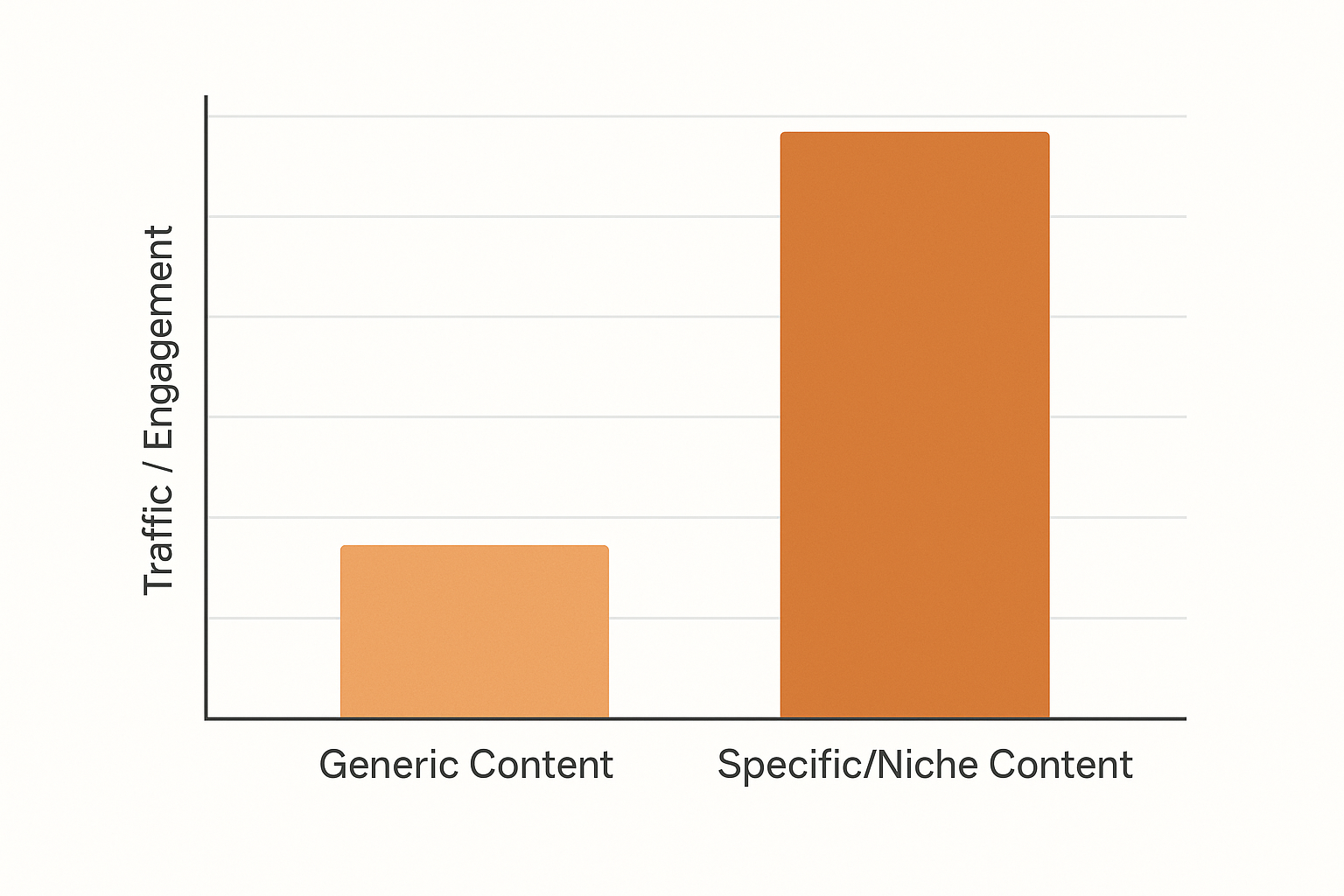
Local and niche still win. Big brands dominate generic queries, but specific, local, and niche topics are still very winnable for small businesses.
The Fundamentals (That Most Sites Still Get Wrong)
Before chasing advanced strategies, nail these basics:
Technical Foundation
Your site needs to:
- Load fast (under 2.5 seconds on mobile)
- Work perfectly on phones (60%+ of searches are mobile)
- Be crawlable (no broken links, proper sitemaps)
- Use HTTPS (non-negotiable)
Quick test: Run your site through PageSpeed Insights. If your mobile score is under 80, fix that before anything else.
Site Structure
Every page should be reachable within 3 clicks from your homepage. For small business sites, this usually means:
Homepage
├── Services (or Products)
│   ├── Service 1
│   ├── Service 2
│   └── Service 3
├── About
├── Blog
│   ├── Post 1
│   └── Post 2
└── Contact
Use descriptive URLs (/services/web-development not /page?id=42).
On-Page Essentials
For every important page:
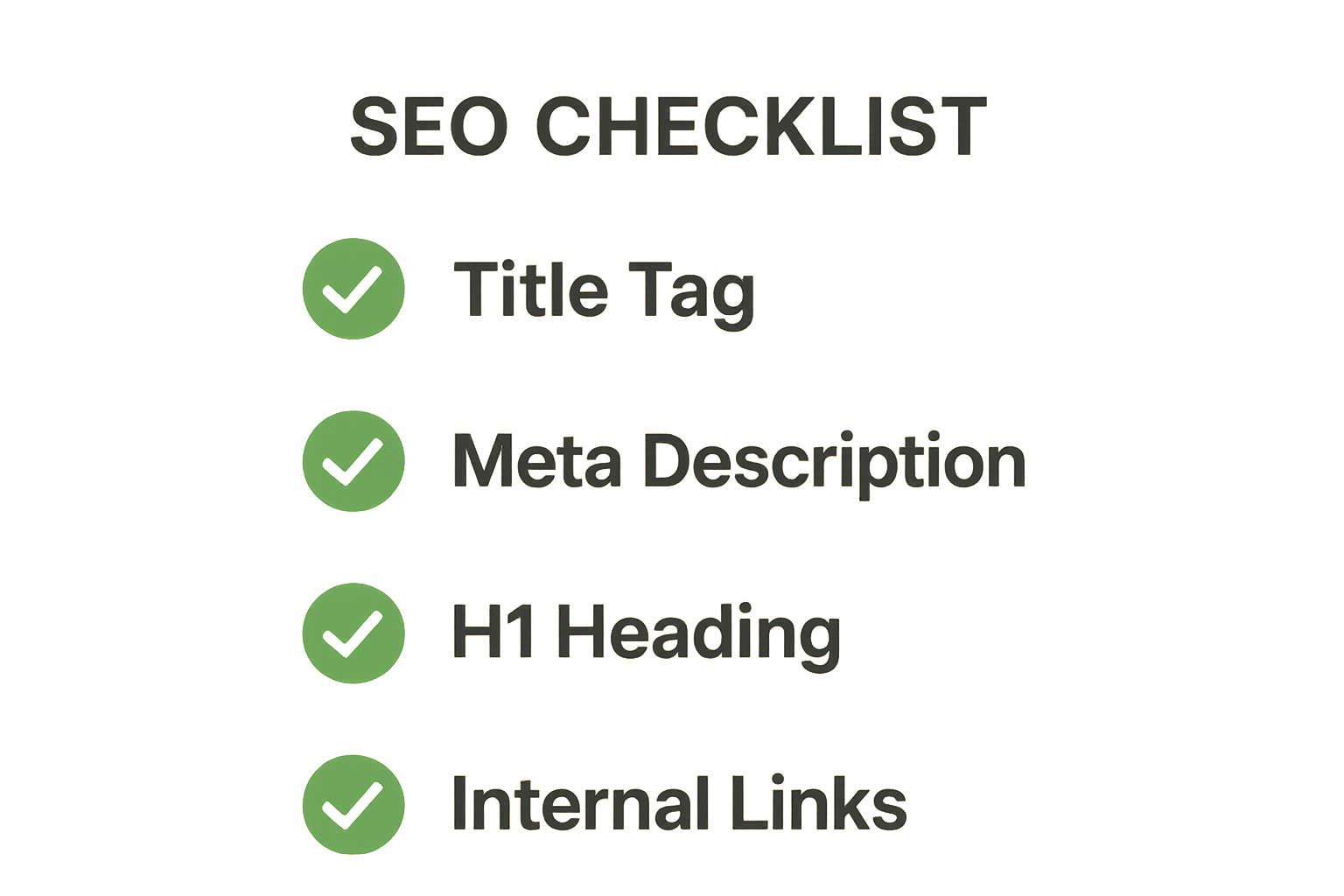
- Title tag: Include your primary keyword, keep under 60 characters
- Meta description: Compelling summary, under 155 characters
- H1 heading: One per page, include your keyword naturally
- Internal links: Connect related pages within your site
These basics alone put you ahead of most small business websites.
Content That Actually Ranks
Here’s the hard truth: most small business blogs are a waste of time. They publish generic content that nobody searches for and wonder why traffic doesn’t grow.
The Content Worth Creating
Answer specific questions. Use tools like AnswerThePublic or just Google’s “People Also Ask” to find real questions in your niche. Then write the best answer on the internet for each one.
Document your expertise. Case studies, process breakdowns, lessons learned—content that only you could write because it’s based on your actual experience.
Create for comparison. “[Your Category] vs [Competitor/Alternative]” posts capture people actively making decisions. These often convert better than informational content.
Go local. If you serve a specific area, create content about that area. “[Service] in [City]” pages can rank with relatively little competition.
The Content to Avoid
“What is [basic term]” posts. Unless you’re an authoritative source, you won’t outrank Wikipedia or industry giants.
Regurgitated listicles. “10 Tips for X” posts are a dime a dozen. If your article could have been written by anyone, it probably won’t rank.
Keyword-stuffed pages. Google knows what you’re doing. Write for humans first.
The Link Question
Backlinks still matter—but not the way many SEO agencies pitch them.
What works:
- Being cited as a source because your content is genuinely useful
- Guest posts on relevant, reputable sites in your industry
- Local business directories and chamber of commerce listings
- Press coverage for newsworthy activities
What doesn’t (or gets you penalized):
- Buying links from “SEO services”
- Mass directory submissions
- Comment spam
- Private blog networks (PBNs)
A practical approach:
- Create something genuinely valuable (original research, tools, comprehensive guides)
- Share it with people who might find it useful
- Some percentage will link to it
This is slower than buying links, but it works long-term and won’t blow up in your face.
Local SEO: The Overlooked Opportunity
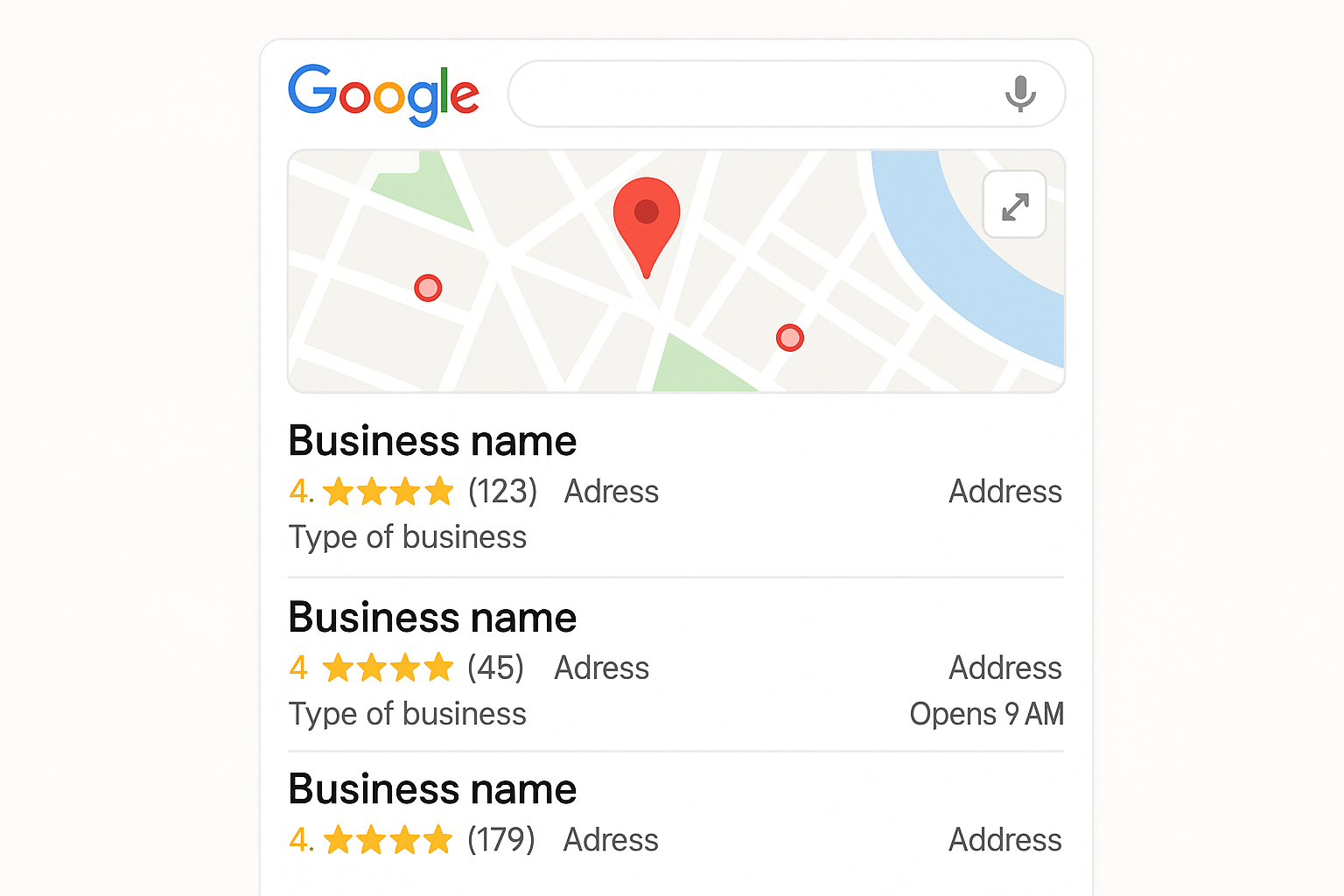
If you serve local customers, your Google Business Profile is arguably more important than your website.
Optimize your profile:
- Complete every section (hours, services, attributes)
- Add quality photos regularly
- Post updates at least monthly
- Get reviews (and respond to all of them)
Local content strategy:
- Create pages for each service area
- Include local landmarks and neighborhood names naturally
- Get listed in local directories (Yelp, industry-specific sites)
For many local businesses, dominating the “Local Pack” (the map results) brings more customers than ranking #1 in regular results.
Measuring What Matters
Forget vanity metrics. Focus on:
Organic traffic to commercial pages. Are people finding your services/products pages through search?
Conversion from organic. Are those visitors taking action (calling, filling out forms, buying)?
Keyword rankings for money terms. Are you ranking for searches where someone is ready to buy?
Trend direction. Is organic traffic growing month over month, even if absolute numbers are small?
Use Google Search Console (free) to see exactly what queries bring traffic and where you rank.
The AI Content Question
Everyone’s wondering: should you use AI to create SEO content?
Our take:
AI as assistant: Great for research, outlines, first drafts, and brainstorming. Saves hours.
AI as replacement: Risky. Fully AI-generated content often lacks the specificity and originality that Google rewards. Sites publishing mass AI content are already being penalized.
The winning combination: Human expertise and perspective + AI efficiency for research and drafts = content that’s both high-quality and efficient to produce.
If you can’t tell the difference between your AI-assisted content and fully AI-generated slop, neither can Google.
A 90-Day Plan
Here’s how to meaningfully improve your SEO in the next 90 days:
Days 1-30: Foundation
- Fix technical issues (speed, mobile, crawlability)
- Optimize existing pages (titles, descriptions, headings)
- Claim and optimize Google Business Profile
- Set up Google Search Console if you haven’t
Days 31-60: Content
- Identify 5-10 specific queries you want to rank for
- Create or improve pages targeting each query
- Add internal links between related pages
- Start documenting customer questions for future content
Days 61-90: Authority
- Reach out to 5 relevant sites for guest posts or collaborations
- Get listed in industry directories
- Ask happy customers for reviews
- Publish one substantial piece of original content
Then repeat. SEO is a compounding game. Consistent effort over 12-24 months beats any short-term hack.
SEO isn’t magic, and it isn’t dead. It’s just slow, methodical work that most businesses aren’t willing to do consistently.
That’s your opportunity.
Need help building an SEO strategy that actually works? Let’s talk.