
In aesthetic medicine, your reputation isn’t just important—it’s everything. When someone is considering a facelift, body contouring, or injectable treatment, they’re not just buying a service. They’re trusting you with their appearance, their confidence, and often tens of thousands of dollars. Before they ever pick up the phone, they’ve already read your reviews.
The practices that thrive understand this truth: patient reviews are your most powerful marketing asset. Yet most aesthetic practices either ignore reviews entirely or handle them reactively, missing enormous opportunities to build trust and attract high-value patients.
This guide will show you exactly how to build a review management system that works—one that generates consistent 5-star feedback, handles criticism professionally, and turns satisfied patients into vocal advocates.
Why Reviews Matter More in Aesthetics Than Any Other Industry
Before diving into tactics, let’s understand what makes review management uniquely critical for aesthetic practices.
The High-Stakes Decision Factor
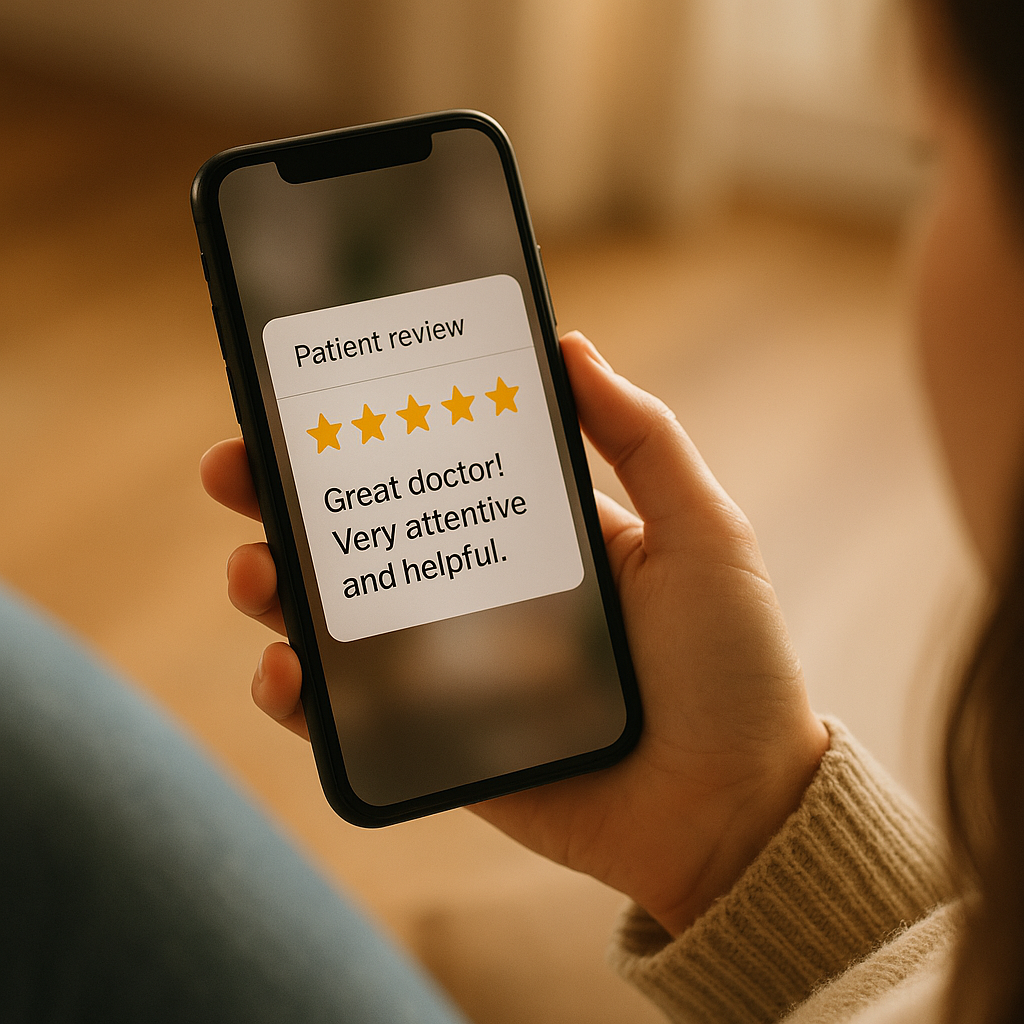
Aesthetic procedures are elective, expensive, and deeply personal. Unlike choosing a restaurant or even a general medical provider, prospective patients spend weeks—sometimes months—researching before committing. During that time, reviews become their primary lens for evaluating your practice.
Consider these statistics:
- 94% of patients read online reviews before choosing a healthcare provider
- 84% trust online reviews as much as personal recommendations
- A single negative review can drive away approximately 22% of potential patients
For aesthetic procedures, these numbers are likely even higher. When someone is considering rhinoplasty or a mommy makeover, they’re not just reading reviews—they’re studying them.
The Social Proof Multiplier
In aesthetics, social proof operates on multiple levels. Patients want to know:
- Does the doctor produce good results?
- Is the staff professional and caring?
- What’s the recovery experience really like?
- Are there hidden costs or complications?
Reviews answer these questions in ways your website copy never can. A genuine patient story carries more weight than any marketing message.
Building Your Review Generation System
Collecting reviews shouldn’t be left to chance. The practices with the strongest online reputations have systematic approaches to generating consistent feedback.
Identify Your Review Sweet Spot
Timing is everything. Ask for a review too early, and the patient hasn’t experienced their full results. Ask too late, and the emotional peak has passed. For aesthetic procedures, the optimal timing varies:
- Injectables (Botox, fillers): 2-3 weeks post-treatment, when results are fully visible
- Surgical procedures: 6-8 weeks post-op, after initial healing but while transformation is still fresh
- Non-surgical body contouring: 3-4 weeks, as results continue developing
- Skincare treatments: 1-2 weeks after completing a treatment series
The key is catching patients at what we call the “wow moment”—when they’re most excited about their results and most likely to share that excitement.
Create a Multi-Touch Request Sequence
One ask is rarely enough. Build a sequence that feels natural, not pushy:
Touch 1 - The Soft Mention (In-Person) During a follow-up appointment, when a patient expresses satisfaction: “We’re so glad you’re happy with your results! If you have a moment, we’d love for you to share your experience online. It really helps other patients who are considering similar treatments.”
Touch 2 - The Helpful Email (24-48 Hours Later) Send a personalized email thanking them for their visit, including direct links to your Google and relevant review platforms. Make it one-click easy.
Touch 3 - The Gentle Reminder (7-10 Days Later) A brief follow-up for those who didn’t respond: “Hi [Name], we hope you’re still enjoying your results! If you haven’t had a chance to share your experience, we’d still love to hear from you.”
Make It Frictionless
Every obstacle you remove increases completion rates:
- Send direct links to your review profiles (not your homepage)
- Use QR codes in the office that go straight to Google reviews
- Consider tablets in the waiting room for immediate feedback
- Text message links often have higher open rates than email
Responding to Reviews: The Art of Professional Engagement
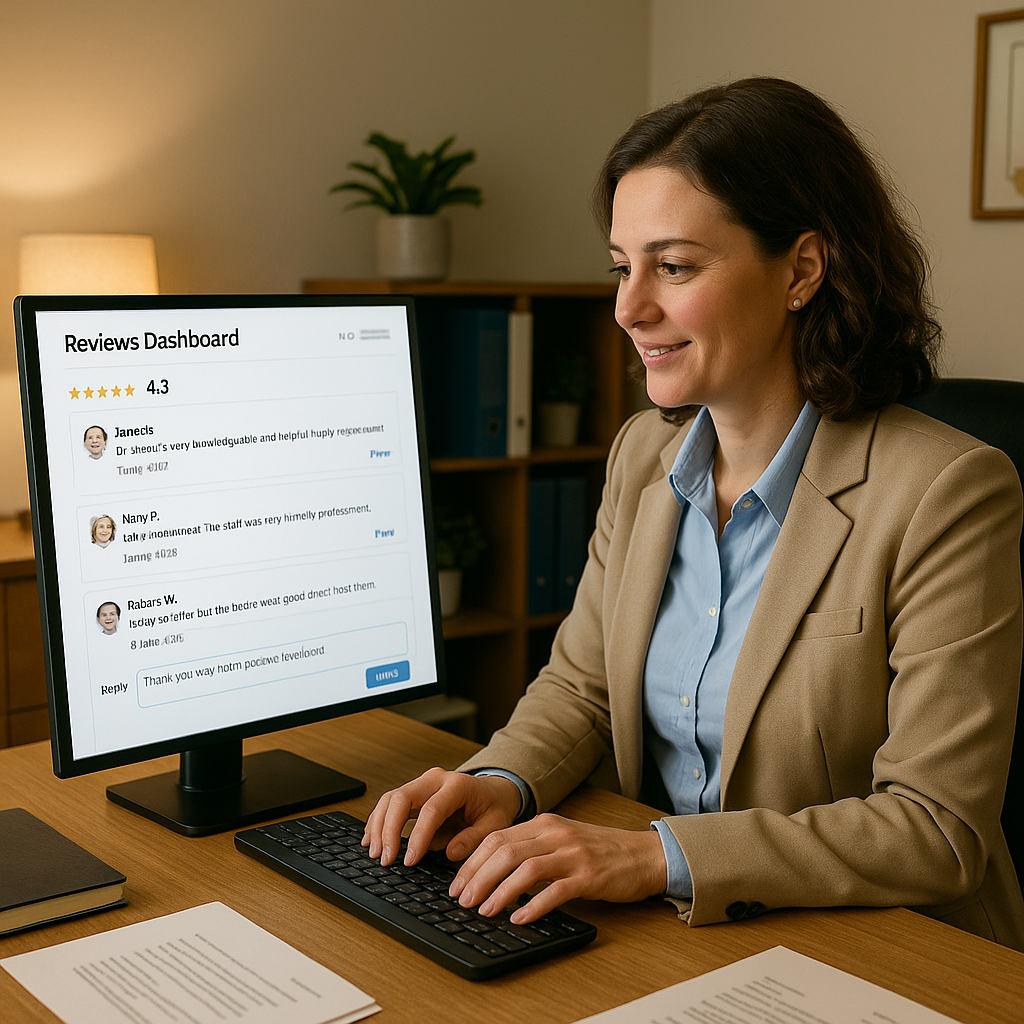
How you respond to reviews matters as much as the reviews themselves. Prospective patients read your responses to gauge how you’ll treat them.
Responding to Positive Reviews
Many practices simply reply “Thank you!” and move on. This is a missed opportunity. Thoughtful responses to positive reviews:
- Show you read and value each patient’s feedback
- Reinforce the positive experience for other readers
- Naturally include keywords that help with search visibility
- Build deeper patient relationships
Example of an excellent response:
“Thank you so much for sharing your rhinoplasty experience, Sarah! We’re thrilled that you felt comfortable and cared for throughout your journey. Dr. [Name] always says that patient education is essential, and we’re glad that came through during your consultations. Wishing you continued confidence as you enjoy your results!”
Notice how this response:
- Uses the patient’s name
- References the specific procedure
- Highlights a practice value (patient education)
- Feels personal, not templated
Navigating Negative Reviews
Negative reviews feel personal, especially in aesthetic medicine where outcomes are subjective and emotional. But handled correctly, they become opportunities to demonstrate professionalism.
The HEARD Framework for Negative Reviews:
- H - Hear them out. Read the full review without defensiveness. Understand their perspective.
- E - Empathize publicly. Acknowledge their feelings without admitting fault or violating HIPAA.
- A - Apologize appropriately. “We’re sorry your experience didn’t meet expectations” is different from “We’re sorry we did something wrong.”
- R - Resolve offline. Invite them to contact you directly to discuss their concerns.
- D - Document internally. Use negative feedback for genuine improvement.
Example response to a negative review:
“We’re sorry to hear that your experience wasn’t what you hoped for. Patient satisfaction is our top priority, and we take feedback like yours seriously. We’d love the opportunity to discuss your concerns directly—please reach out to our patient coordinator at [phone/email] so we can make this right.”
What NOT to do:
- Never argue or get defensive
- Never reveal any patient information (HIPAA!)
- Never ignore negative reviews—silence looks like indifference
- Never offer incentives to change or remove reviews
The HIPAA Consideration
A critical note: even if a patient publicly discusses their treatment, you cannot confirm or reveal any information about their care without written authorization. Your responses must remain general: “We value all patient feedback” rather than “We’re sorry your lip filler appointment didn’t go as planned.”
When in doubt, keep responses brief and focused on moving the conversation offline.
Turning Reviews into Marketing Assets
Reviews aren’t just for Google. Strategic practices leverage testimonials across every marketing channel.
Website Integration
Create a dedicated testimonials page, but don’t stop there:
- Feature procedure-specific reviews on relevant service pages
- Include video testimonials when possible (with written consent)
- Display aggregate ratings prominently: “4.9 stars from 250+ reviews”
- Use a reviews widget that pulls in live Google reviews
Social Media Amplification
Transform written reviews into shareable content:
- Create quote graphics with patient testimonials (with permission)
- Share review milestones: “We just hit 300 five-star reviews!”
- Post video testimonials on Instagram Reels and TikTok
- Use Stories to highlight recent positive feedback
Consultation Room Leverage
During consultations, reviews become sales tools:
- “Many patients who chose this procedure mentioned in their reviews that…”
- “One thing our patients consistently appreciate is…”
- Keep a physical binder of printed testimonials organized by procedure
Building a Review Monitoring System
You can’t manage what you don’t monitor. Set up systems to track reviews across platforms.
Key Platforms to Monitor
For aesthetic practices, focus on:
- Google Business Profile (most important for local search)
- RealSelf (specific to cosmetic procedures, highly trusted)
- Healthgrades/Zocdoc (general healthcare, still relevant)
- Facebook (less critical but visible to some demographics)
- Yelp (varies by market, but don’t ignore completely)
Monitoring Tools and Processes
- Google Alerts: Set up notifications for your practice name and doctor names
- Review management software: Tools like Birdeye, Podium, or Reputation.com aggregate reviews from multiple platforms
- Weekly review audits: Assign someone to check all platforms every Monday
- Response time goals: Aim to respond to all reviews within 24-48 hours
Metrics That Matter
Track these monthly:
- Total review count per platform
- Average star rating
- Review velocity (new reviews per month)
- Response rate and time
- Sentiment trends in feedback

Common Mistakes and How to Avoid Them
Even well-intentioned practices make review management errors that hurt more than help.
Mistake 1: Fake or Incentivized Reviews
It’s tempting to pad your ratings, but platforms are increasingly sophisticated at detecting fake reviews. Worse, the FTC has cracked down on incentivized reviews in healthcare. Getting caught destroys trust instantly.
Instead: Focus on genuine review generation from satisfied patients. Volume and authenticity beat artificially inflated numbers.
Mistake 2: Only Asking Happy Patients
Cherry-picking who you ask creates liability. If you only request reviews from obviously satisfied patients, you’re potentially running afoul of FTC guidelines around “review gating.”
Instead: Ask all patients using the same systematic approach. Yes, this means some negative reviews might come in—but that authenticity builds trust.
Mistake 3: Ignoring Reviews Entirely
Some practices don’t respond to any reviews, positive or negative. This signals disengagement.
Instead: Make responding to reviews part of someone’s job description. Even simple acknowledgments make a difference.
Mistake 4: Templated, Robotic Responses
“Thank you for your review. We appreciate your feedback.” Copy-pasted across every review screams automation.
Instead: Personalize each response, even if briefly. Reference something specific from their review.
Getting Started This Week
Review management might feel overwhelming, but progress beats perfection. Here’s your action plan:
Day 1-2: Audit Your Current State
- Search your practice name on Google, RealSelf, and other platforms
- Document your current ratings and review counts
- Read your last 20 reviews—what themes emerge?
Day 3-4: Set Up Monitoring
- Create Google Alerts for your practice and physician names
- Choose a review management tool or assign weekly manual monitoring
- Establish response time goals
Day 5-7: Build Your Request System
- Draft email and text templates for review requests
- Create or update QR codes linking to Google reviews
- Train staff on the soft ask during appointments
Ongoing: Measure and Improve
- Track review velocity and ratings monthly
- Respond to every review within 48 hours
- Share positive reviews across marketing channels
Your patients are already talking about you online. The question is whether you’re actively shaping that conversation or leaving your reputation to chance.
In aesthetic medicine, where trust is everything and competition is fierce, the practices that master review management don’t just survive—they become the obvious choice in their market.
Ready to build a stronger online reputation for your practice? Contact Monsoft Solutions to learn how we help aesthetic practices implement automated review generation and monitoring systems that actually work.