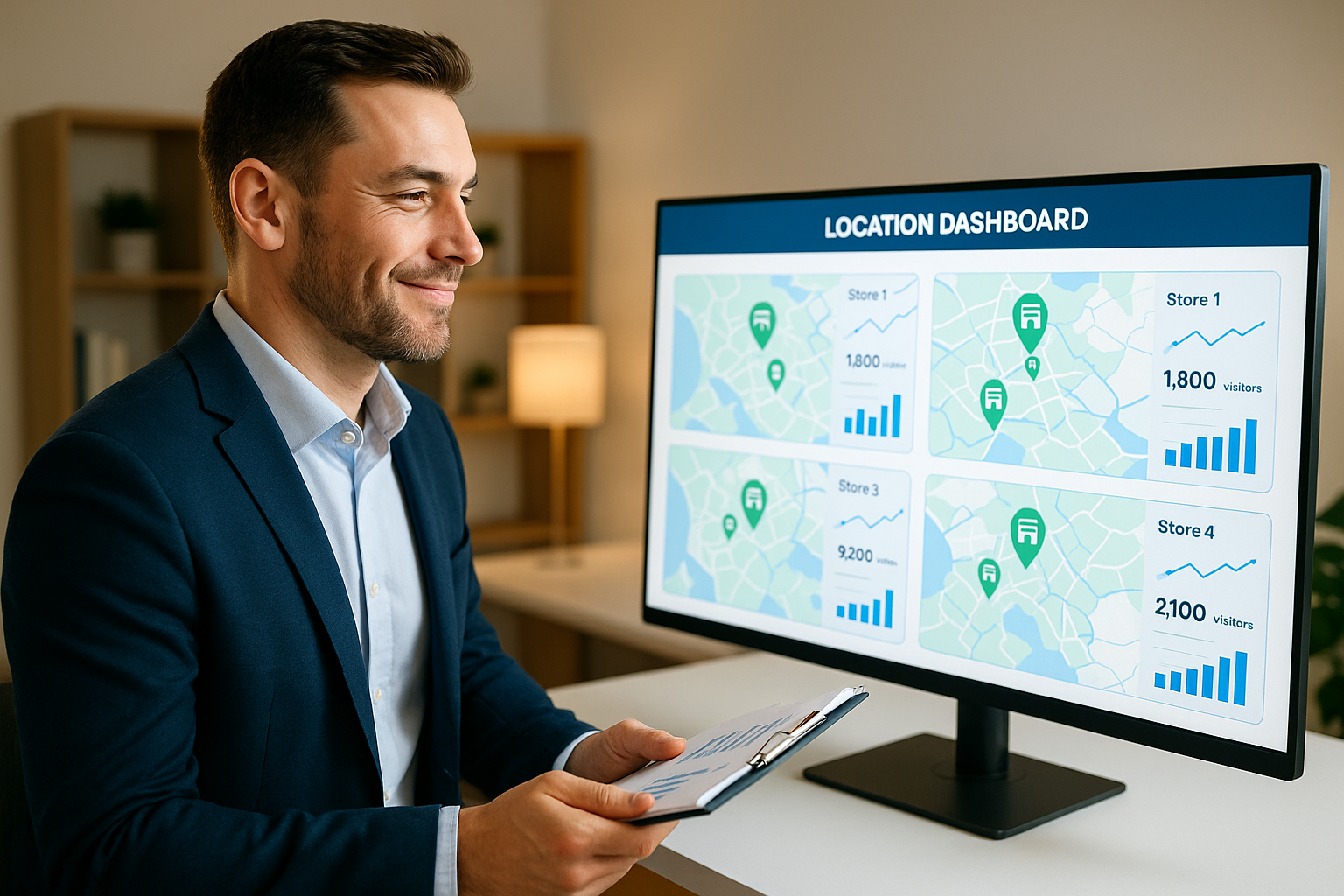
Opening a second location is exciting. The third starts to feel like running two different businesses simultaneously. By the fourth, you realize the problem isn’t growth — it’s the systems underneath it.
Multi-location businesses that struggle aren’t struggling because of demand. They’re struggling because the informal processes that worked at one location fall apart when replicated across several. The owner who could personally oversee everything becomes a bottleneck. The “we just figure it out” culture gets lost in translation.
But local businesses are successfully scaling to five, ten, even twenty locations in competitive Southwest Florida markets — and they’re doing it by building specific systems before they need them. This guide covers what those systems look like, how to build them, and what to automate so you can grow without burning out.
The Shift That Happens at Location Two
When you ran one location, you were the system. You knew every customer by name, spotted problems before they became complaints, and adjusted on the fly. Your presence was the quality control.
That doesn’t scale.
At location two, you’re split — physically and mentally. Each location gets half your attention, which means neither gets enough. You’re driving between them, resolving issues that should have been handled by a manager, and realizing that what you knew intuitively about location one needs to be documented so someone else can run location two the same way.
The businesses that scale multi-location well make one fundamental shift early: they build systems that replace their presence, not people who replace their presence.
That distinction matters. If your second location succeeds only because you hired an exceptional manager, you’ve built a personality-dependent business, not a scalable one. When that manager leaves — and eventually they will — you’re back to chaos.
Systems create consistency. People execute the systems. That’s the model.
Brand Consistency Across Locations
Your brand is a promise. Every location that carries your name is making that promise to customers. When one location delivers beautifully and another falls short, the customer doesn’t blame that location — they lose trust in the brand.
Brand consistency across multiple locations requires intentional work in three areas:
Visual Standards
Every customer-facing element should be governed by documented standards:
- Signage: Font, colors, logo placement, lighting — identical across all locations. Even slight variations read as inconsistency to customers comparing photos online.
- Interior: If your Naples location has a certain feel — music level, lighting, layout — your Fort Myers location should replicate it closely enough that a regular from one could walk into the other and feel at home.
- Uniforms and appearance: Written dress code standards that leave nothing to interpretation. “Neat and professional” means different things to different people. “Black polo with embroidered logo, dark pants, closed-toe shoes” does not.
- Digital presence: Your Google Business Profiles for each location should have consistent photos, descriptions, and response tone. Customers who find you online compare locations.
Service Standards
Document exactly what the customer experience should look like at every touchpoint:
- How are customers greeted when they walk in?
- What’s the script or framework for handling complaints?
- How long should someone wait before being acknowledged?
- What happens if a product is out of stock?
- How do you handle a customer who wants to speak with a manager?
This isn’t about turning your team into robots. It’s about setting a floor so that every customer at every location gets at least that experience — then empowering your people to exceed it.
Culture Consistency
The hardest thing to replicate across locations is culture. The vibe, the way people treat each other, the pride in the work. This one requires ongoing investment:
- Regular all-hands gatherings — even once a quarter, bringing managers and key staff from all locations together builds relationships and shared identity
- Cross-location training — rotating employees between locations briefly helps spread best practices and builds a “we’re one team” mentality
- Visible leadership — visiting each location regularly, not just to check on problems but to celebrate wins, signals that you care equally about all locations
Operations: Building Systems That Run Without You
The operational foundation of a multi-location business is documentation. If the only person who knows how to close the register is the manager at location three, you have a single point of failure.
Standard Operating Procedures (SOPs)
Create written SOPs for every recurring process:
- Opening and closing procedures
- Inventory receiving and counting
- Employee scheduling protocols
- Customer complaint escalation path
- Cash handling and deposit procedures
- Cleaning and maintenance schedules
Your SOPs don’t need to be elaborate. A one-page checklist is infinitely better than institutional knowledge that lives in one person’s head. Use tools like Notion, Google Docs, or Trainual to house your SOPs in a central, accessible location that any manager can reference.
Review and update SOPs quarterly. What worked at one location often gets refined at another — and those refinements should be captured and shared across all locations.
Technology Stack for Multi-Location Management
The right tools make managing multiple locations dramatically easier. Here’s what a well-functioning multi-location business typically runs:
Point of Sale / Business Management:
A centralized POS or business management system that gives you real-time visibility across all locations is non-negotiable. Whether you’re in retail, food service, home services, or another industry, you need to see sales, inventory, and key metrics at each location without making phone calls or waiting for end-of-day reports.
Staff Scheduling:
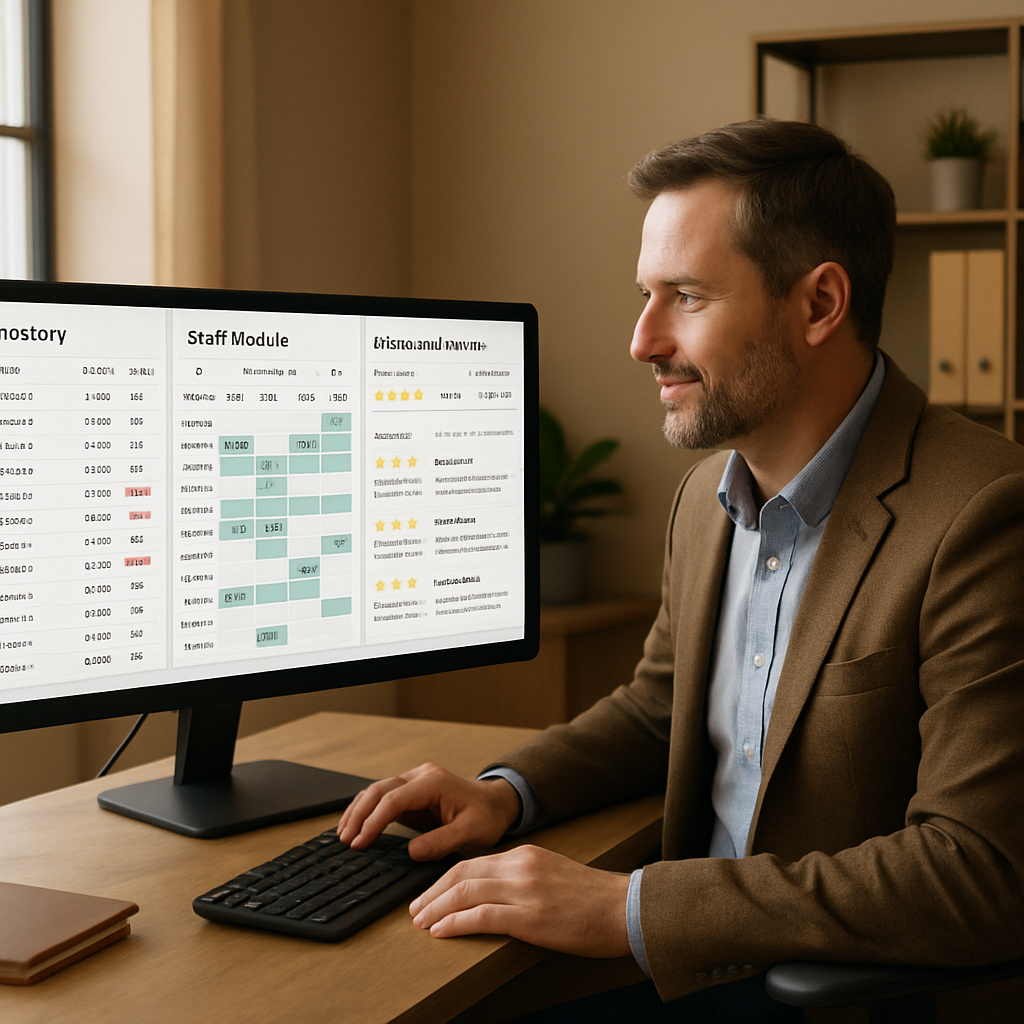
Tools like Homebase, Deputy, or When I Work let you manage schedules across all locations from a single dashboard, track labor costs by location, and handle shift swaps without manager involvement. When you’re managing 30-50 employees across three or four locations, spreadsheet scheduling becomes a liability.
Communication:
Slack or Microsoft Teams with location-specific channels keeps communication organized without everything flooding into one chaotic group text. Create channels for each location, a management channel, and a cross-team channel. Policy updates, announcements, and urgent issues all have a designated place.
Inventory Management:
If you carry physical inventory, you need real-time visibility across locations. The ability to transfer stock between locations when one location runs low — rather than losing a sale — is a direct revenue impact.
CRM:
A unified customer database that spans all locations lets you understand customer behavior across your business, not just within one location. A customer who spends heavily at your Naples location but lives near your Fort Myers location is an opportunity — if you can see the whole picture.
For a deeper look at CRM automation that works for multi-location businesses, our CRM automation guide for small business covers the setup in detail.
Staff Management Across Multiple Locations
People are the hardest part of multi-location management. The same staff behavior that felt manageable at one location becomes a systemic problem at four.
The Management Layer Problem
Most single-location businesses operate with a flat structure: owner at the top, staff below. That works when the owner is present. It breaks when they’re not.
Multi-location businesses need a true management layer — people who have genuine authority to make decisions, hold staff accountable, and represent the brand without requiring the owner’s sign-off on everything.
This means hiring (or promoting) location managers who are:
- Accountable for results, not just activities — their performance is measured on location metrics, not just “showed up and ran things”
- Empowered to make decisions within defined parameters — what can they decide without calling you?
- Invested in the brand — they understand why consistency matters, not just what to do
Define the decision rights clearly. What can a location manager do without owner approval? What requires a call? What are hard stops requiring escalation? Documenting this prevents both micromanagement (the manager calls you about everything) and overreach (the manager makes decisions they shouldn’t).
Hiring for Culture Fit Across Locations
As you open new locations, the hiring process needs to screen not just for skills but for culture fit. A skilled employee who doesn’t embody your values at location three will drag that location’s culture down, no matter how technically capable they are.
Build a consistent interview process — same key questions, same evaluation criteria — used at every location. This ensures you’re measuring candidates against the same standard regardless of which manager conducts the interview.
Performance Management Across Locations
Track location-level performance metrics consistently:
- Revenue per labor hour
- Customer satisfaction scores or review ratings
- Repeat customer rate
- Average transaction value
- Employee turnover rate
When one location consistently underperforms on a metric, you can diagnose whether it’s a management issue, a market difference, or a systemic problem that needs addressing. Without consistent measurement, you’re guessing.
Multi-Location Marketing: Local SEO and Paid Advertising
Marketing multiple locations requires a different approach than marketing one. You need the efficiency of centralized strategy with the relevance of locally tailored execution.
Google Business Profile: One for Each Location
Every location should have its own verified Google Business Profile. This is non-negotiable for local search visibility.
For each location’s GBP:
- Use the location-specific address, phone number, and hours — never the same NAP (name, address, phone) data
- Upload photos specific to that location — the actual storefront, interior, and team
- Respond to reviews promptly, with a consistent voice, from each profile
- Keep categories, services, and descriptions accurate and complete
A customer searching “air conditioning repair near me” in Cape Coral needs to find your Cape Coral location, not your Naples location. Google matches the search to the relevant location profile — but only if the profiles are properly set up.
For a complete setup process, our Google Business Profile optimization guide walks through every setting in detail.
Location-Level SEO on Your Website
Your website needs location-specific pages for each city or service area where you operate. A general “we serve Southwest Florida” page won’t rank for location-specific searches.
Each location page should include:
- The city-specific address, phone number, and hours
- Photos of that specific location
- Local testimonials and reviews from customers in that area
- Local landmarks and neighborhood references to build relevance
- Embedded Google Map for that location
These pages also need to be linked from your main navigation in a way that makes it easy for customers to find “their” location.
Managing Reviews Across Locations
With multiple GBP profiles, review management becomes significantly more complex. You’re monitoring incoming reviews, drafting responses, and tracking rating trends across every location simultaneously.
Automate as much of this as possible:
- Use a review management tool (Podium, Birdeye, or similar) that aggregates reviews from all profiles in one dashboard
- Set up automated alerts for new reviews, especially low ratings
- Create response templates for common review scenarios — then personalize before posting
Review volume and quality directly impact local search rankings. A system that ensures every review gets a prompt, thoughtful response is a competitive advantage that compounds over time.
Paid Advertising by Location
When running Google or Meta ads for multiple locations, segment your campaigns by location so you can:
- Set budgets appropriate to each market’s competition and opportunity
- Tailor creative to each location (real photos of that specific storefront)
- Track performance and ROI separately — not all locations will have the same cost per lead
- Geo-target each campaign to the actual service area of that location
Don’t run one campaign targeting all of Southwest Florida from the same ad set. The customer in Bonita Springs needs to see your Bonita Springs location, not a generic ad for your business.

Financial Management Across Locations
Money is where multi-location management gets complicated fast. Costs that were invisible at one location become significant at four.
Location-Level P&L Tracking
Every location should have its own profit and loss statement. Not a quarterly summary — a real, up-to-date P&L that shows revenue, cost of goods, labor, rent, utilities, and operating profit for each location individually.
Without location-level P&L, you cannot:
- Identify which locations are profit centers and which are drains
- Make informed decisions about staffing changes or capital investment
- Spot problems early before they become serious
- Evaluate whether opening additional locations makes financial sense
Your accountant can set this up, or your business management software may include it. This is a non-negotiable discipline for any business operating two or more locations.
Shared Services vs. Location-Level Costs
Some costs make sense to centralize — marketing agency fees, software subscriptions, insurance, accounting — while others should be tracked at the location level — labor, local marketing spend, supplies.
Getting this accounting right prevents misattributing costs and gives you an accurate picture of each location’s true profitability.
Cash Flow Across Locations
Managing cash flow is harder when revenue streams are coming in from multiple locations on different timelines. Seasonality often hits locations differently — your Naples location may boom in snowbird season while your Cape Coral location has steadier year-round volume.
Forecasting cash flow at the business level requires understanding each location’s seasonal patterns and ensuring there’s adequate reserve to cover slower periods at individual locations without pulling from the whole.
Customer Experience: Consistency with Local Flavor
Here’s the tension that every multi-location owner navigates: too much standardization kills the local personality that made your first location successful. Too little creates inconsistency that erodes brand trust.
The resolution is to standardize the structure and let teams personalize within it.
Standardize:
- Customer greeting protocol
- Complaint resolution process
- Response time standards
- Core service delivery quality
- Pricing and promotions
Customize locally:
- Team personality and relationship with regular customers
- Local community involvement and sponsorships
- Location-specific events or promotions
- Staff’s knowledge of local neighborhoods and customer context
Your Naples location regulars might know their favorite team member by name, tease each other about Dolphins games, and get a Christmas card every year. That’s irreplaceable — and it’s not in any SOP. It’s the humans doing what humans do well. Your job as the owner is to protect the space for that to happen by making everything else run efficiently.
For building community engagement at the local level, our community engagement marketing guide has specific tactics for each location type.
Preparing for Location Three (and Beyond)
The hardest transition isn’t from one to two locations. It’s from two to three — because that’s when you realize you can’t be everywhere and something will be underserved.
Before opening another location, confirm you have:
Operational readiness:
- SOPs documented and actively used at existing locations
- Location managers who can run their sites independently for a week without calling you
- Technology in place that gives you real-time visibility across all locations
Financial readiness:
- Location-level P&L for each existing location
- Clear understanding of how long each location took to reach profitability
- Capital reserves sufficient to carry the new location through its break-even period (typically 6-18 months depending on the business type)
Marketing readiness:
- GBP presence established and optimized for existing locations
- Systems for managing reviews and local SEO already running
- Capacity to add a new location’s marketing without diluting what’s already working
Team readiness:
- An internal candidate ready to lead the new location, or a clear hiring plan
- Onboarding process documented so new teams can be trained consistently
- Performance measurement framework that will apply from day one

Automation That Makes Multi-Location Management Scalable
The difference between a multi-location business that’s chaotic and one that hums is usually automation. Specifically: what repetitive, time-consuming tasks can the system handle so your people can focus on customers?
Appointment and Booking Automation
If any of your locations take appointments, automated booking confirmation, reminders, and follow-ups eliminate the front desk time spent managing scheduling manually — and dramatically reduce no-shows. A customer who booked three weeks ago and gets a text reminder the day before is far less likely to forget. For a complete walkthrough, our appointment reminder automation guide covers the setup.
Review Request Automation
After a customer visit or completed job, an automated follow-up (text or email) requesting a Google review, sent at the right time, creates a consistent review generation system that doesn’t depend on individual staff members remembering to ask.
Lead Follow-Up Automation
New inquiries — whether from your website, a phone call that didn’t get answered, or a form submission — should trigger an immediate automated response and a follow-up sequence that keeps your business top of mind until the prospect converts. At multiple locations, you can’t rely on someone manually catching every new lead.
For the full playbook on lead nurturing automation, our automated follow-up sequences guide walks through building these sequences step by step.
Reporting and Analytics Automation
Set up automated weekly reports for each location manager — delivered to their inbox every Monday morning — showing their location’s key performance metrics from the prior week. This creates a culture of data awareness without requiring anyone to pull reports manually.
Frequently Asked Questions
How do I maintain quality control across locations I can’t visit daily?
Systematic measurement replaces physical presence. Implement location-level KPIs tracked in real time (customer satisfaction, revenue per labor hour, review ratings), mystery shopping programs on a rotating basis, video check-ins with managers, and a peer review system where locations rate each other on brand standards quarterly. Presence is impossible to scale; systems are.
What’s the biggest mistake multi-location owners make?
Promoting their best employee to run a new location without giving them the tools, training, and authority to succeed. A great salesperson or technician is not automatically a great location manager — those require different skills. Invest in management training and clearly define what authority the manager has before they start.
How should I handle pricing differences across locations?
In most cases, maintain consistent pricing across all locations. Price discrepancies confuse customers who visit multiple locations and create internal friction. If local market conditions genuinely require differentiation — higher rent in one area, different competitive dynamics — be deliberate about it and communicate it clearly.
When is the right time to open a new location?
When your existing locations are: profitable on their own P&L, running with minimal owner involvement, staffed with managers who don’t need constant support, and served by operational systems that can be replicated. Opening before these conditions exist accelerates the chaos, not the growth.
Multi-location success isn’t about working harder — it’s about working on the right things before you need them. The businesses growing confidently across five or ten Southwest Florida locations aren’t doing it through heroic personal effort. They’re doing it through documented systems, empowered managers, automation where it makes sense, and a clear-eyed view of what each location actually costs and earns.
Get those foundations right at two locations, and three becomes much easier. Get them right at three, and five stops feeling impossible.
Ready to put the right systems in place before your next location? Talk to our team about how we help local businesses in Naples, Fort Myers, and Cape Coral build the operations and marketing infrastructure to grow without the growing pains.