Something changed in search, and most small business owners haven’t caught up yet.
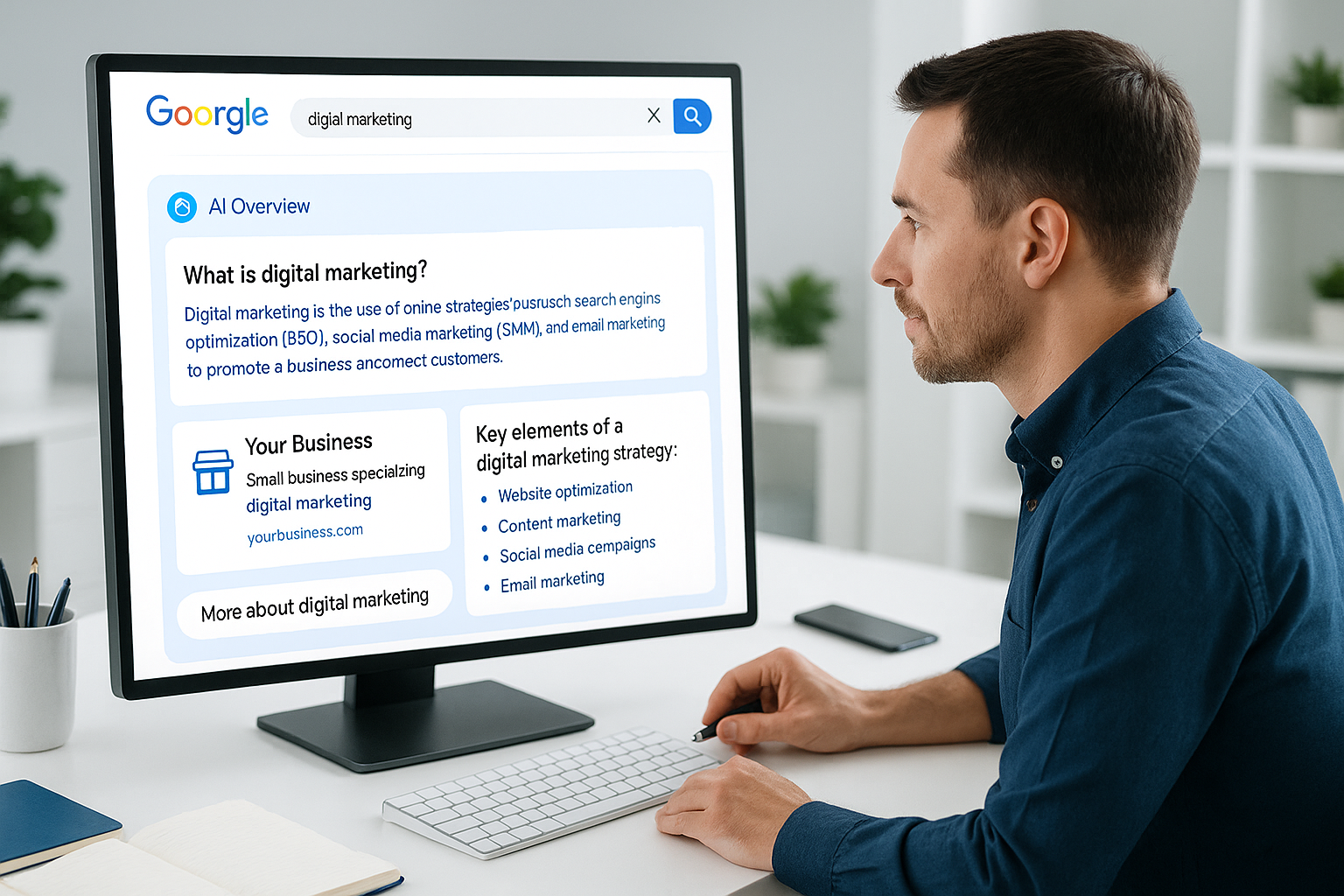
When someone types “best HVAC company near me” or “how much does a Botox treatment cost” into Google today, they don’t always see ten blue links. They see an AI-generated summary — a paragraph or two synthesized from multiple sources that answers the question directly. Below that summary, there might be a few citations. And beneath those, finally, the traditional organic results.
If your business is cited in that AI Overview, you get traffic, visibility, and credibility. If you’re not there, you’re competing for whatever attention is left after someone has already gotten their answer.
AI search optimization is the practice of structuring your content, your website, and your local presence specifically to get cited and featured in AI-generated search results. It’s different from traditional SEO in important ways — and in 2026, it’s no longer optional for businesses that care about staying visible online.
This guide covers exactly what’s changed, why it matters for small businesses in particular, and the specific tactics that get you into those AI Overviews.
What’s Actually Happening in Search Right Now
To understand what you need to do, it helps to understand what’s actually changed in search over the past 18 months.
Google’s AI Overview (formerly Search Generative Experience) now appears for a significant portion of informational and commercial queries. When a user searches for something with a clear question or comparison intent, Google synthesizes an answer from multiple sources and presents it at the top of the results page — before any organic listings.
Bing Copilot does something similar, pulling from indexed web content to generate conversational answers with citations.
ChatGPT and Perplexity have become legitimate research tools for consumers. When someone is researching services or products, they’re increasingly starting with an AI assistant rather than a search engine — and those assistants pull from indexed web content to cite sources.
What all of these systems have in common: they reward structured, authoritative, specific content that directly answers real questions. Keyword-stuffed articles with vague value propositions don’t get cited. Clear, detailed, factual content written for real people gets cited.
The good news for small businesses: this is a level playing field in ways that traditional SEO never was. A small business with genuinely helpful, well-structured content can appear in AI Overviews alongside — or even instead of — much larger competitors with bigger budgets.
Why Small Businesses Are Both at Risk and Positioned to Win
Here’s the tension: AI search both threatens small businesses and gives them a real opportunity.
The threat: If your traditional SEO strategy depended on ranking in positions 3–7 for informational keywords, AI Overviews may be capturing that traffic directly. Users are getting their answers without clicking through. Websites that lived on informational content traffic are seeing organic click volume drop even when they maintain rankings.
The opportunity: AI systems genuinely prioritize quality, specificity, and expertise over raw domain authority. A small business that deeply understands its local market, its customers’ questions, and its specific services can produce content that AI systems prefer to cite — even without a massive backlink profile or national brand recognition.
For local businesses specifically, this is significant. When someone asks an AI assistant “who handles estate planning in Naples, Florida” or “what is a good med spa in Fort Myers,” the AI is trying to answer with specific, credible, locally-relevant information. If your website has that information in a structured, readable format, you’re a candidate for the answer.
The Core Principles of AI Search Optimization
Before we get into tactics, it helps to understand what AI search systems are actually trying to do. They’re trying to:
- Answer the question accurately — They want factual, verifiable content
- Cite credible sources — They prefer structured, professional, E-E-A-T content
- Provide complete answers — They favor content that addresses all dimensions of a question
- Serve the user’s intent — They understand what the user actually wants, not just what they typed
This means the content that performs best in AI search is the same content that’s genuinely most useful to your target customer. There’s no gaming it. The optimization is really just: make better content, structure it clearly, and make it easy for AI systems to understand and use.
E-E-A-T: Experience, Expertise, Authoritativeness, Trustworthiness
Google’s quality guidelines emphasize E-E-A-T, and AI systems apply similar principles. For small businesses, this means:
- Experience: Include real-world specifics. Case examples, local details, specific scenarios. Not generic advice that could apply to anyone anywhere.
- Expertise: Demonstrate subject matter depth. Cover the nuances. Don’t just scratch the surface.
- Authoritativeness: Have a consistent web presence. Your Google Business Profile, your website, your reviews, your social media — they should all tell a coherent story about who you are and what you do.
- Trustworthiness: Reviews, testimonials, professional credentials, accurate business information, HTTPS, and clear contact information all signal trustworthiness to AI systems.
Tactical Playbook: How to Optimize for AI Search
These are the specific tactics that improve your visibility in AI-generated search results.
1. Answer Questions Directly and Completely
AI systems are trained to answer questions. The content they pull from does the same thing: it answers questions.
The implication is simple: structure your content around the questions your customers actually ask. Not generic industry questions — your customers’ specific questions about your services.
For a med spa in Southwest Florida, this means content that answers:
- “How much does CoolSculpting cost in Naples?”
- “What’s the difference between Botox and filler?”
- “How many sessions does laser hair removal take?”
- “Is a medical consultation required before starting a weight loss program?”
For a local HVAC company, it means:
- “What size AC unit do I need for a 1,500 sq ft home in Florida?”
- “How often should I replace my air filter?”
- “Why is my AC blowing warm air?”
The format that performs best: lead with a direct, specific answer. Then expand with context, nuance, and detail. AI systems can pull just the direct answer for a quick snippet, or pull the full context for a more detailed response — both help you.
2. Structure Your Content for Scannability
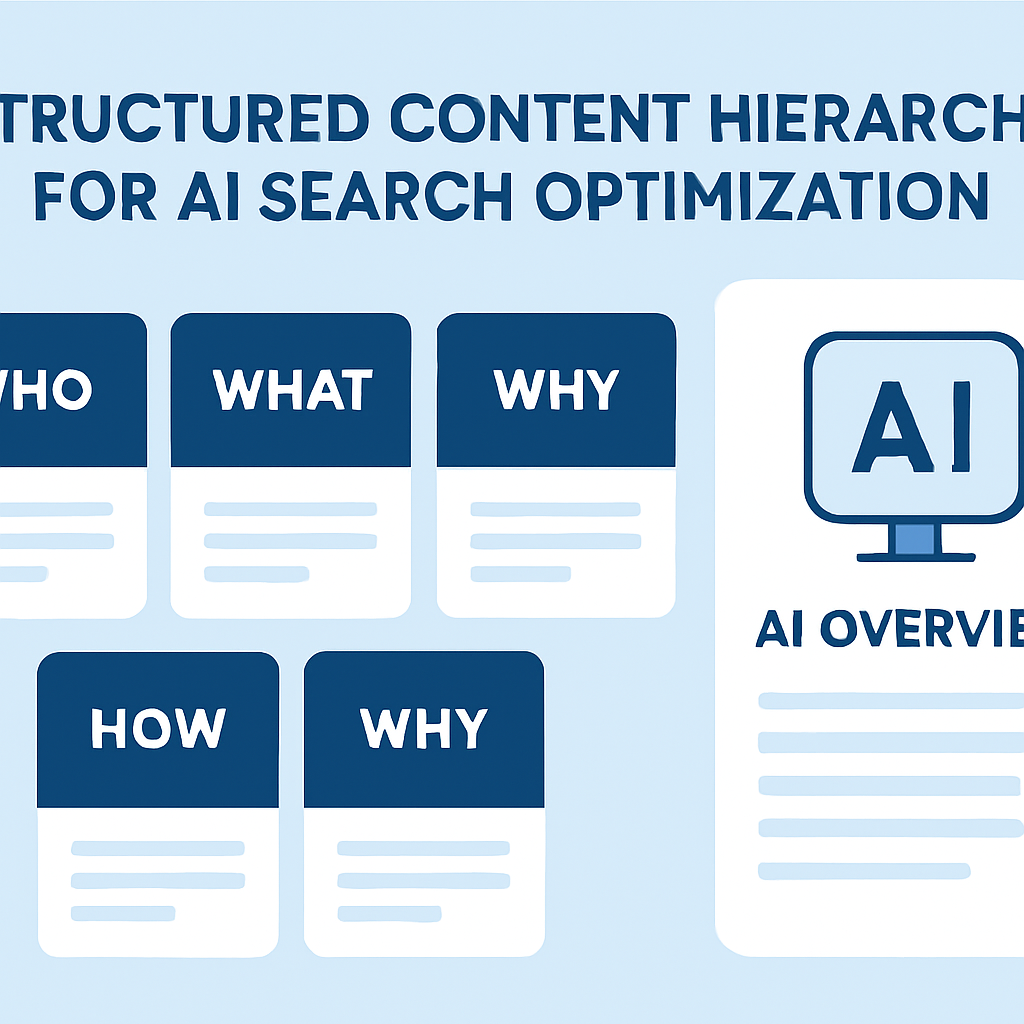
AI systems parse structured content better than walls of text. Practically, this means:
Use descriptive headers (H2, H3). Your headers should be specific enough to stand alone as answers. “Pricing” is a weak header. “How Much Does Laser Hair Removal Cost in Florida?” is a strong one.
Use short paragraphs. Two to four sentences per paragraph. AI systems can extract a concise answer more easily from focused paragraphs than from dense blocks of text.
Use lists and tables where appropriate. Comparison tables, numbered steps, and bulleted lists all structure information in ways that AI systems can easily extract and reformat.
Put the answer first. Don’t bury the key point. State the direct answer at the beginning of each section, then elaborate.
3. Build a Comprehensive FAQ Section on Key Pages
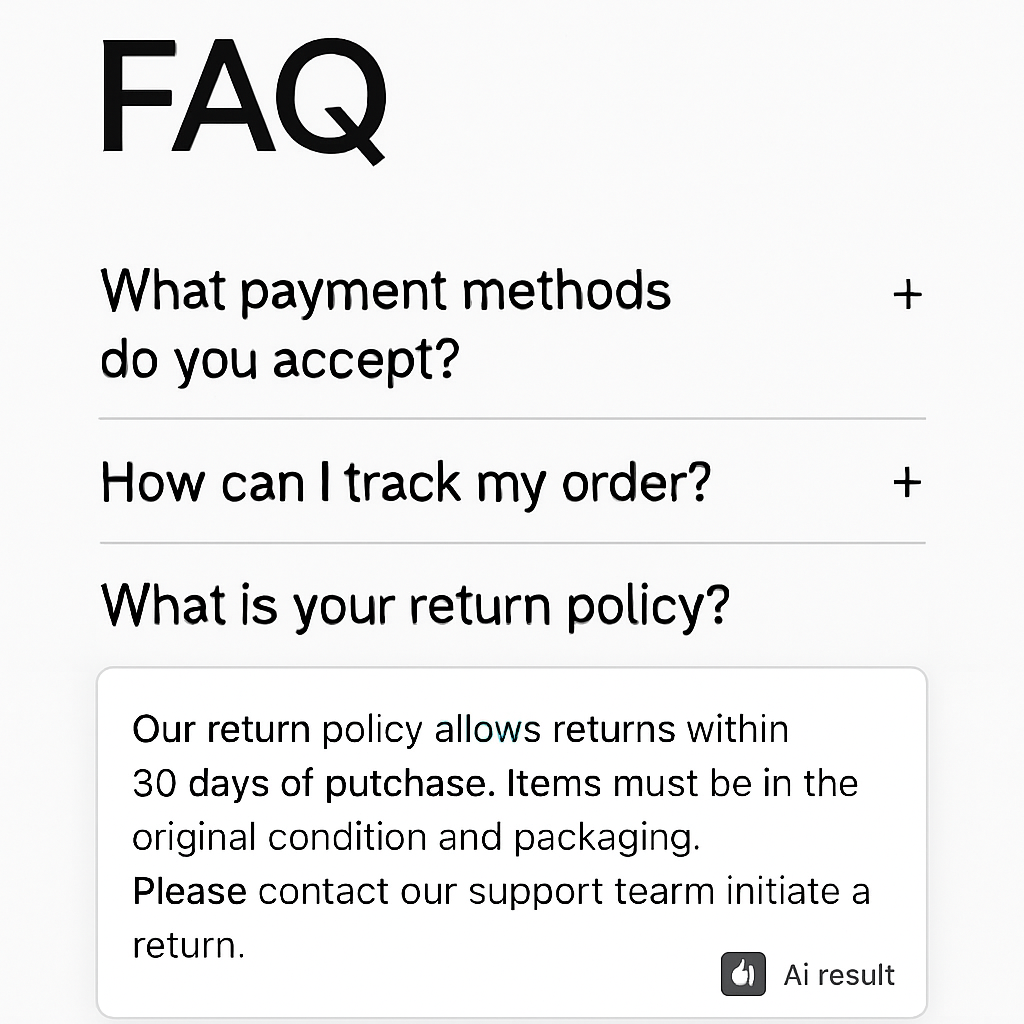
FAQ sections are one of the highest-leverage investments in AI search optimization. Here’s why: AI systems are explicitly designed to answer questions. When you have a clear question followed by a complete, accurate answer, you’ve done much of the AI’s work for it.
Every major service page on your website should have a FAQ section with 5–8 questions and thorough answers. These should be real questions — the things customers actually ask you or search for, not the questions that make you look best.
For a consultation-based business, good FAQ candidates include:
- What does the first appointment look like?
- What should I bring?
- How long does the process take?
- What results can I realistically expect?
- What’s the difference between Option A and Option B?
- Is this covered by insurance?
- What happens if I’m not satisfied?
For e-commerce or service businesses, include questions about pricing, timelines, guarantees, and specific product/service differences.
The FAQ schema markup (discussed below) makes these even more visible to AI systems.
4. Implement Schema Markup
Schema markup is code you add to your website that tells search engines (and AI systems) explicitly what your content is about. For small businesses, these are the most important schema types:
LocalBusiness schema: Tells AI systems your name, address, phone, hours, service area, and business type. Essential for local search visibility.
FAQPage schema: Marks up your FAQ sections so AI systems can easily identify questions and answers. This is one of the highest-ROI schema implementations for AI search.
Service schema: Describes your specific services — what they are, who they’re for, pricing if applicable.
Review/AggregateRating schema: Surfaces your review data in a structured format AI systems can parse.
Article schema: On blog posts, signals to AI systems that this is informational content with a specific author and publication date.
You don’t need to be a developer to add schema markup. Many CMS platforms (WordPress, Squarespace, Wix) have SEO plugins that handle this. If you’re on a custom platform, your web team can add it — or you can use Google’s Structured Data Markup Helper to generate the code.
5. Strengthen Your Local Signals
For businesses that serve a specific geography, local signals are a major factor in AI search visibility.
Google Business Profile: Keep it completely filled out — categories, services, business description, photos, hours, Q&A section. The description you write for your GBP is often pulled verbatim into AI Overviews. Write it to answer “what does this business do and for whom?”
Consistent NAP (Name, Address, Phone): Your business name, address, and phone number should be identical across your website, Google Business Profile, Yelp, Bing Places, Apple Maps, and any industry directories. Inconsistencies confuse AI systems trying to verify your business identity.
Local content: Blog posts about local topics, local events you’ve participated in, local case studies — these all signal to AI systems that you are genuinely embedded in your community and relevant to local searches.
Reviews with specificity: Encourage customers to leave reviews that mention specific services, their specific situation, and specific outcomes. AI systems extract information from reviews to understand what your business actually does. “Great service, highly recommend!” tells them nothing. “Dr. Chen removed my tattoo in four sessions — the clinic is in the Mercato area of Naples, and they were incredibly professional” is actually useful to an AI trying to understand your business.
6. Build Content Clusters
AI systems understand topical depth. A website that has comprehensive coverage of a topic — not just one article, but many pieces that address different dimensions of the same subject — gets treated as more authoritative on that topic.
For a small business, this means building content clusters: a pillar page on your core service or topic, supported by related posts that go deep on specific aspects.
An example for an aesthetic practice:
- Pillar: “Complete Guide to Botox and Dermal Fillers”
- Cluster posts: “Botox vs. Dysport: What’s the Difference?” / “How Long Does Botox Last?” / “Botox Pricing in Southwest Florida” / “What to Expect at Your First Botox Appointment” / “Botox Safety: What You Need to Know”
Each cluster post answers a specific question in depth. The pillar page links to all of them. Collectively, the cluster signals that this website is a genuinely authoritative source on this topic — and AI systems respond accordingly.
7. Make Your Content Citable
“Citable” means AI systems can excerpt a portion of your content and present it as a useful answer, with attribution back to you.
For your content to be citable:
- State facts clearly. AI systems prefer factual claims over vague marketing language. “Our treatment area includes Naples, Bonita Springs, and Marco Island” is citable. “We serve the greater Southwest Florida area” is not.
- Use specific numbers when relevant. “Treatment sessions typically take 30–45 minutes” is more citable than “treatments are quick and convenient.”
- Avoid excessive hedging. “Results may vary for every individual in ways that depend on numerous factors” is not citable. “Most patients see results within two to four weeks” is.
- Cite your own sources. When you reference statistics or research, link to the source. This signals to AI systems that you are operating in good faith with verifiable information.
Tracking Your AI Search Performance
Standard analytics tools are beginning to add AI search visibility metrics, but the picture is still evolving. Here’s what to track:
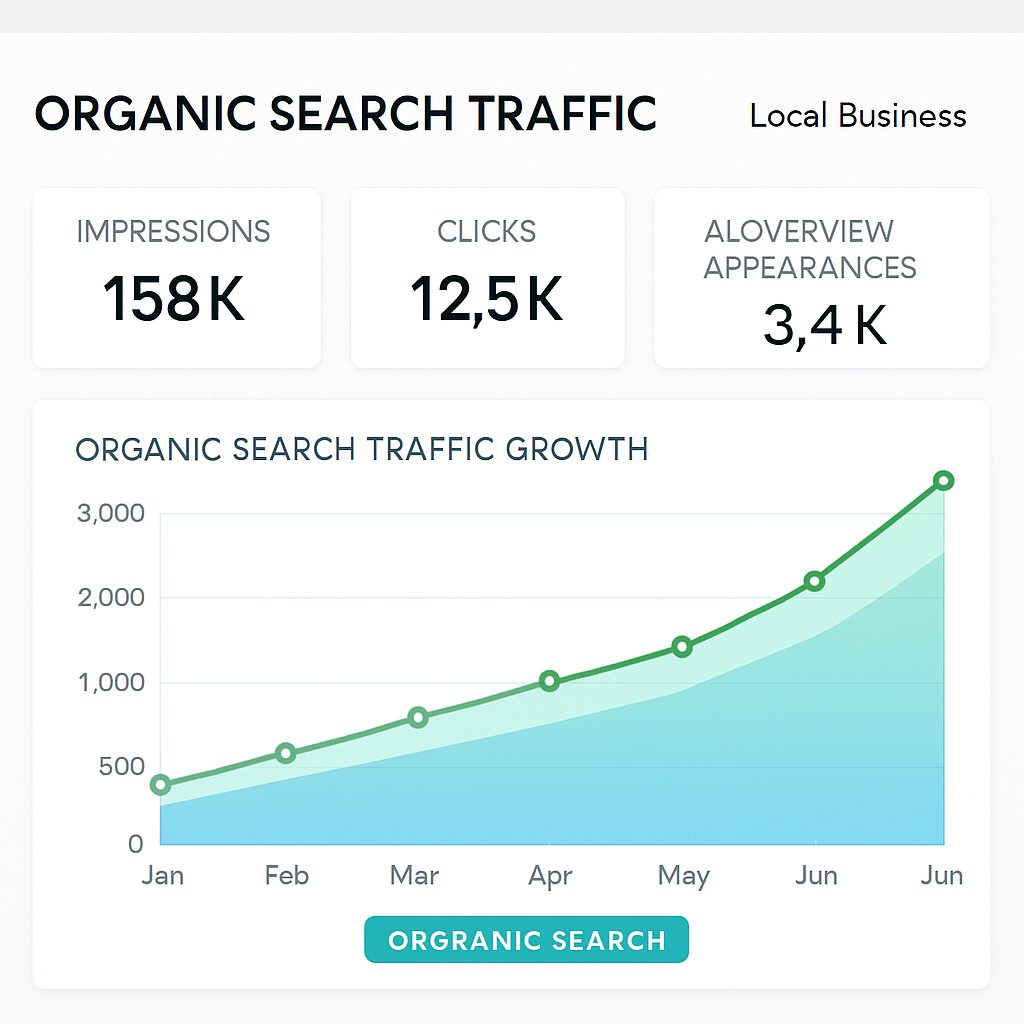
Google Search Console: In the Performance report, filter by “Search Appearance” to see if you have featured snippets (a precursor to AI Overviews). Track impressions and clicks separately for featured snippets vs. organic.
AI Overview appearances: GSC is beginning to surface AI Overview impression data. Check your Performance report for the “AI Overview” appearance type if available in your account.
Zero-click rate: As AI Overviews capture more queries, you may see impressions stay flat or grow while clicks decline. This isn’t necessarily bad — it means you’re appearing in AI answers, even if some users don’t click through. But monitor it so you can distinguish between content that drives discovery vs. content that drives visits.
Brand search volume: One indirect benefit of AI search visibility is brand awareness. If you’re consistently cited in AI answers, people learn your business name. Track direct brand searches as a proxy for AI search impact over time.
AI Search for Specific Business Types
Local Service Businesses (HVAC, Plumbing, Landscaping, etc.)
Your highest-leverage actions:
- Complete Google Business Profile with every service listed and a detailed business description
- FAQ content on each service page answering the top questions customers ask before calling
- Blog posts targeting “near me” and location-specific queries (“best time to service AC in Florida”)
- LocalBusiness + Service schema markup
Medical and Aesthetic Practices
Your highest-leverage actions:
- Procedure-specific FAQ pages with pricing ranges (AI systems prefer specific, factual content)
- Content that explains the consultation process, candidacy criteria, and realistic outcomes
- HIPAA-compliant approach to showcasing patient results (descriptions and stats rather than photos work well for AI)
- Strong local schema + GBP optimization for the service area
For practices, note that Google applies heightened scrutiny (YMYL — Your Money or Your Life) to medical content. E-E-A-T signals are especially important: physician credentials, practice affiliations, and evidence of clinical expertise all help.
Retail and E-commerce
Your highest-leverage actions:
- Product comparison content (“X vs Y for [use case]”)
- Use-case content (“best [product type] for [specific situation]”)
- FAQ sections on product pages covering common pre-purchase questions
- FAQ schema markup, Review schema markup
Professional Services (Law, Accounting, Consulting)
Your highest-leverage actions:
- Question-and-answer content targeting the specific questions prospects Google before hiring you
- Process transparency content (what does working with you look like? What happens at each step?)
- Local and practice area schema
- Strong review presence with specific, detailed reviews
What Not to Do: AI Search Anti-Patterns
Some practices that worked in traditional SEO actively hurt you in AI search:
Keyword stuffing. AI systems are trained on natural language. Unnatural keyword repetition signals low quality, not high relevance.
Thin content. A 300-word page optimized for a keyword won’t get cited. AI systems extract from comprehensive, authoritative content.
Vague, hedged language. “Our team of dedicated professionals provides comprehensive solutions for your unique needs” is exactly the type of generic marketing language AI systems ignore.
Blocking AI crawlers. Some businesses have added User-agent blocks to prevent AI companies from crawling their content. This might protect your content from being used for training data, but it also prevents citation. Understand the trade-off before blocking.
Ignoring your Google Business Profile. Your GBP is often the single highest-leverage piece of AI-visible content for a local business. An incomplete or stale GBP hurts your local AI search presence disproportionately.
The 30-Day AI Search Optimization Starter Plan
You don’t need to rebuild your entire website. Here’s a focused first month:
Week 1: Audit and quick wins
- Run your homepage and top service pages through Google’s Rich Results Test to check for existing schema
- Review your Google Business Profile — fill in every empty field, update photos, review the business description
- List your top 5 services and write 5–7 FAQ questions for each (you’ll use these in Week 2)
Week 2: Content structure
- Add FAQ sections to your top 3 service pages using the questions from Week 1
- Rewrite your service page intros to lead with a direct, specific answer (“We provide [service] for [who] in [where]. Most [clients/patients] [result].”)
- Add descriptive H2/H3 headers to any pages that have walls of text
Week 3: Schema implementation
- Add LocalBusiness schema to your homepage (use Google’s Structured Data Markup Helper or a plugin)
- Add FAQPage schema to the pages you updated in Week 2
- Submit updated URLs for indexing in Google Search Console
Week 4: Content creation
- Write one blog post targeting a “how much does [your service] cost in [your city]” question
- Write one comparison or FAQ post targeting a specific question your customers ask before buying
- Set up Google Search Console monitoring for AI Overview appearances if the report type is available
The search engines that drive business for small businesses have fundamentally changed. Optimizing for AI search isn’t about chasing a new trend — it’s about being genuinely useful, specific, and credible in the places where your future customers are looking for answers.
The businesses that adapt their content strategy now will be cited in the AI answers that shape purchase decisions for the next decade. The ones that don’t will find themselves competing for a shrinking share of whatever traffic makes it past the AI Overviews.
If you want help auditing your website’s AI search readiness and building a content plan that drives visible results, Monsoft Solutions works with local businesses and aesthetic practices across Southwest Florida to make sure the right customers can always find them.