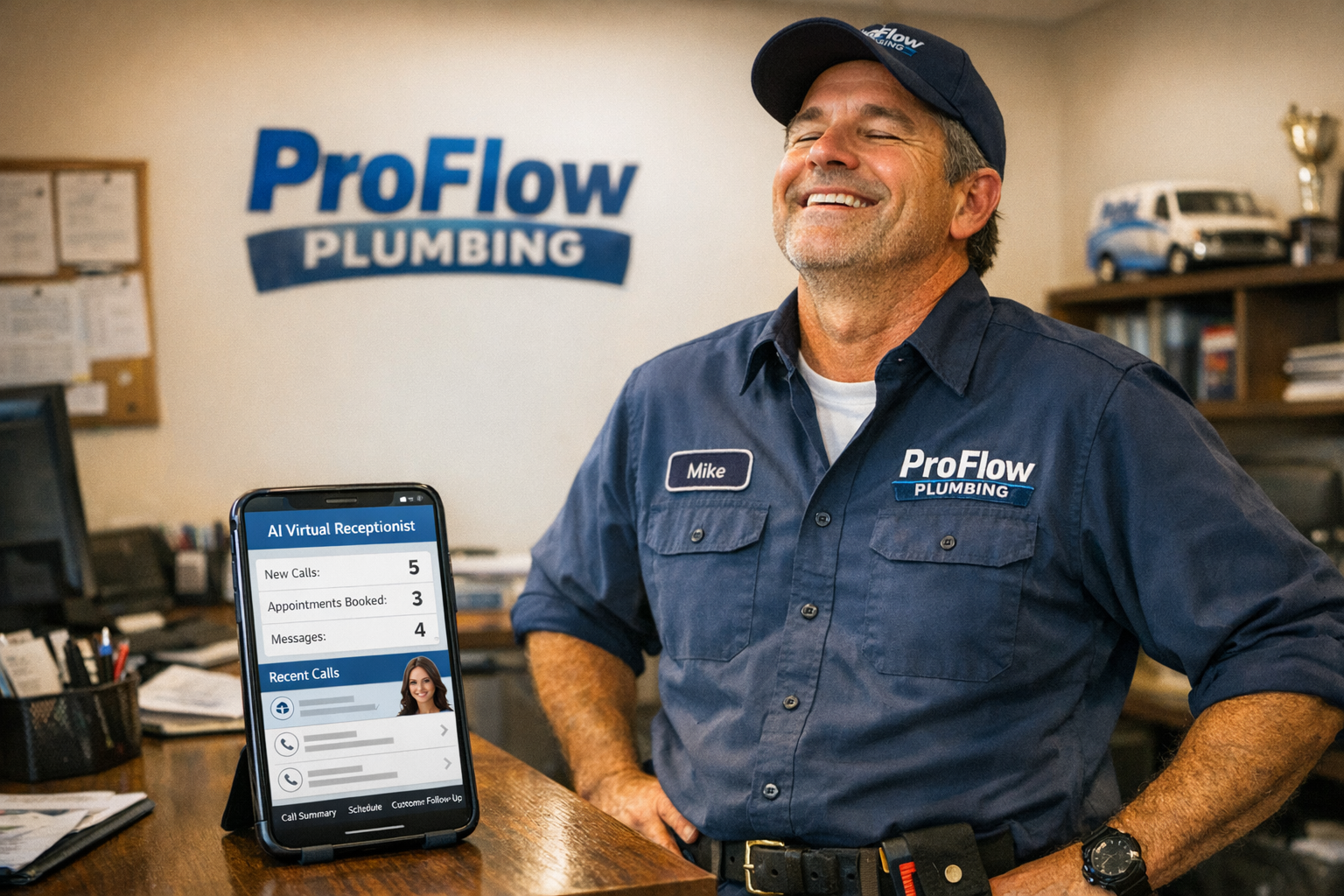
Every missed call is a customer choosing your competitor. For small businesses in Southwest Florida—plumbers, HVAC technicians, salons, and professional services—the math is brutal: miss three calls a day, lose $50,000+ annually. You can’t answer the phone while you’re on a job. You can’t afford a full-time receptionist. And voicemail? Customers don’t leave messages anymore—they just call the next name on Google.
AI phone answering changes this equation entirely. These systems answer every call instantly, capture lead information, book appointments, and even handle common questions—all while sounding remarkably human. No more lost leads to voicemail. No more hiring headaches. Just a virtual receptionist that works 24/7 for a fraction of the cost.
What Is AI Phone Answering and How Does It Work?
AI phone answering is a technology that uses artificial intelligence to handle incoming business calls automatically. Unlike traditional voicemail or basic auto-attendants, modern AI phone systems can have natural conversations with callers, understand context, and take meaningful action.
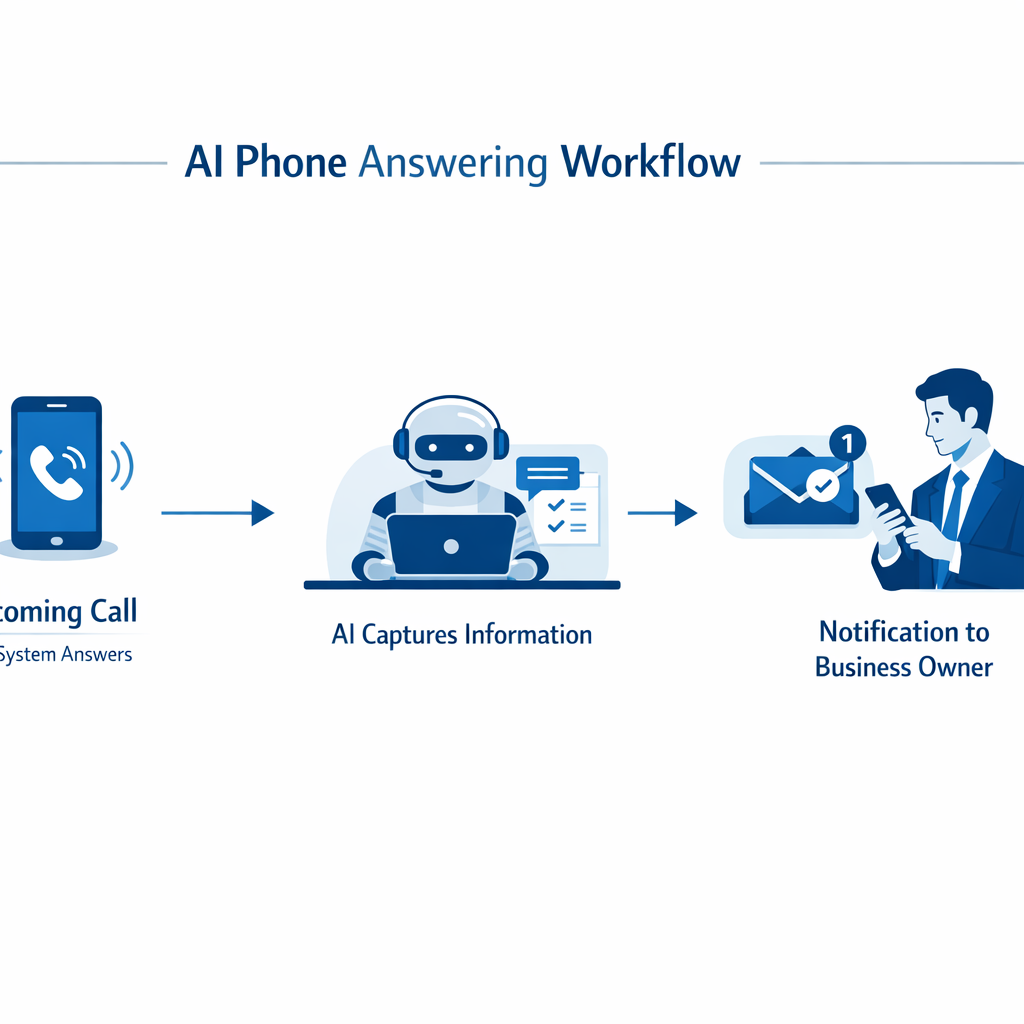
Here’s what happens when a customer calls a business using AI phone answering:
- Instant pickup — The AI answers within seconds, greeting the caller professionally
- Natural conversation — The system asks questions, listens to responses, and adapts in real-time
- Information capture — Name, phone number, service needed, and urgency are recorded automatically
- Smart routing — Emergency calls get escalated immediately; routine inquiries are handled or scheduled
- Notification — You receive a summary via text, email, or app notification with all the details
The technology has matured significantly. Modern AI voices are nearly indistinguishable from human receptionists. They pause naturally, respond to interruptions, and handle accents and background noise effectively. Callers often don’t realize they’re talking to an AI—they just know they got helpful service without being sent to voicemail.
Traditional Answering vs. AI Phone Answering
| Feature | Voicemail | Human Receptionist | AI Phone Answering |
|---|---|---|---|
| Cost per month | $0 | $3,000-4,500 | $150-500 |
| Availability | 24/7 (no engagement) | 40 hrs/week | 24/7 active |
| Lead capture rate | 20-30% | 80-95% | 85-95% |
| Response time | Delayed | Immediate | Immediate |
| Scalability | N/A | Hire more staff | Unlimited calls |
Why Every Missed Call Costs More Than You Think
Let’s do the math for a typical SWFL service business:
- Average missed calls per day: 3-5 (industry average during work hours)
- Percentage that call competitors: 85% won’t leave a voicemail
- Average job value: $300-500
- Monthly cost of missed calls: $7,650-$15,300
That’s not a typo. If you’re missing just three $400 calls per day, five days a week, you’re losing $6,000 per month—$72,000 per year—to competitors who simply answered the phone.
For home service businesses in Naples, Fort Myers, and Cape Coral, the seasonal impact is even more dramatic. During snowbird season (November through April), call volume can triple. Miss those calls, and you’re losing premium customers who often spend 2-3x more than year-round residents.
The “I’ll Call Back Later” Myth
Many business owners assume missed callers will try again. The data says otherwise:
- 62% of customers who can’t reach a business will call a competitor instead
- 78% of consumers buy from the company that responds first
- Only 20% will leave a voicemail (and even fewer expect a callback)
The moment someone’s toilet is flooding or their AC dies in July, they’re not patient. They need someone now. If your phone goes to voicemail, they’ve already moved on before the beep.
Setting Up AI Phone Answering for Your Business
Getting started with AI phone answering is simpler than you might expect. Most systems can be operational within 24-48 hours, with no technical expertise required.
Step 1: Choose the Right Platform
Several AI phone answering platforms serve small businesses effectively. Key features to evaluate:
- Voice quality — Does it sound natural? Request a demo call
- Integration options — Can it connect to your existing scheduling software?
- Customization — How much control do you have over the script and responses?
- Reporting — What insights do you get about call patterns and outcomes?
- Pricing model — Per-minute, per-call, or flat monthly rate?
Popular options include Smith.ai, Ruby, Dialpad AI, and specialized solutions for specific industries. Prices typically range from $150-500/month depending on call volume and features.
Step 2: Define Your Call Flow
Before activation, map out how you want calls handled:
For service businesses:
- Capture: Name, phone, address, service needed, urgency level
- Emergency protocol: What counts as urgent? How should those be escalated?
- Appointment booking: What scheduling system should the AI connect to?
- After-hours behavior: Different script for evenings/weekends?
For professional services:
- Capture: Name, phone, nature of inquiry, preferred callback time
- Qualifying questions: Budget range? Timeline? Specific needs?
- Transfer rules: Which calls go straight to you vs. scheduled callback?
Step 3: Train Your AI (It’s Easier Than It Sounds)
Modern AI systems learn from examples, not programming. You’ll typically:
- Record sample calls or provide transcripts of ideal conversations
- List common questions and the answers you’d give
- Define business rules (“Never quote prices over $X without human approval”)
- Set up escalation triggers (“If caller mentions ‘emergency’ or ‘water damage’…”)
Most platforms offer guided setup wizards. The AI improves over time as it handles more of your specific calls.
Step 4: Test Before Going Live
Run at least 20-30 test calls covering different scenarios:
- Standard service inquiry
- Price question
- Emergency/urgent situation
- After-hours call
- Existing customer checking on a job
- Spanish or accented callers (if relevant to your market)
Adjust scripts based on what sounds natural and captures the right information.
Real Results: What AI Phone Answering Delivers
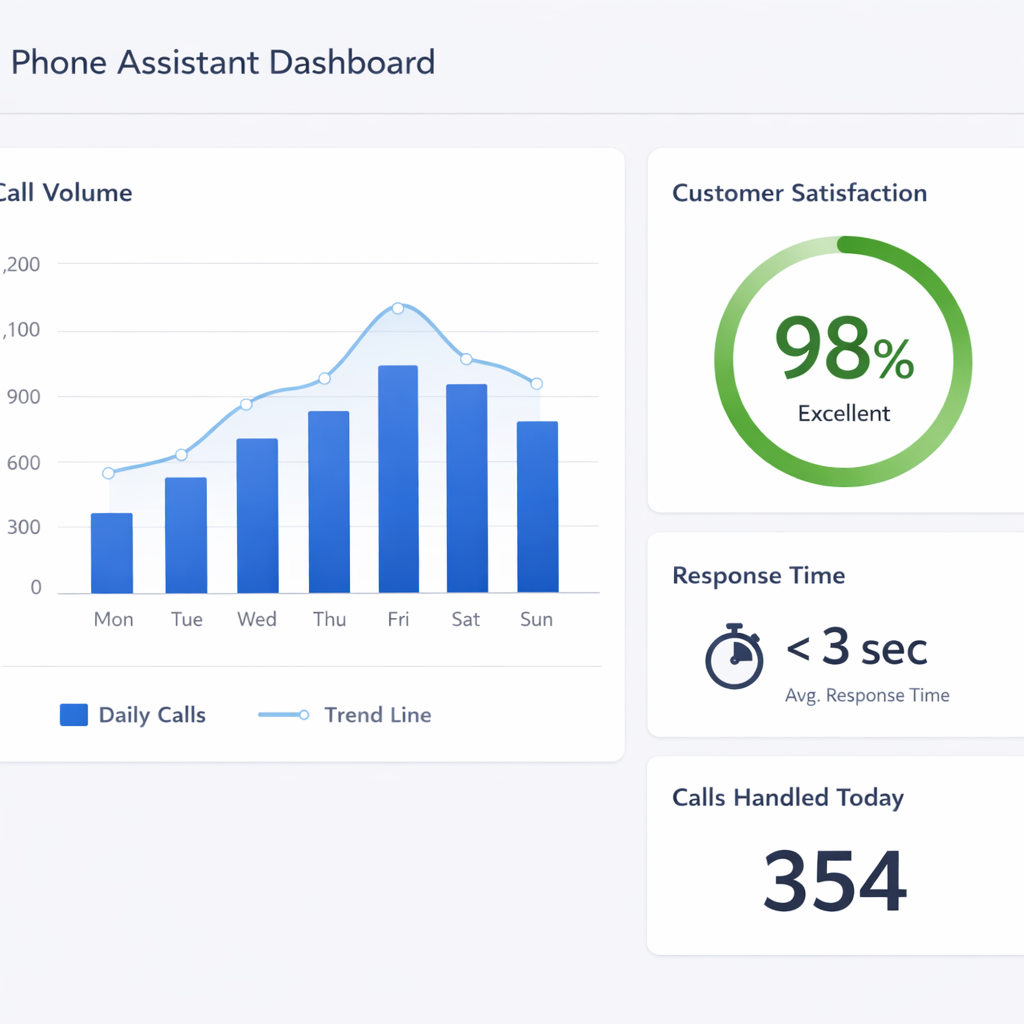
Businesses across Southwest Florida are seeing measurable results within the first month:
Lead Capture Improvement
A Fort Myers plumbing company went from capturing 34% of after-hours inquiries to 91% after implementing AI phone answering. Monthly lead volume increased by 127%—without any additional marketing spend.
Revenue Per Call
When every call gets answered professionally and lead information is captured correctly, conversion rates climb. Businesses report 15-25% higher close rates on leads captured by AI compared to voicemail callbacks.
Time Reclaimed
The average small business owner spends 8-12 hours per week on phone-related tasks: answering calls, returning messages, coordinating schedules. AI phone answering can eliminate 60-80% of this time, letting you focus on billable work.
Customer Satisfaction
Surprisingly, customers often prefer AI answering to rushed humans. The AI never sounds annoyed, never puts them on hold, and always captures their information correctly. One Naples salon owner reported her Net Promoter Score increased 18 points after implementing AI—customers loved the instant, consistent response.
Common Concerns (And Why They’re Usually Overblown)
“My Customers Want to Talk to a Real Person”
They want to talk to someone helpful. The frustration comes from voicemail, hold times, and having to repeat information. A well-designed AI provides immediate, helpful engagement. Most callers don’t care whether the voice is human or artificial—they care whether their problem gets addressed.
”What If the AI Can’t Handle a Complex Situation?”
It won’t try to. Good AI systems are trained to recognize complexity and escalate appropriately. “Let me get you connected with someone who can help with that specific situation” is always an option. The AI handles the routine calls (which are 70-80% of volume), freeing you for the complex ones.
”It Sounds Too Robotic”
Five years ago, maybe. Today’s AI voices are remarkably natural—with appropriate pauses, conversational filler words (“um,” “let me check that”), and dynamic intonation. Most callers can’t tell the difference, especially on a phone connection.
”What About My Repeat Customers?”
Better systems integrate with your CRM. When a known number calls, the AI can greet them by name: “Hi Sarah, thanks for calling back. Are you calling about your appointment next Tuesday?” This feels more personal than many human receptionists manage.
Getting Started This Week
You don’t need a massive technology overhaul to stop missing calls. Here’s a practical path forward:
Day 1-2: Research
- List your top 10 call types (what do people usually call about?)
- Calculate your current missed-call cost using the formula above
- Request demos from 2-3 AI phone answering providers
Day 3-5: Setup
- Choose a platform based on demo experience and pricing
- Define your basic call flow and escalation rules
- Record or write your ideal greeting and common Q&A
Day 6-7: Test and Launch
- Run internal test calls
- Adjust scripts based on results
- Go live with AI answering (keep your existing system as backup initially)
Within two weeks, you’ll have data on how it’s performing. Most businesses see positive ROI within the first month—often within the first week.
Ready to Stop Losing Leads to Voicemail?
Every call that goes unanswered is revenue walking out the door—often straight to your competitors. AI phone answering gives small businesses the 24/7 availability that customers expect, at a fraction of the cost of hiring staff.
Whether you’re a plumber in Cape Coral, a salon in Naples, or a professional service firm in Fort Myers, the technology is ready, affordable, and proven. The question isn’t whether AI phone answering works—it’s how much longer you can afford to miss calls while your competitors don’t.
Want help implementing AI phone answering for your business? Contact us for a free consultation. We’ll analyze your current call patterns and recommend the right solution for your specific needs.
Frequently Asked Questions
How much does AI phone answering cost for a small business?
Most AI phone answering services cost between $150-500 per month for small businesses, depending on call volume and features. This compares favorably to a part-time receptionist ($1,500-2,000/month) or full-time staff ($3,000-4,500/month with benefits). Many services offer pay-per-minute or pay-per-call options for businesses with lower volume.
Can AI phone answering work with my existing business phone number?
Yes, AI phone answering integrates seamlessly with your existing business number. Most services use call forwarding—calls to your number ring through to the AI system. You keep your number, and callers see no change. Setup typically takes less than an hour with no hardware required.
What happens if the AI can’t answer a customer’s question?
Well-designed AI phone systems are trained to recognize their limits. When a question is too complex or outside their training, they’ll offer to take a message, schedule a callback, or transfer to a human if one is available. The goal is helpful engagement, not pretending to know everything.
Is AI phone answering appropriate for medical or legal businesses?
Yes, with appropriate configuration. Many AI phone systems are HIPAA-compliant for healthcare and can be configured to avoid giving advice that could create liability. They excel at appointment scheduling, basic information capture, and triage—while making clear that professional consultation is needed for specific guidance.
How long does it take to set up AI phone answering?
Most businesses can be live within 24-48 hours. Basic setup involves defining your greeting, common questions, and routing rules. More sophisticated implementations with CRM integration or complex call flows may take 1-2 weeks. Many providers offer white-glove setup where they handle configuration for you.